Weihnachtsplätzchen are the small cookies Germans bake at home during Advent, the four weeks before Christmas. They are not one recipe but a family: buttery crescents, spiced honey cakes, meringue stars, pressed biscuits, cut-out shapes. Most households bake several kinds, store them in tins and put a mix of them on one plate, the Bunter Teller, whenever someone drops by.
What sets them apart from ordinary cookies is time. Many of them are made to keep for weeks, some actually taste better after a rest in the tin, and the baking itself is spread over November and December rather than done in one afternoon. The seven below cover the main types, from the one that goes in the tin first to the one you bake last.
Lebkuchen: bake these first
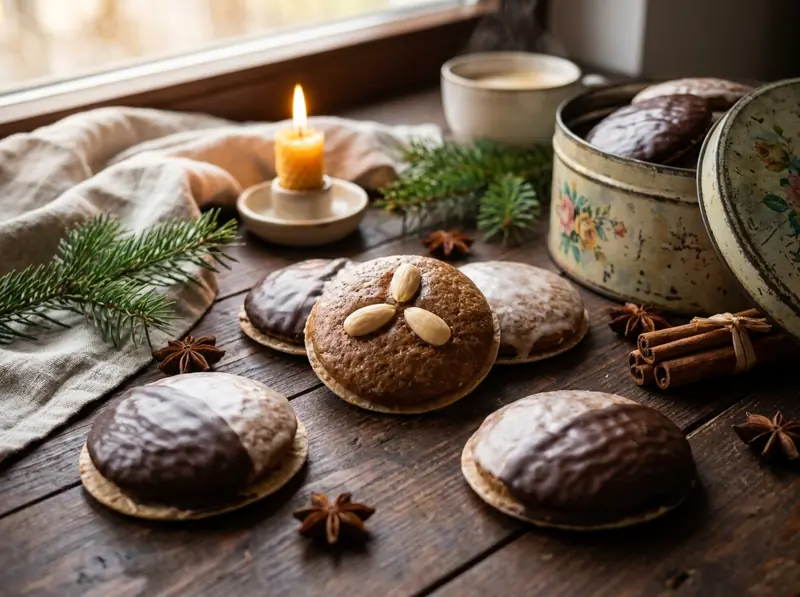
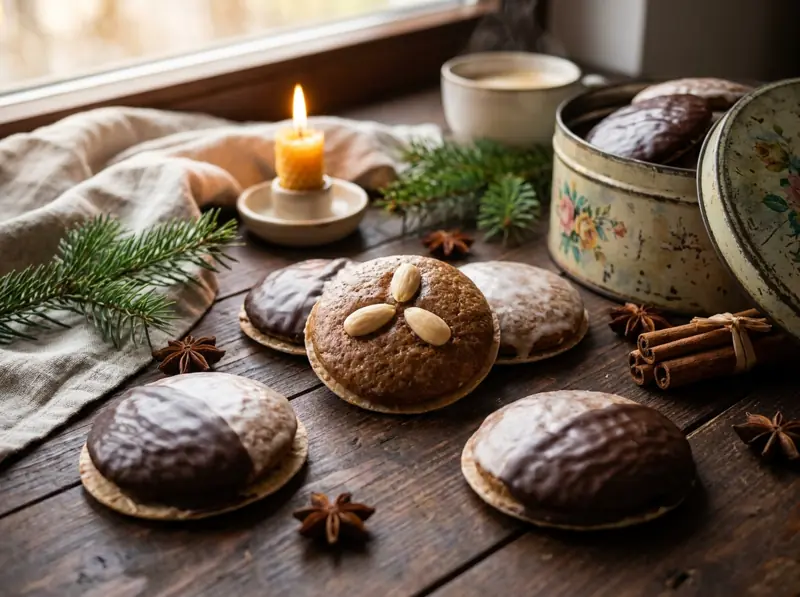
Nürnberger Elisenlebkuchen are soft spiced cakes of ground nuts, honey and candied peel, baked on thin wafers called Oblaten. The Elisen version is the finest grade: by the German food code it must contain at least 25 percent almonds, hazelnuts or walnuts and hardly any flour, which is why the texture is moist and nutty rather than bready. "Nürnberger Lebkuchen" is a protected geographical name in the EU, so the name on a packet means it was made in Nuremberg.
They keep for weeks in a closed tin, and a slice of apple in the tin stops them drying out. That makes them the natural start of the season.
Spekulatius: the biscuit with a picture
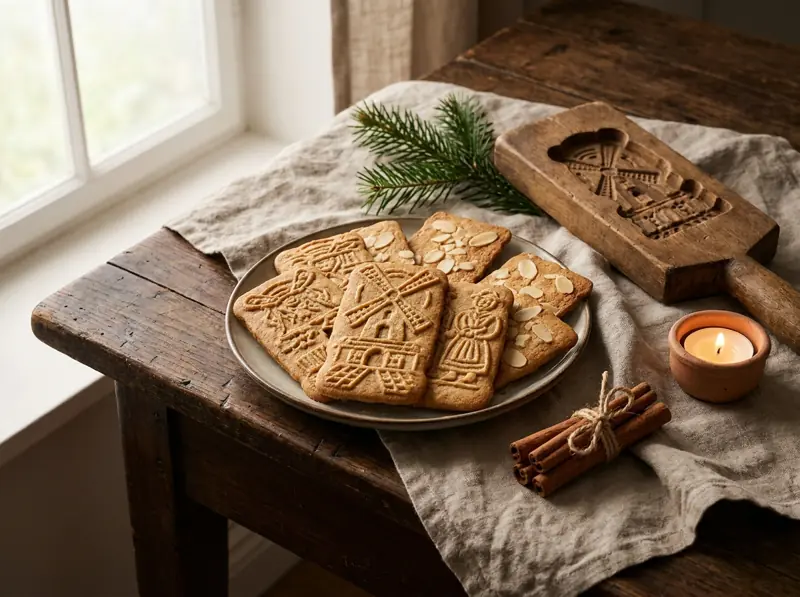
Spekulatius are thin, crisp spiced biscuits pressed into carved wooden moulds, so each one carries a relief: a windmill, a horse, a figure of St Nicholas. They came to the Rhineland from the Netherlands and Belgium, where they are called speculaas, and they belong to St Nicholas Day on 6 December.
The dough needs a night in the fridge, and the spice blend is what makes them: cinnamon first, then clove, cardamom, nutmeg and a little white pepper. If you do not own a wooden mould, an embossed rolling pin or ordinary cutters work; the taste is the same, only the picture is missing.
Zimtsterne: meringue on almonds
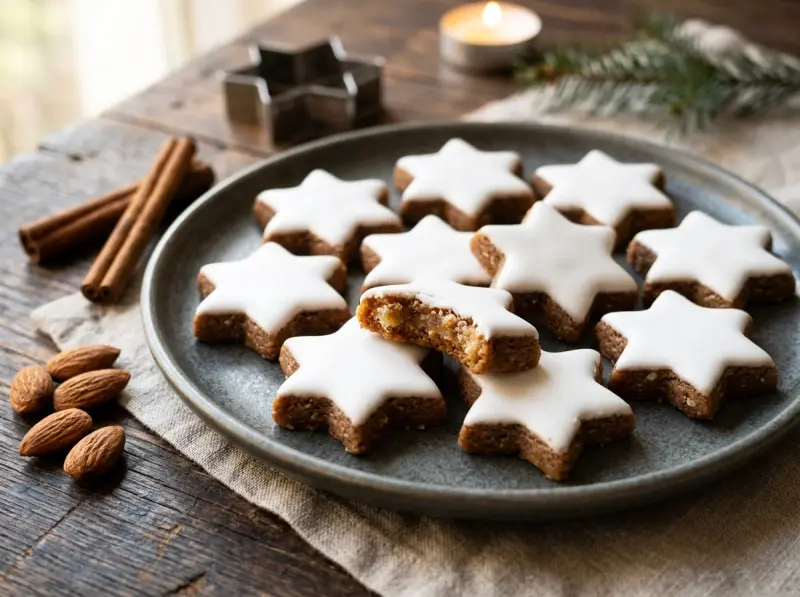
Zimtsterne are cinnamon stars made from a dough of stiff egg white, sugar and ground almonds, with no flour at all, glazed with the same meringue before baking. They bake at a low temperature so the glaze stays snow white and the inside stays soft.
The one step people forget is setting the glaze aside before the almonds go in. Once the nuts are folded in, there is no way back.
Vanillekipferl: the one everyone asks for
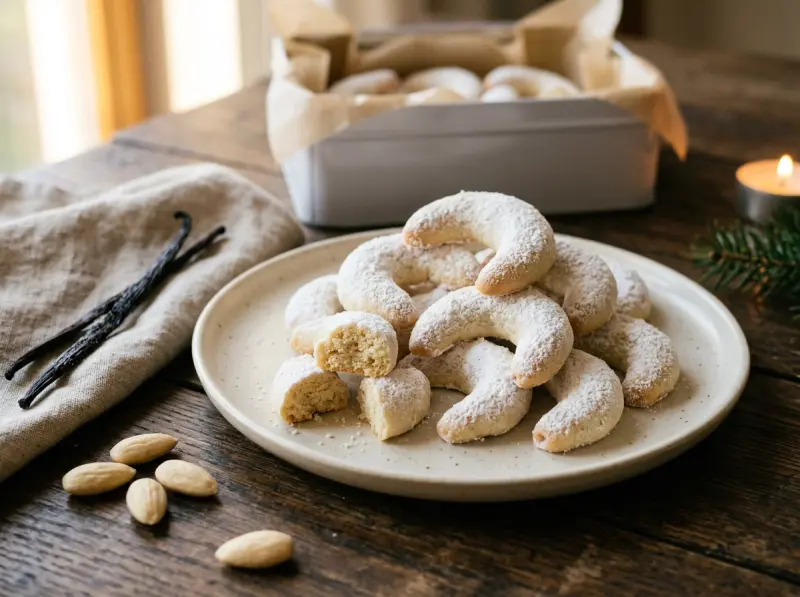
Vanillekipferl are small crescents of short dough made with ground almonds and a lot of butter, rolled in vanilla sugar while still warm. They came to German kitchens from Austria and are, in most family rankings, the favourite on the plate.
They should stay pale: only the tips turn light gold. Browned Kipferl taste of toasted nuts and lose the way they melt in the mouth. The timing of the sugar matters as much as the baking. Straight from the oven they break at a touch; after ten minutes the sugar no longer sticks.
Butterplätzchen: the cookies children cut out
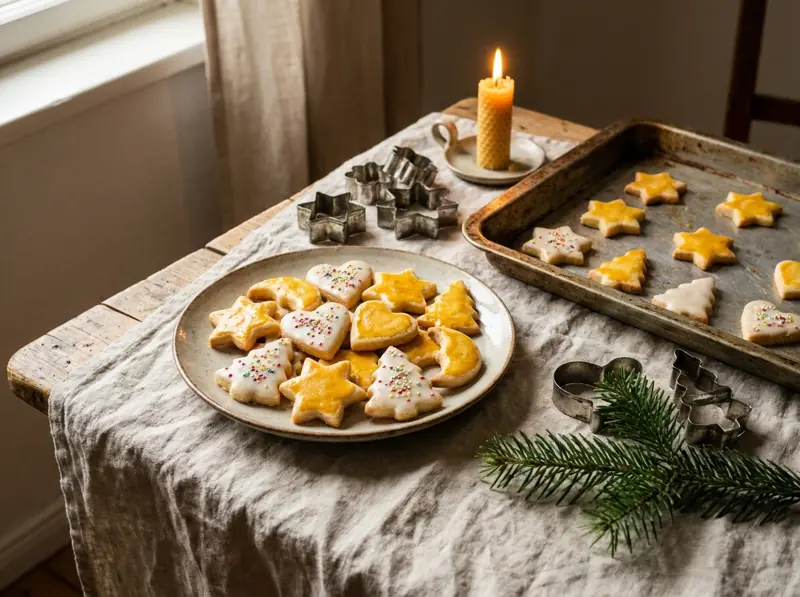
Butterplätzchen are the plain butter cookies cut out with stars, hearts and trees and then glazed or iced. The dough follows the old 3-2-1 rule of German shortcrust: three parts flour, two parts butter, one part sugar, held together with an egg yolk.
Two things keep the shapes sharp: rolling the dough between baking paper so no extra flour goes in, and ten minutes in the fridge after cutting. This is the recipe to bake with children, and the one that disappears fastest.
Spritzgebäck: the one from the piping bag
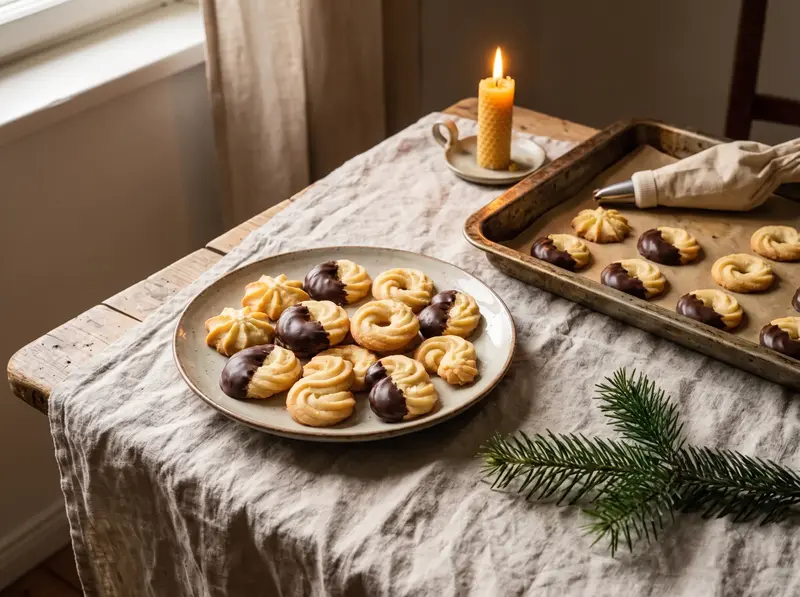
Spritzgebäck is a butter cookie piped straight from a pastry bag with a star tip, in rosettes, rings and the letter S. The dough has to be soft and glossy: stiff dough will not come out of the bag, and dough that is too loose will not hold its ridges.
Put the piped tray in the fridge for 30 minutes before baking, so the grooves stay sharp instead of melting flat. Many people dip half of each cooled cookie in dark chocolate.
Kokosmakronen: the quick one
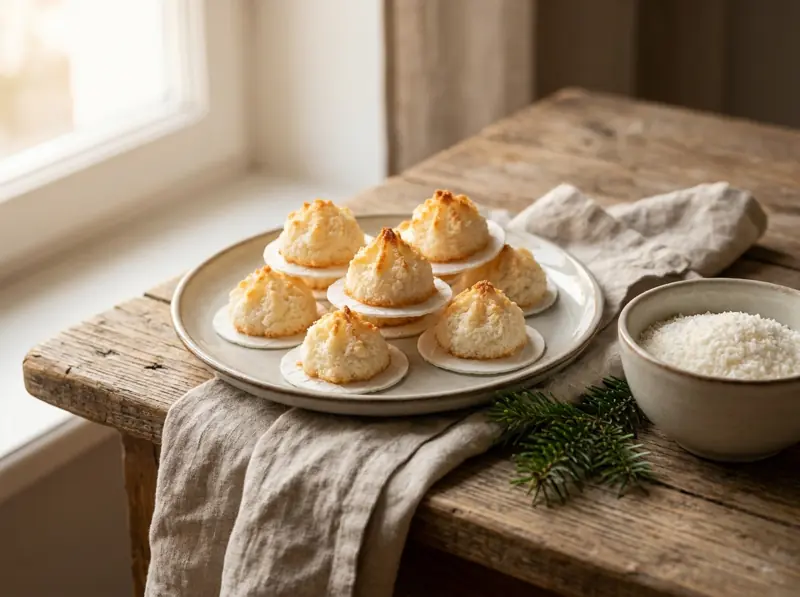
Kokosmakronen are coconut macaroons: egg white beaten stiff with sugar, folded with desiccated coconut, warmed briefly over a water bath and piped onto wafers. They are chewy inside with toasted tips, and they are a good way to use the egg whites left over from Vanillekipferl and Butterplätzchen yolks.
They have nothing to do with the French macaron except the name and the egg white.
How to plan the baking
Bake in order of how long each cookie keeps. Lebkuchen and Spekulatius can be made in November and stored. Zimtsterne and Kokosmakronen keep two to three weeks. Spritzgebäck keeps up to four weeks without the chocolate, so it can be baked in the middle of the season. Vanillekipferl and Butterplätzchen are best within two weeks, so they come last.
Store each kind in its own tin. Soft cookies and crisp ones in one tin end up the same texture: the crisp ones go soft and the soft ones dry out. Line the tins with baking paper, keep them somewhere cool, and only mix the cookies on the plate when you serve them.
A German Bunter Teller usually has four to six kinds, a few pieces of each, with a cup of coffee in the afternoon or a glass of mulled wine in the evening.