
Georgia sits where the Caucasus mountains meet the Black Sea, on the road everyone used — Persians, Byzantines, Mongols, Ottomans, Russians — and the cooking absorbed all of them without turning into any of them. The result surprises people who expect something like Turkish or Middle Eastern food. Georgian cooking is not built on chilli heat or olive oil. It is built on walnuts, on sour fruit standing in for lemon, and on a handful of herbs used in quantities that look like a mistake until you taste the dish.
The other thing that catches people out is how much of it is vegetarian by accident. Long Orthodox fasts run to nearly two hundred days a year, and an entire register of the cuisine exists to feed people through them: vegetables under walnut sauce, bean stews, herb-heavy salads. None of it was designed as diet food, which is why it tastes like something you would order by choice.
The regions disagree with each other, and that is the point
Ask a Georgian for the national dish and you get a regional answer. Mingrelia in the west cooks the spiciest food in the country and puts sulguni cheese into everything. Imereti, next door, uses its own fresh cheese and a gentler hand with pepper. Adjara sits on the coast and bakes bread into the shape of a boat. Kakheti in the east is wine country, and its contribution is meat over vine coals. In the mountains of Pshav-Khevsureti, where nothing grows easily, the dish is a dumpling built to travel.
This matters when you cook from a Georgian recipe, because two versions of the same dish from neighbouring valleys can be genuinely different food rather than variations on a theme.
Walnut is a sauce, not a garnish
In most cuisines nuts are texture, scattered on top at the end. In Georgia the walnut is the body of the sauce, ground until it releases its oil and thinned with broth or water into something with the weight of cream and none of the dairy.
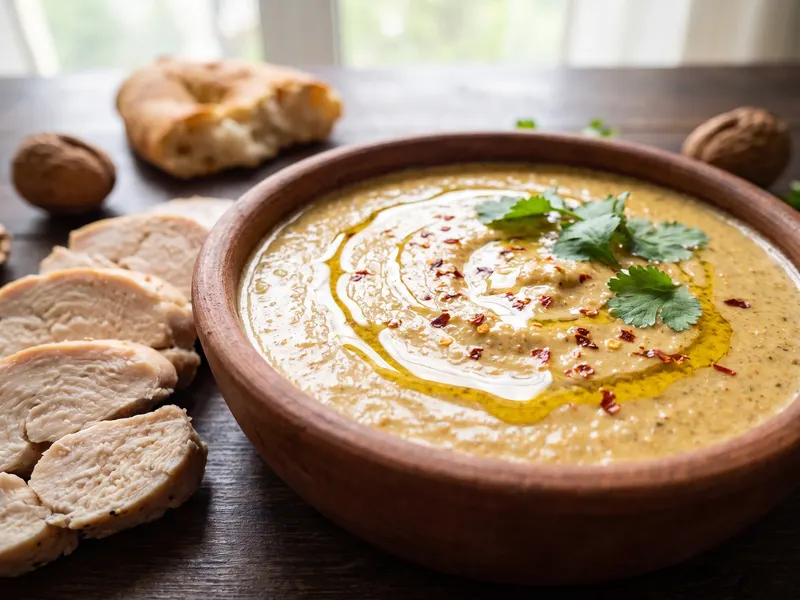
Bazhe is the plain form and the one to learn first: walnuts, garlic, blue fenugreek, marigold, vinegar, water. No cooking at all, no heat anywhere in it. It goes cold over poached fish, boiled chicken or roast vegetables, and it will teach you more about the cuisine in fifteen minutes than any stew.
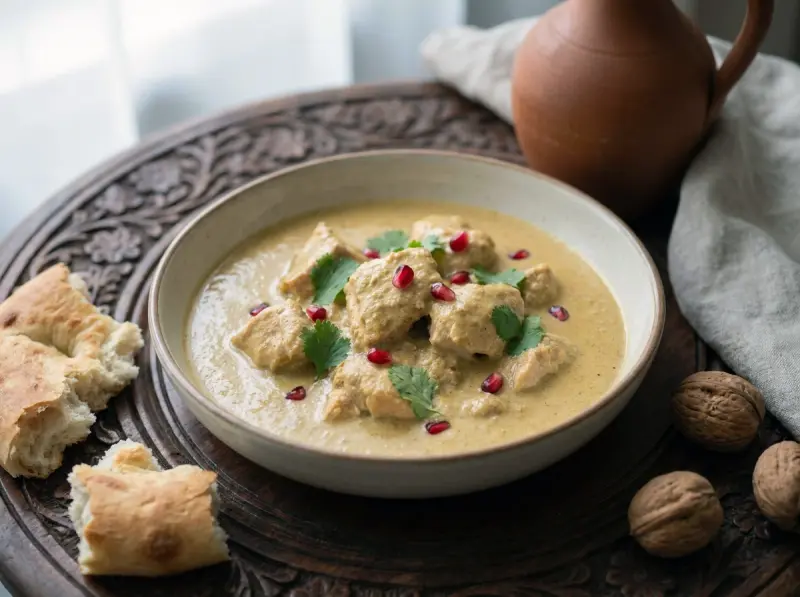
Satsivi is the same idea at feast scale, and its name simply means cold. Poultry is poached, the walnut sauce is loosened with the poaching broth, and the whole thing is chilled until it sets. It is the Georgian New Year dish, made a day ahead by design — which is exactly why it appears on tables where the cook wants to sit down with the guests.
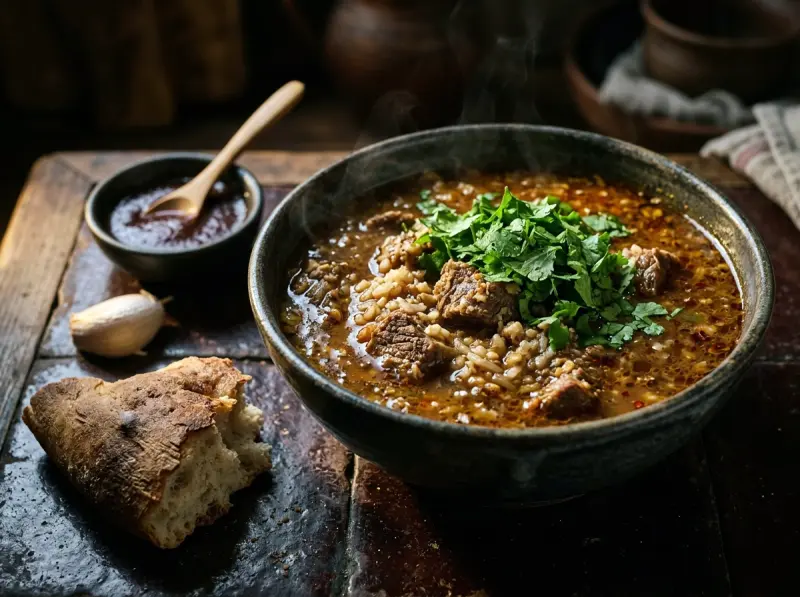
Kharcho puts the walnut into soup, and its sourness comes from tkemali rather than tomato. Recipes outside Georgia get this backwards constantly, add tomato paste, and produce a decent beef soup that is not kharcho.
Sourness does the work lemon does elsewhere
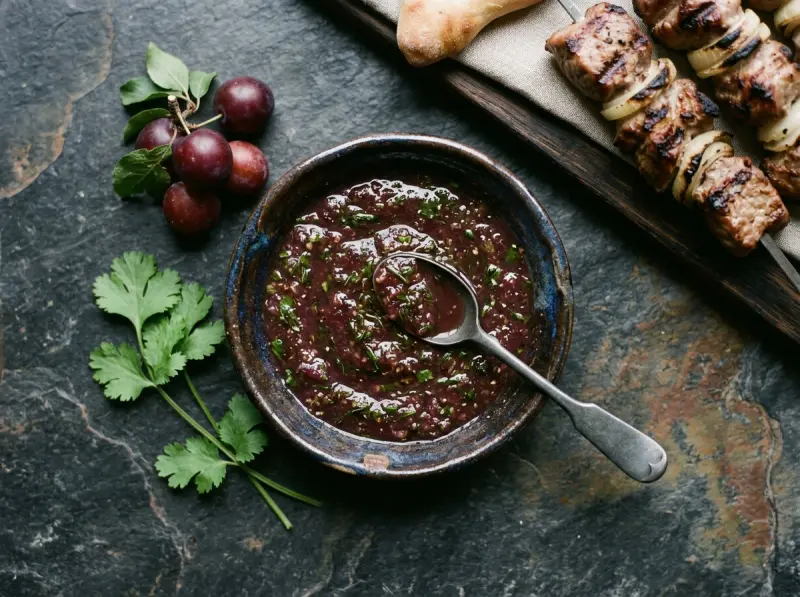
Georgian cooking is sour more often than it is hot, and the sourness is fruit. Tkemali is the sauce that carries it: wild sour plums cooked down with garlic and herbs, made green in spring from unripe fruit and red in late summer from ripe ones. Green goes with chicken and fish, red with beef and potatoes. A Georgian kitchen keeps it on the table the way other kitchens keep ketchup, and it is why so many Georgian dishes need no acid added at the end.
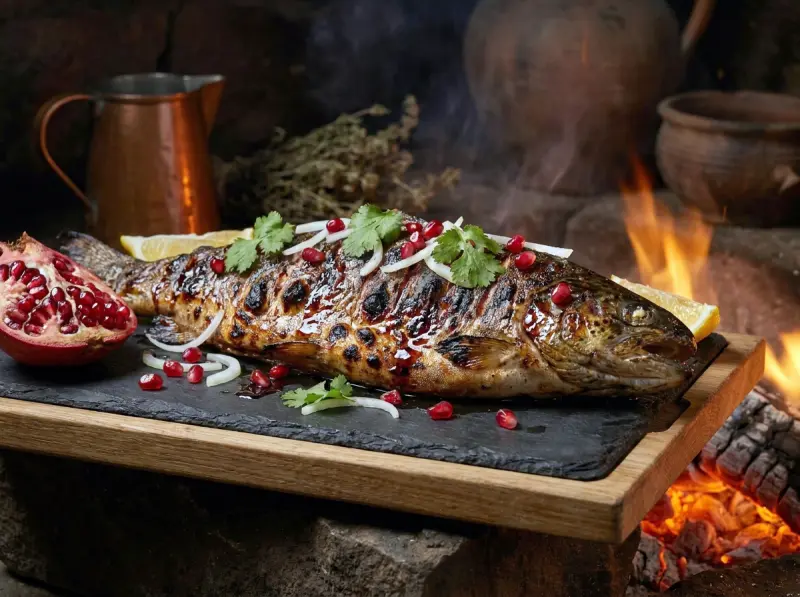
Pomegranate does the same job in a different register. Kalmakhi — mountain trout grilled whole and dressed in reduced pomegranate juice with raw onion and cilantro — is one of the oldest dishes in the repertoire and needs about twenty minutes of actual work.
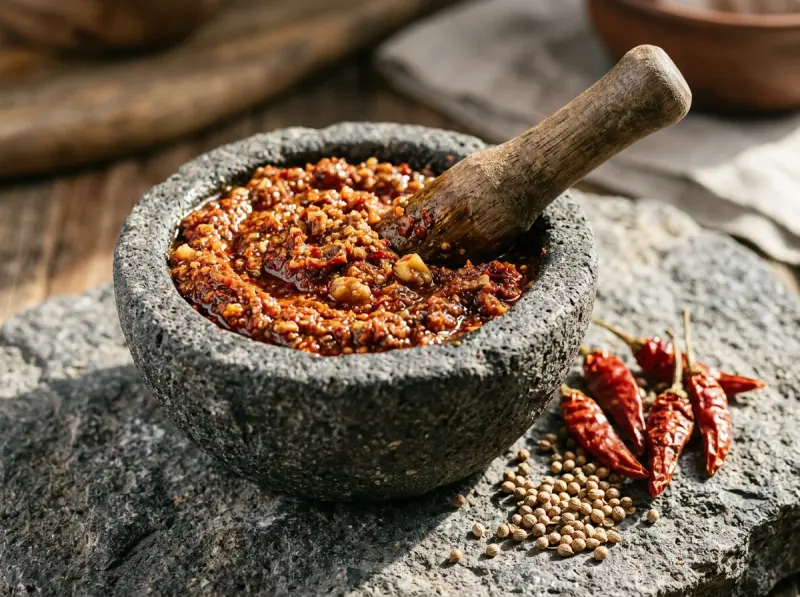
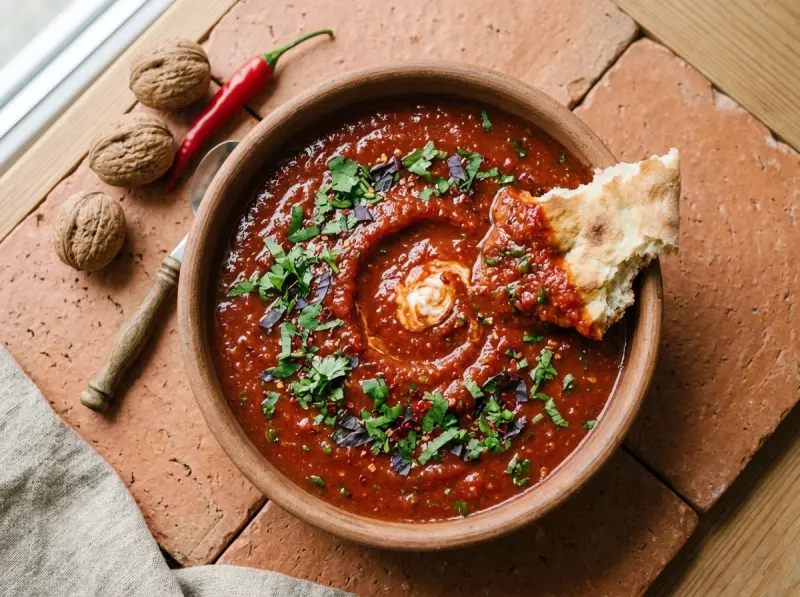
Then there is the pepper end of the shelf. Adjika is a paste, not a sauce: red peppers, garlic, salt and herbs pounded into a thick paste that keeps for months. Satsebeli is the tomato one, thinner, sweeter and the least aggressive of the three. Georgian tables run several of these at once, which is why the food reads as varied even when the meat on the plate is the same.
Khachapuri is a category, not a recipe
Every region bakes its own. Imeruli is a closed round with cheese inside. Megruli is the same with more cheese melted on top. And khachapuri Adjaruli — the one everyone photographs — is an open boat filled with cheese, finished with a raw egg yolk and a knob of butter dropped in as it leaves the oven.
The boat is not decorative. You tear the pointed end off, stir the yolk and butter through the hot cheese with it, and keep tearing pieces from the rim to dip. The dish is designed to be eaten with your hands and to be assembled by the person eating it. A knife and fork will work, but you will have missed the point and the yolk will scramble while you look for cutlery.
Khinkali are counted, not portioned
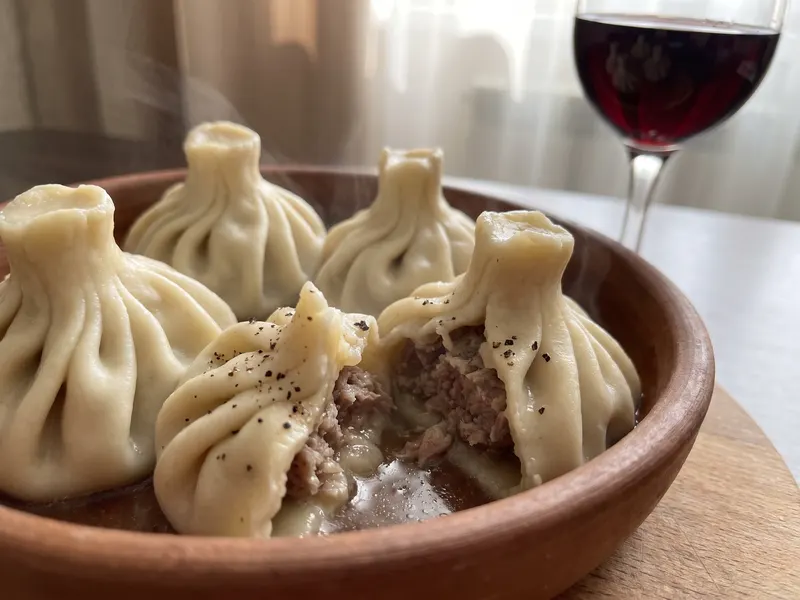
Khinkali come from the mountains and are built to hold hot broth inside the dough. The filling goes in raw and loose, almost wet; the liquid is made by the meat as it cooks, not added.
Eating them has a method. Hold the top knot, bite a small opening in the side, drink the broth first, then eat the body. The knot itself is not eaten — it stays on the plate, and the plate is how the table keeps score. Ten is a normal order for one person. The stack of knots at the end is the receipt.
The pleating is the skill: a well-made khinkali carries somewhere between eighteen and twenty folds, and each one is a place where a thin dough could tear under the weight of the broth.
The spice shelf is short, and two of its names are traps
Khmeli suneli is the blend that makes Georgian food taste Georgian, and the two ingredients that matter most are the ones most often mistranslated.
Utskho suneli is blue fenugreek, Trigonella caerulea, and it is not the same plant as ordinary fenugreek. Ordinary fenugreek is harsher and more bitter; swap it in and the dish turns medicinal in a way that is hard to diagnose afterwards. Imeretian saffron is not saffron at all but dried marigold petals, which give colour and a faint muskiness and cost a fraction of the real thing. A recipe that calls for saffron threads in a Georgian dish has been translated by someone working from a dictionary.
The fresh side of the shelf is cilantro, used by the handful rather than the sprig, plus blue fenugreek's dried leaves, coriander seed and dried marigold. Heat, when it appears, comes from dried red pepper and stays modest outside Mingrelia.
The supra has a chairman
A Georgian feast is a supra, and it is a structured event rather than a long dinner. A tamada — the toastmaster — is chosen at the start and runs the table: he sets the sequence of toasts, and the toasts have an order that begins with peace and ends with the people who are not at the table any more. Guests can be handed an alaverdi, the right to continue the toast in their own words.
The food arrives all at once and stays on the table, dishes stacked on dishes as the evening goes on. Nothing is served in courses, and there is no moment when the table is cleared for dessert. It is also worth knowing that beer is not toasted with — a beer toast is reserved for enemies, and the joke has enough teeth that you should not test it on a first visit.
Rtveli is why autumn is the season
September and October are rtveli, the grape harvest, and it is the closest thing Georgia has to a national holiday that no one declared. Families come back to the villages, the grapes go into the qvevri — the clay vessel buried in the ground where Georgian wine has been made for eight thousand years, on skins and stems, which is where the orange wines come from — and the cooking that surrounds it is the cooking this article is about.
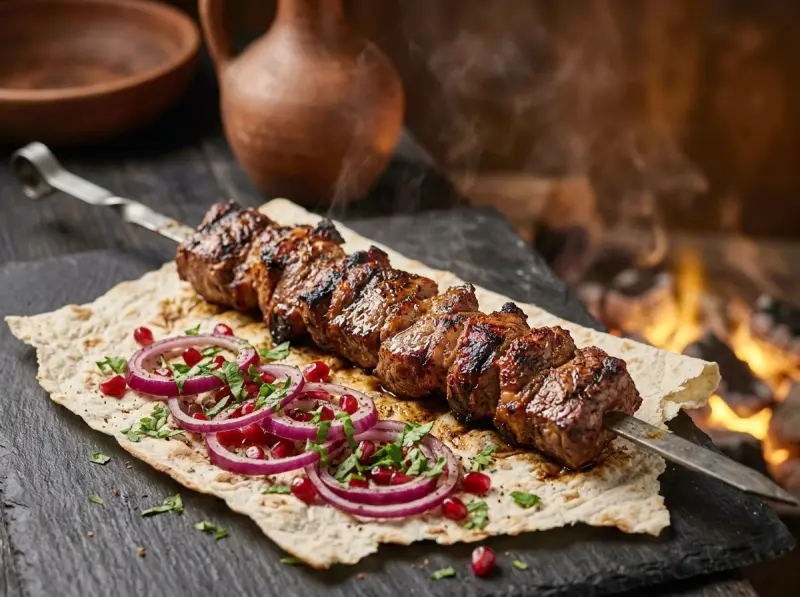
Mtsvadi is the dish of that week. Pork neck cut into large cubes, held in pomegranate juice and onion, grilled over vine cuttings left from the pruning. The vine wood is not an affectation: it burns fast and hot, gives a sweeter smoke than charcoal and is standing in the yard for free in October.
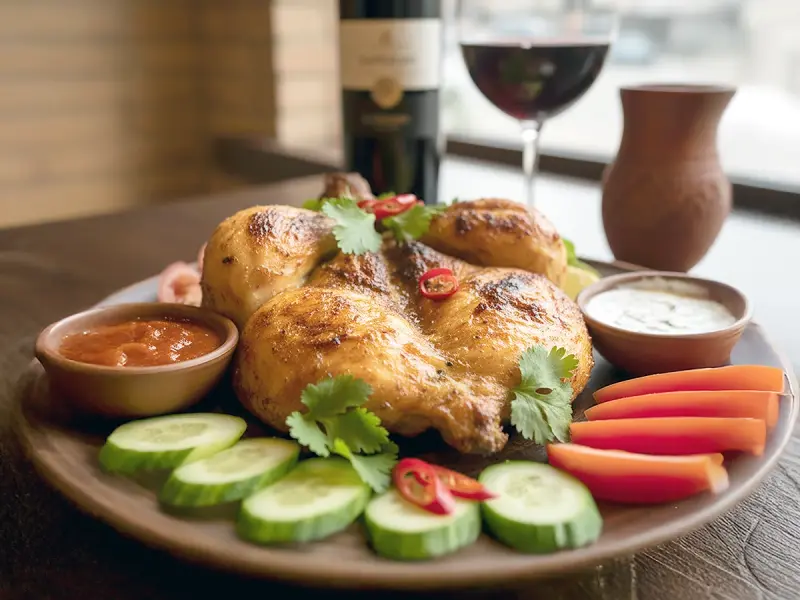
Chicken tabaka belongs to the same season and the same logic. A whole bird is flattened and cooked under a weight in a heavy pan — tapa, the pan, is where the name comes from, not tobacco — so the skin crisps evenly across the whole surface at once.
Where to start
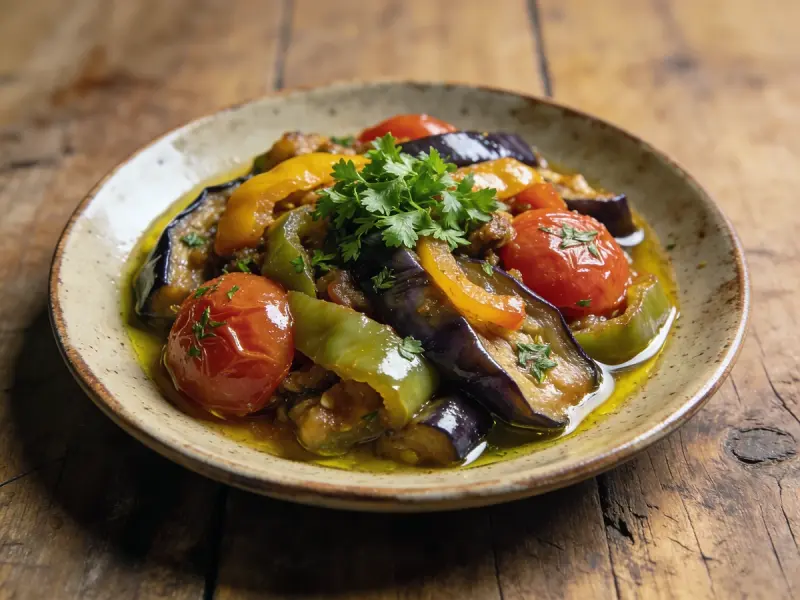
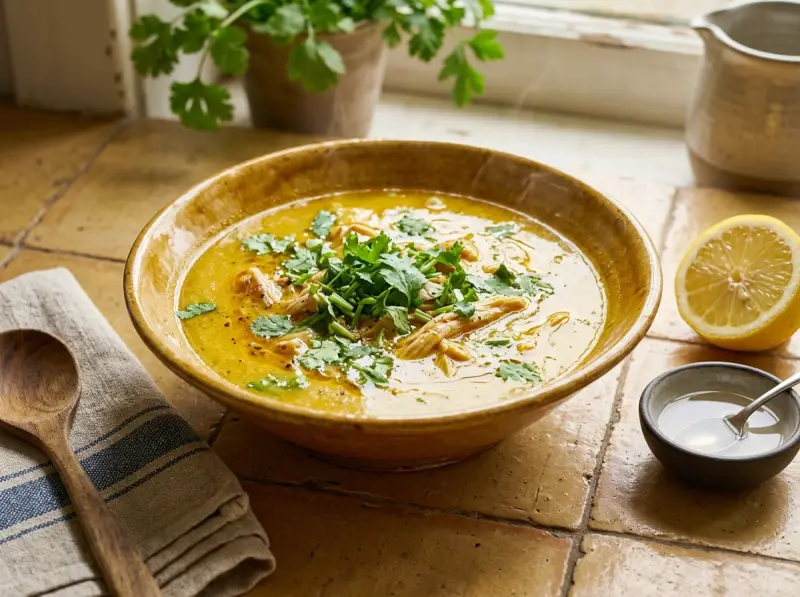
If you cook one thing, make bazhe: it takes fifteen minutes, needs no heat and explains the cuisine. If you want a weeknight dinner, ajapsandali — the aubergine and pepper stew that eats as well cold as hot — is vegan without trying and better on day two. Chikhirtma, a chicken soup thickened with egg yolk and no vegetables at all, is the one to make when someone is ill.
And if you are cooking for a table rather than a plate, make satsivi the day before, put tkemali and adjika out in small bowls, and let people build their own. That is closer to how the food is actually eaten than any single dish on its own.