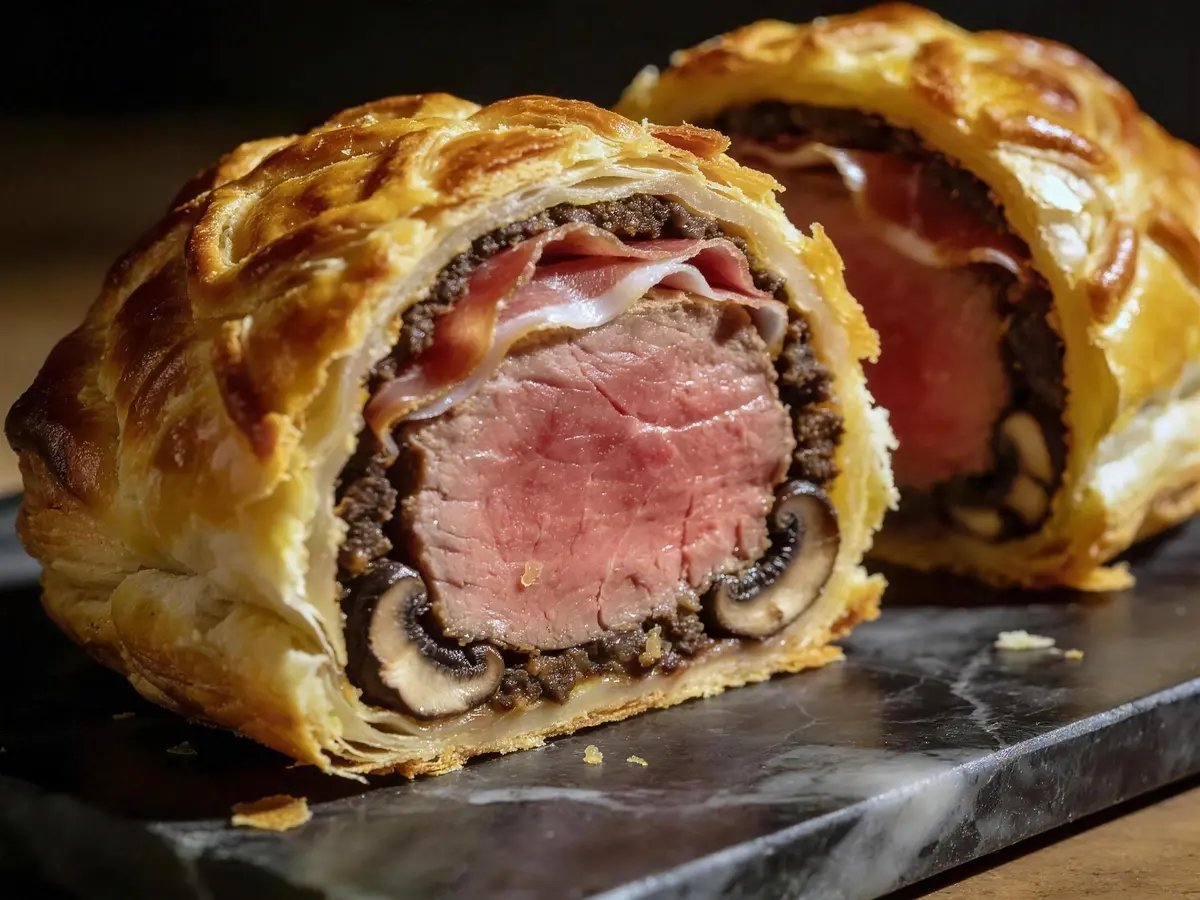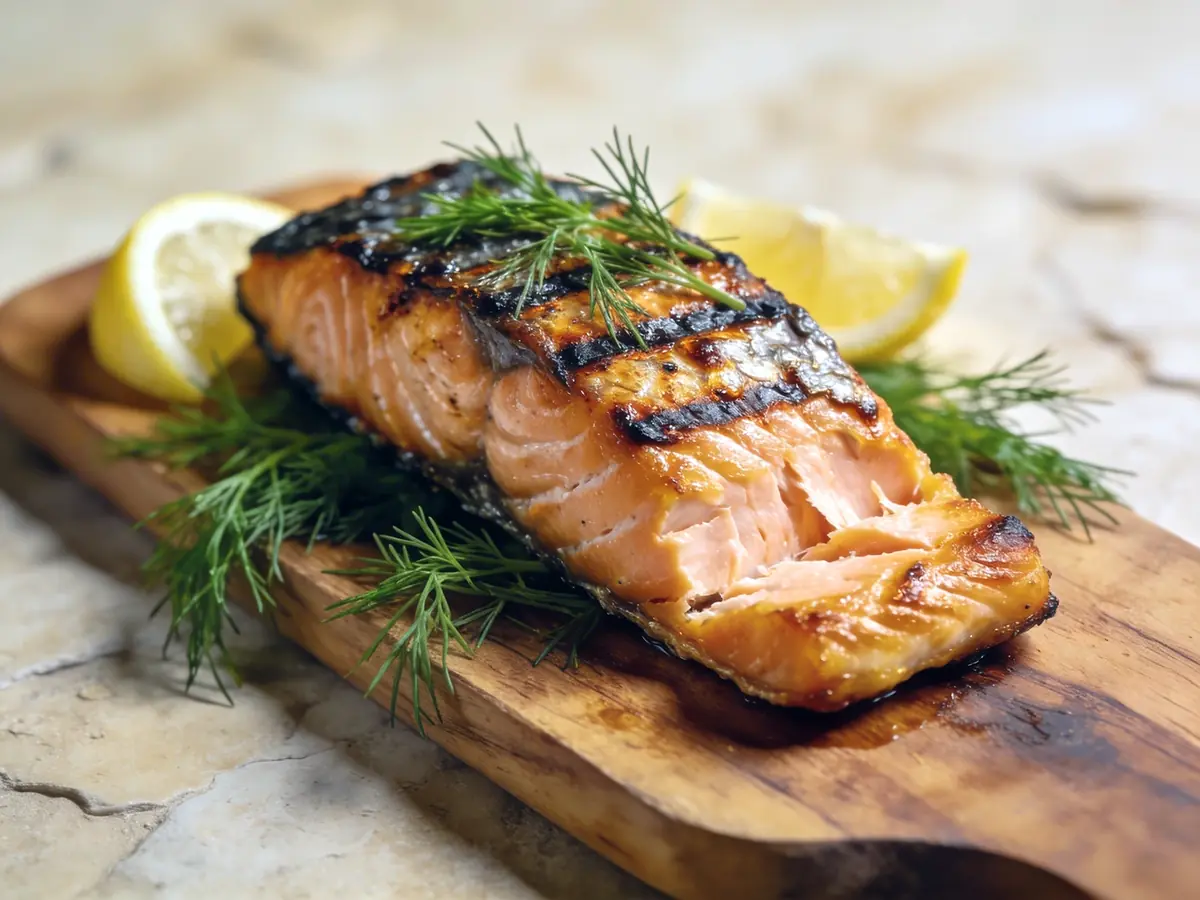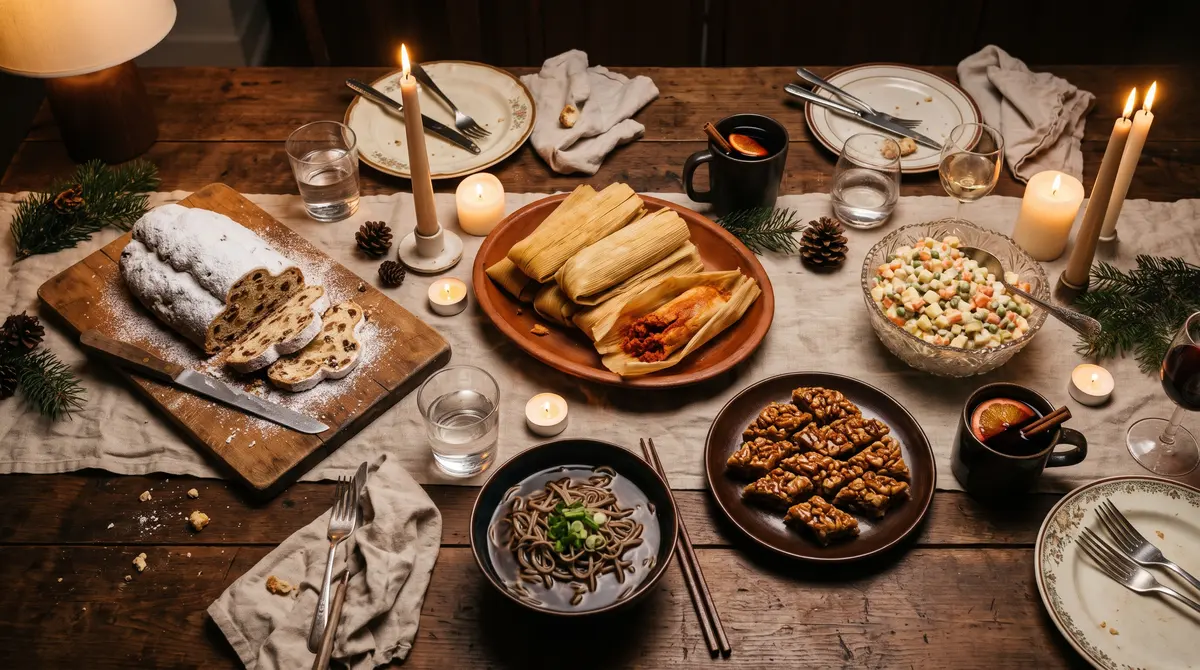
This is a guide to what people eat at the winter holidays in different countries, from late November 2026 to mid-January 2027, in the order the dates come. It starts with Thanksgiving in the United States on 26 November and goes through Hanukkah, St. Nicholas Day and Advent in Germany, Las Posadas in Mexico, Christmas Eve in Ukraine, Christmas in Bologna, then New Year's Eve and New Year in Japan, Germany, Russia and Georgia. For each holiday you get a sentence or two on what it is, what goes on the table and why, and the recipes from our site that fit it.
Thanksgiving in the United States (26 November 2026)
Thanksgiving is the American harvest holiday, and the federal holiday calendar puts it on Thursday 26 November in 2026. The meal is built around a large roast turkey, and many of the side dishes come from plants native to the Americas, cranberries and pumpkin among them. Menus printed as far back as 1887 already list roast turkey, cranberry sauce and mashed potatoes.
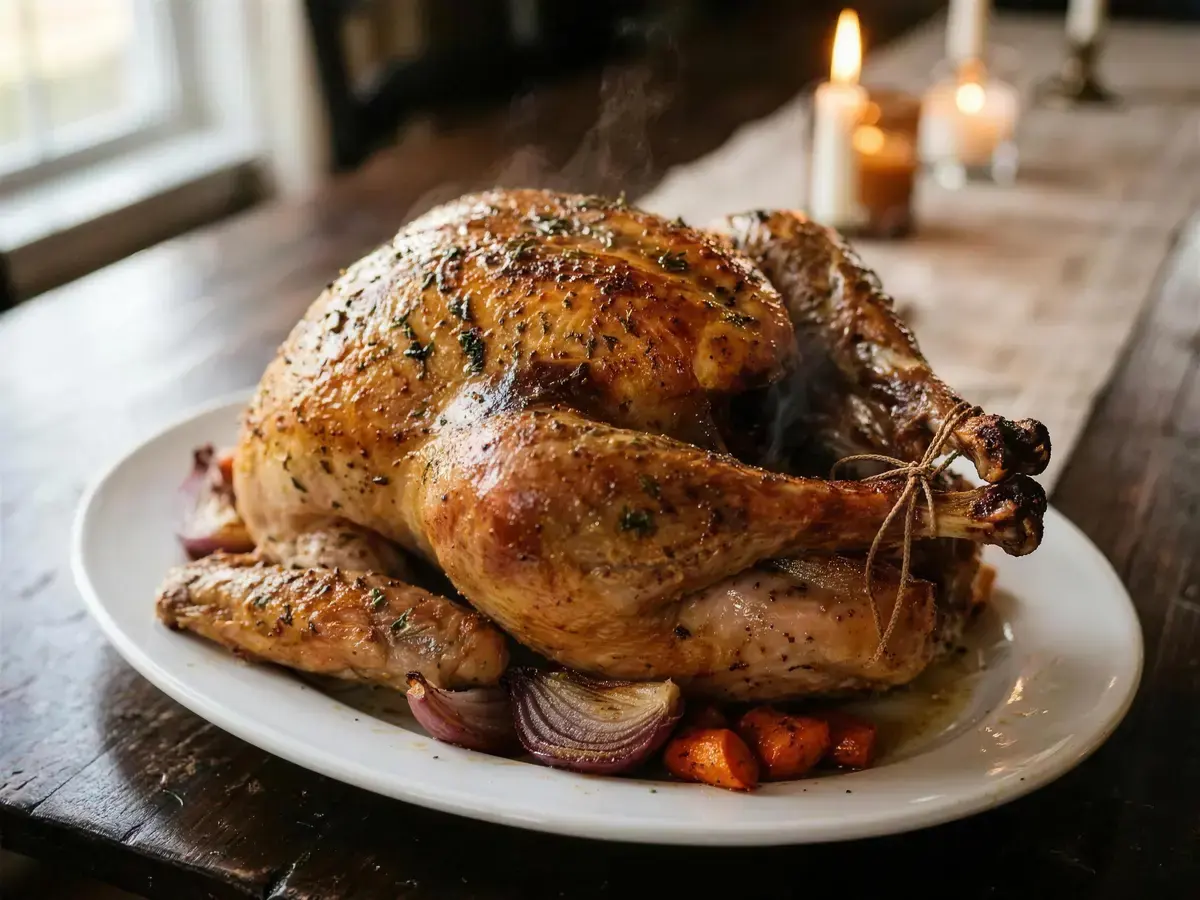
Our roast turkey is a 5.4 kg bird, dry-brined with plain salt one to two days ahead and roasted until the thigh reads 74°C. It feeds 10, and its pan juices go into the gravy for our mashed potatoes. The cranberry sauce takes 15 minutes and keeps for up to 10 days in the fridge, so it is the one thing you can finish in the week before. Cornbread stuffing bakes in its own dish rather than inside the bird, which is how the USDA advises it. For dessert there is pumpkin pie, a spiced custard in a blind-baked crust that needs two hours to cool before it slices cleanly. The full plan with timings is in our Thanksgiving dinner menu.
Hanukkah: Jewish Festival of Lights (4–12 December 2026)
Hanukkah is the eight-day Jewish Festival of Lights. In 2026 it begins at sundown on Friday 4 December and ends at nightfall on Saturday 12 December. The food custom comes from the story at its centre, one small jar of oil that burned for eight days, so people eat things fried in oil: latkes, which are potato pancakes, often with applesauce or sour cream, and sufganiyot, jam doughnuts. Cheese dishes are customary too.
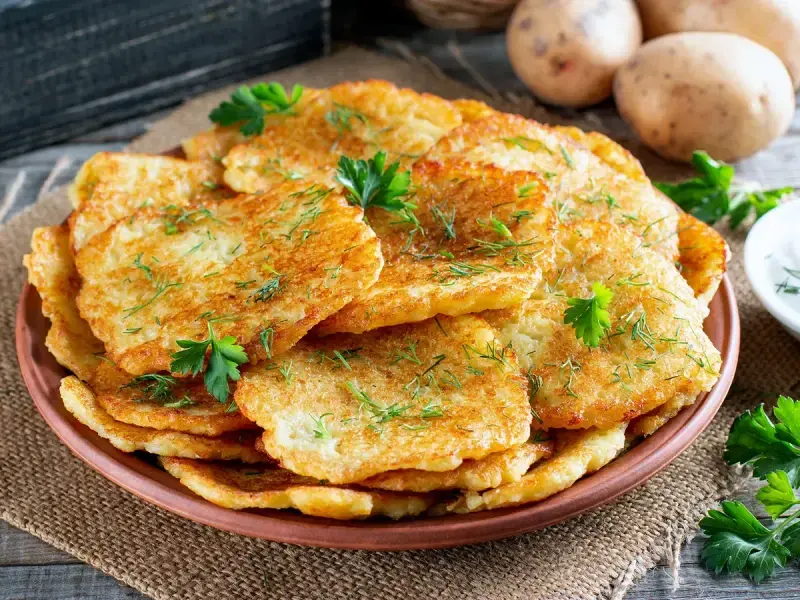
We don't have a latke recipe yet. The closest thing on the site is draniki, Belarusian potato pancakes made the same basic way: grated potato and onion, squeezed hard, then fried in about 1 cm of hot oil, three to five minutes a side. They are not a Hanukkah dish and the seasoning is not the same, but the method carries over. The word latke itself comes from Yiddish and, before that, from the East Slavic word for a small fried pancake.
St. Nicholas Day in Germany (6 December)
On the evening of 5 December, German children put a shoe or boot outside the door, and in the morning of the 6th, St. Nicholas Day, they find it filled. Chocolate Nikolaus figures are a common gift. In many regions the bakery also sells a yeast-dough man with raisin eyes: the Weckmann, also called Stutenkerl or Klausenmann, the last after St. Nicholas himself. The little clay pipe in his arm is said to stand for a bishop's staff.
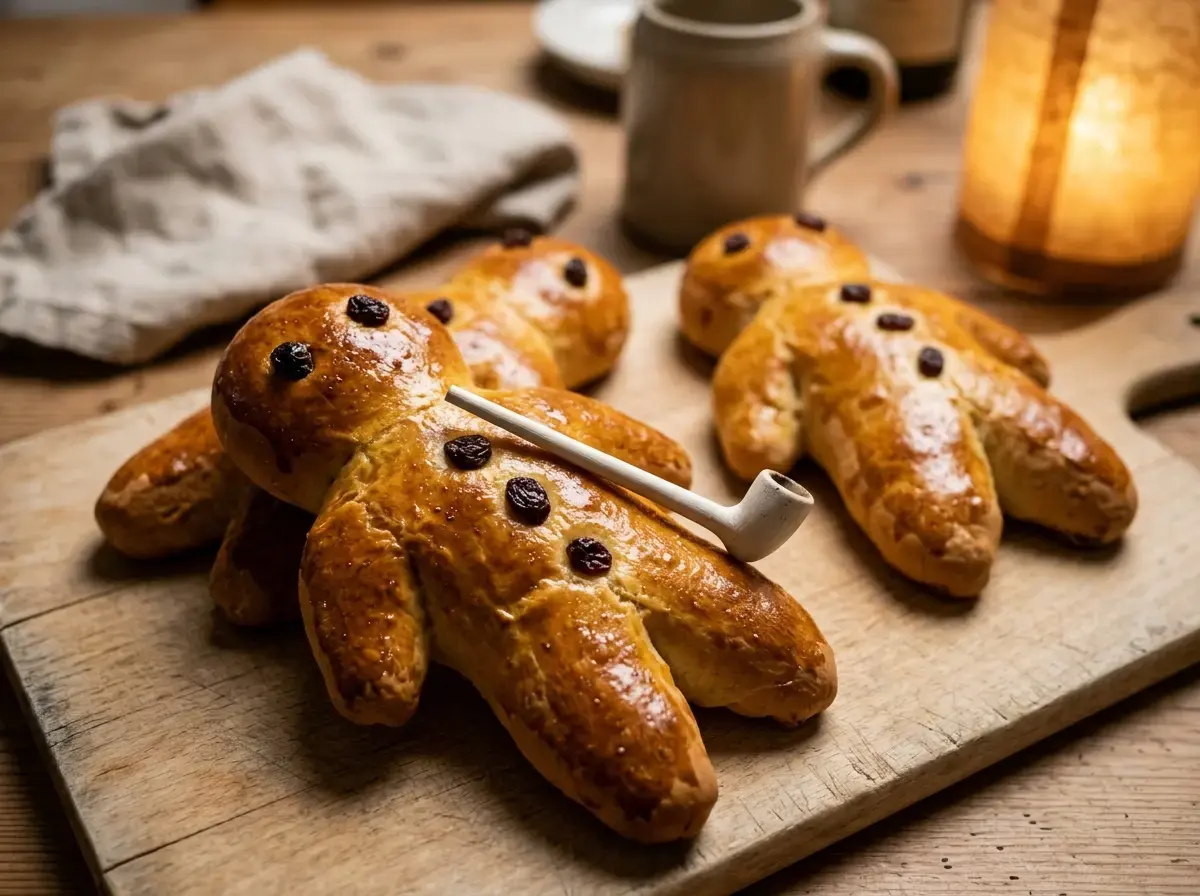
Our Weckmann is a plain sweet dough of milk, butter and egg with no spices. It rises once, for 30 to 45 minutes, and the first warm bun comes out about an hour and a half after you start. In the Rhineland the same bun is given out earlier, on St. Martin's Day, 11 November.
Advent and Christmas in Germany (December)
Advent, the weeks of waiting before Christmas, is Christmas market season in Germany. Glühwein, hot spiced red wine, is traditionally drunk in Advent, mostly from market stalls. Our mulled wine is held near 70°C on the lowest flame and never boiled, because boiling browns the wine and flattens it.
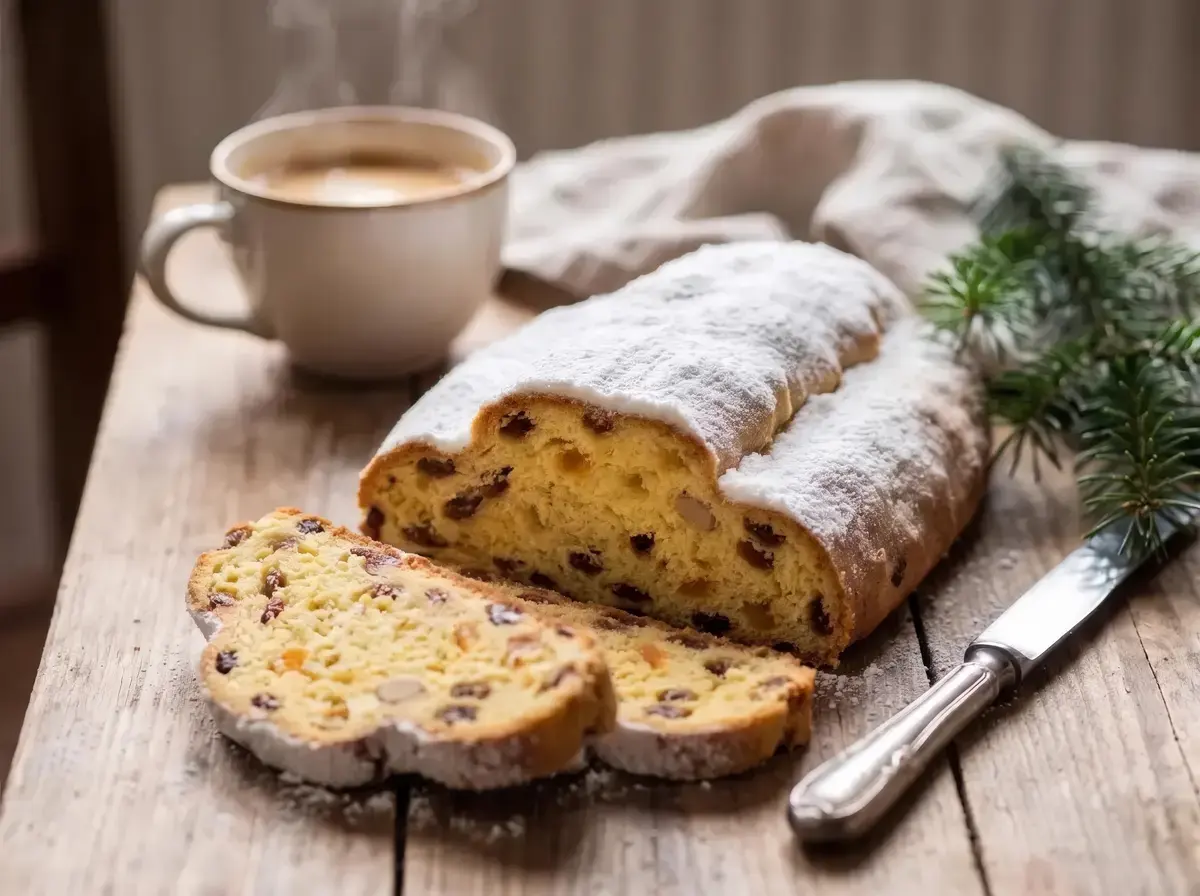
Stollen is the Advent bake. Germans make it weeks before Christmas and let it rest. Our Christstollen bakes for about 50 minutes, 10 at 200°C and 40 at 170°C, then gets brushed with melted butter, covered in powdered sugar and left wrapped for two to three weeks. Only loaves from Dresden and the towns around it may be sold as Dresdner Stollen. The home dessert of the season is the Bratapfel, a baked apple filled with marzipan, toasted almonds and rum-soaked raisins, ready after 35 minutes in the oven. Cookies get their own guide: German Christmas cookies covers Vanillekipferl, Zimtsterne, Lebkuchen and the rest of the cookie tin.
Las Posadas and Nochebuena in Mexico (16–24 December)
Las Posadas are nine nights of processions before Christmas, from 16 to 24 December. Each night people walk with candles behind figures of Mary and Joseph, sing at a door to ask for lodging, are let in and stay to eat. Mexico's Ministry of Culture traces the custom to the colonial "Misas de Aguinaldo", and lists the food that goes with it: ponche, a hot fruit punch, atole, buñuelos and tamales. The last posada falls on Nochebuena, Christmas Eve, the night of the biggest dinner.
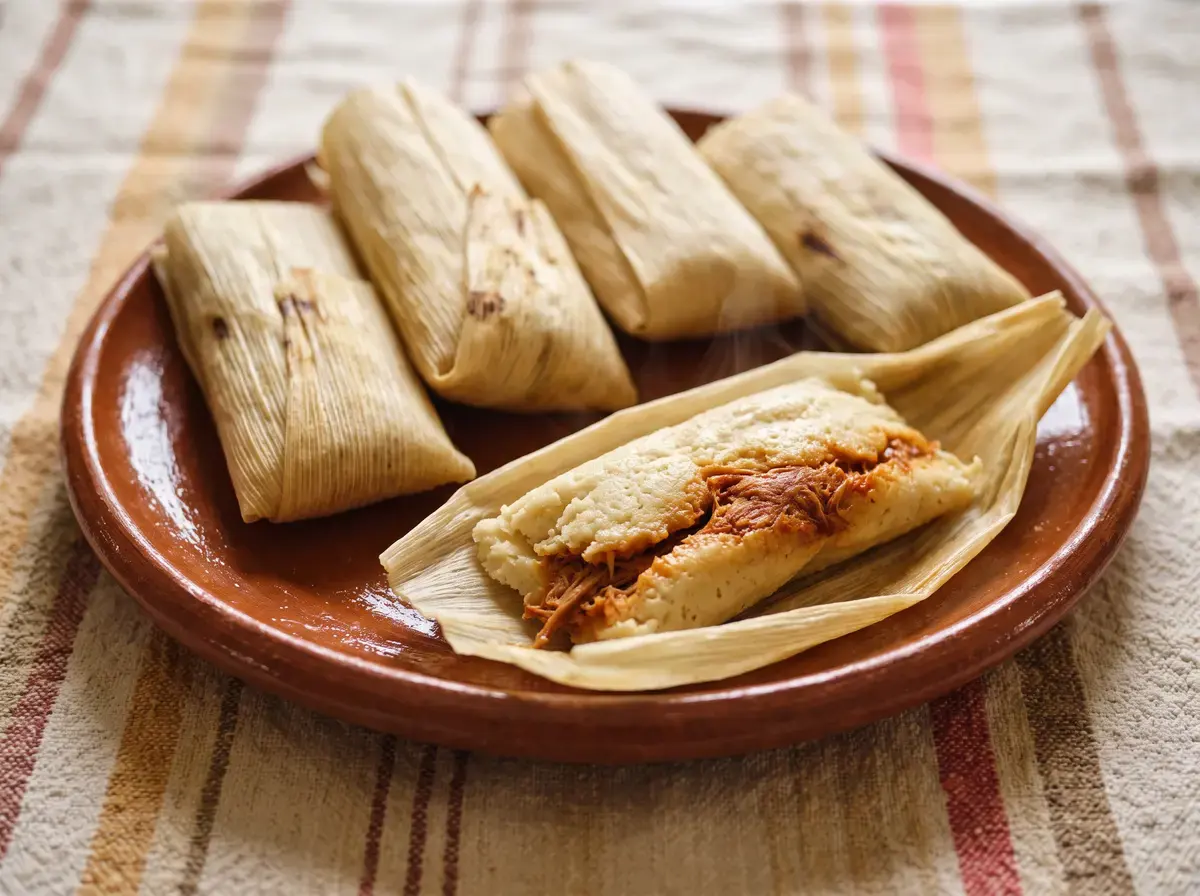
Tamales are the dish people make together, in batches big enough that the cooking becomes a gathering of its own, the tamalada. They come back on the table at the Nochebuena dinner after the last posada, next to the ponche. Our red pork tamales make a batch of 24: pork shoulder in a guajillo and ancho chile sauce, wrapped in masa beaten with lard and the pork broth. There is a simple test for the masa. Drop half a teaspoon into a glass of cold water, and if it floats, the tamales will be light. They steam standing upright for 75 minutes, and they are done when the husk peels away cleanly. Set aside about 4½ hours, most of it simmering and steaming, which leaves plenty of time for the talking.
Sviatvechir: Christmas Eve in Ukraine (24 December, or 6 January)
Sviatvechir, the Holy Evening, is the Ukrainian Christmas Eve supper. In 2023 the Orthodox Church of Ukraine and the Ukrainian Greek Catholic Church moved their fixed feasts to the new calendar, so in 2026 most Ukrainian families sit down to it on Thursday 24 December. Communities that still follow the Julian calendar keep the older date, 6 January, the eve of Christmas on 7 January. The supper is meatless, traditionally twelve dishes, and the centre of the table is kutia, boiled wheat with honey, poppy seeds and nuts.
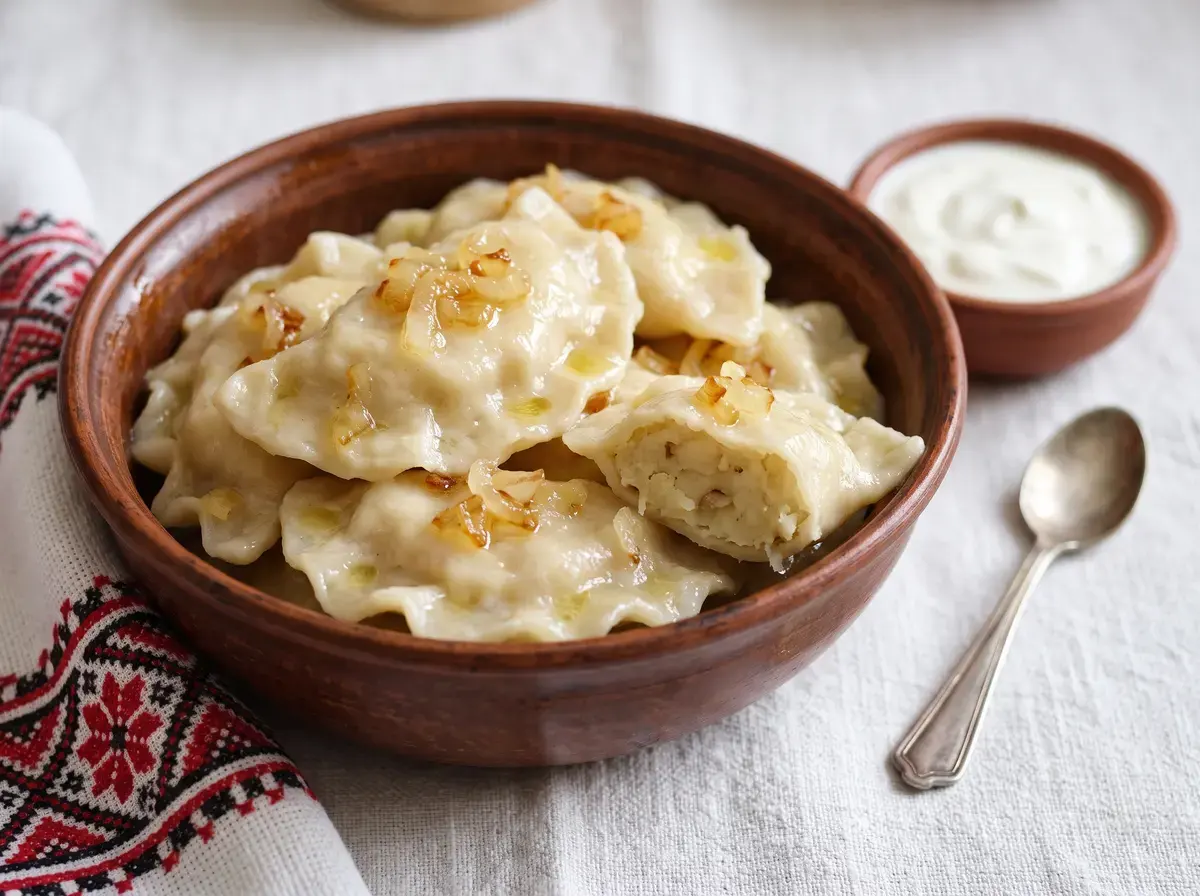
Varenyky with potato or cabbage are on almost every list of the twelve. Our varenyky with potatoes suit the fasting table as written: the dough is flour, hot water and oil with no egg, the filling is mashed potato with fried onion, and the dough rolls out to 1.5 mm and is cut with an 8 cm glass. For a lenten supper, leave out the sour cream we serve them with; the fried onion poured over the top is enough.
Christmas in Italy: Bologna and Modena (25 December)
In Bologna and Modena, the dish that cannot be missing from Christmas lunch is tortellini in brodo, small rings of filled egg pasta served in clear broth. Some families keep it for the big dinner on New Year's Eve instead. Bologna registered the filling at its Chamber of Commerce on 7 December 1974, and the full recipe in 2008.
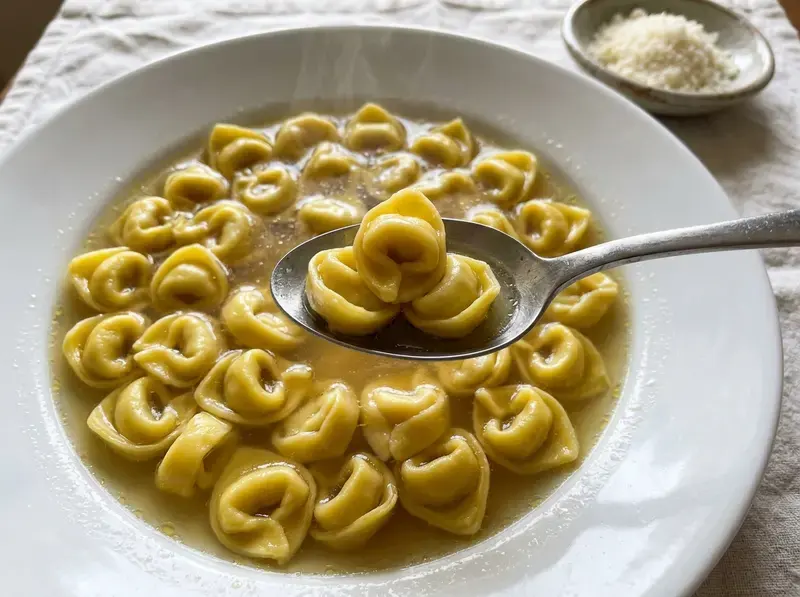
Our tortellini in brodo stays close to the registered filling: pork loin, prosciutto, mortadella and Parmigiano Reggiano. The beef and chicken broth simmers for 3½ hours, and the filling and pasta are made inside that time, so the whole thing takes about 4½ hours. Making the filling the day before splits the work in two.
Ōmisoka: New Year's Eve in Japan (31 December)
Ōmisoka is the last day of the year in Japan, and in the evening, before midnight, families eat a bowl of toshikoshi soba, "year-crossing noodles". Japan's agriculture ministry says the custom began in the Edo period. The long, thin noodles are eaten as a wish for a long life, and because buckwheat noodles break more easily than others, they also stand for cutting away the troubles of the old year.
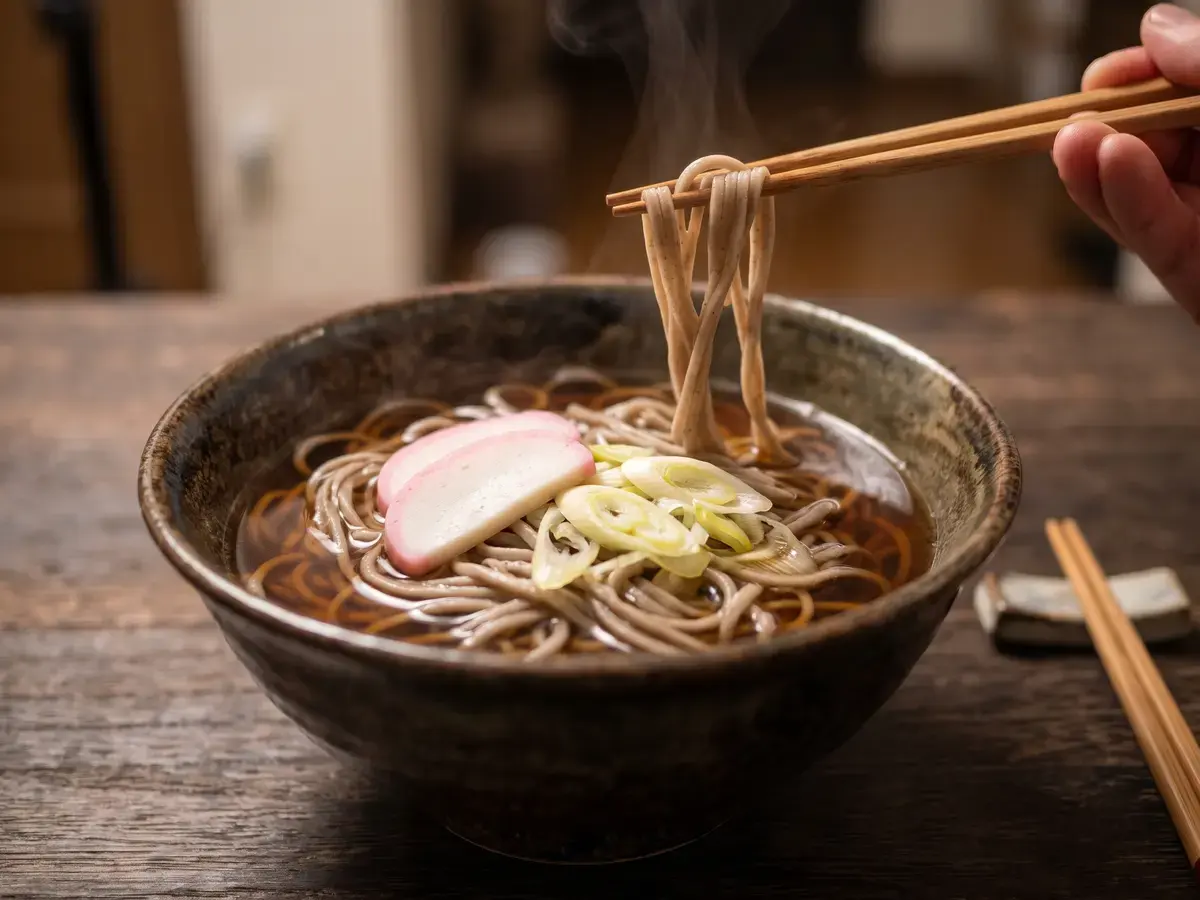
Any soba soup counts. Our toshikoshi soba is kake soba, the plainest kind: dried buckwheat noodles in a hot broth of kombu and bonito dashi with soy sauce and mirin, topped with negi and kamaboko fish cake. It takes about 35 minutes, dashi included. Buckwheat is a serious allergen, so check with guests first.
Silvester: New Year's Eve in Germany (31 December)
Germans call New Year's Eve Silvester, and in many homes the raclette grill comes out for it, as it does at Christmas. The meal cooks itself at the table. Everyone slides a slice of cheese into a small pan under the grill and pours it over boiled potatoes, with gherkins and pickled onions on the side, while vegetables sizzle on the hot plate on top.
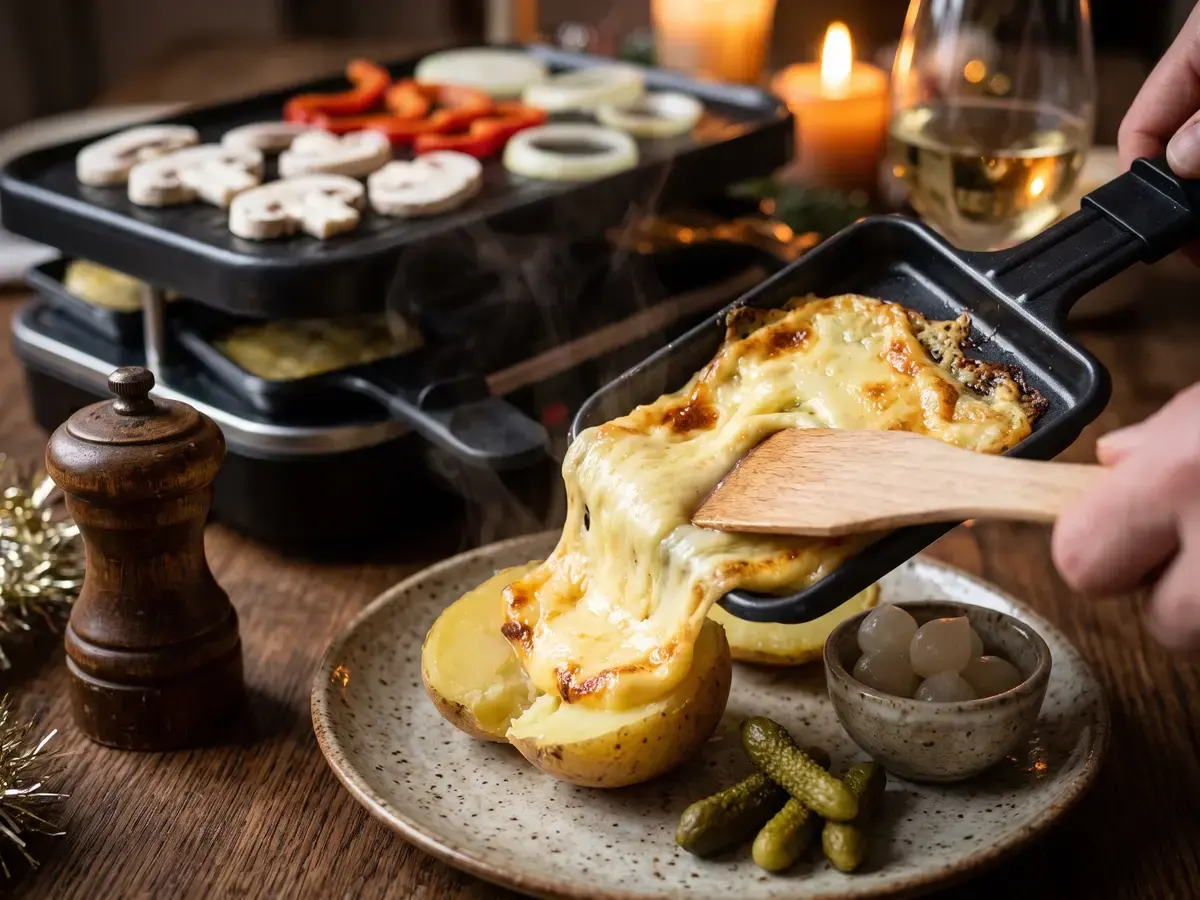
Raclette is Swiss, from the canton of Valais, and the name comes from the French racler, to scrape. In the classic Swiss version only the cheese goes into the pan; baking potatoes and vegetables under the cheese is the German home habit. From cold water to the first pan of melted cheese takes about 50 minutes, which suits a long evening that has to last until midnight.
Novy God: New Year in Russia (31 December)
New Year's Eve, Novy God, is the main winter holiday in Russia. Olivier salad has been part of it since Soviet times, on a par with the bottle of sparkling wine and the bowl of mandarins. Its partner is herring under a fur coat.
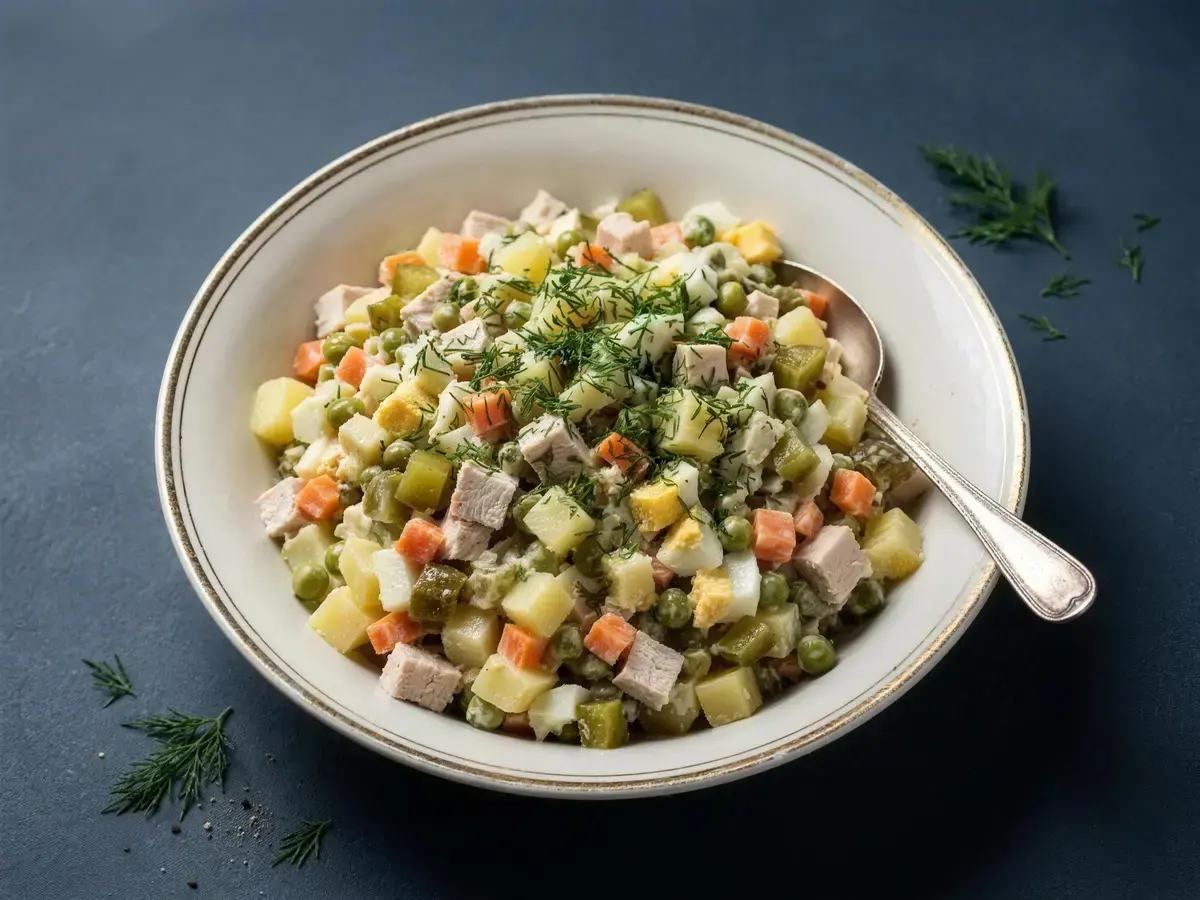
Our Olivier salad is potato, carrot, egg, pickles, peas and chicken, all cut to the same 1 cm dice and dressed with mayonnaise; it needs at least an hour in the fridge and tastes better the next day. Herring under a fur coat is built in layers in a ring, salted herring at the bottom and grated beetroot on top, and chills overnight so the layers set together. Kholodets, meat jelly, is the dish you start the day before: the meat soaks for 3 hours, simmers for about 7, and the broth sets in the fridge by itself, with no gelatine, from the collagen in the trotters.
New Year in Georgia (31 December to 14 January)
The Georgian New Year season runs long: after the night of 31 December come two weeks of visits and toasts, up to Old New Year on 14 January. Gozinaki is the sweet for it, walnuts cooked in honey and cut into diamonds. Culinary Backstreets, writing from Tbilisi, says families serve it first at midnight, so that the year goes as sweetly as that first bite.
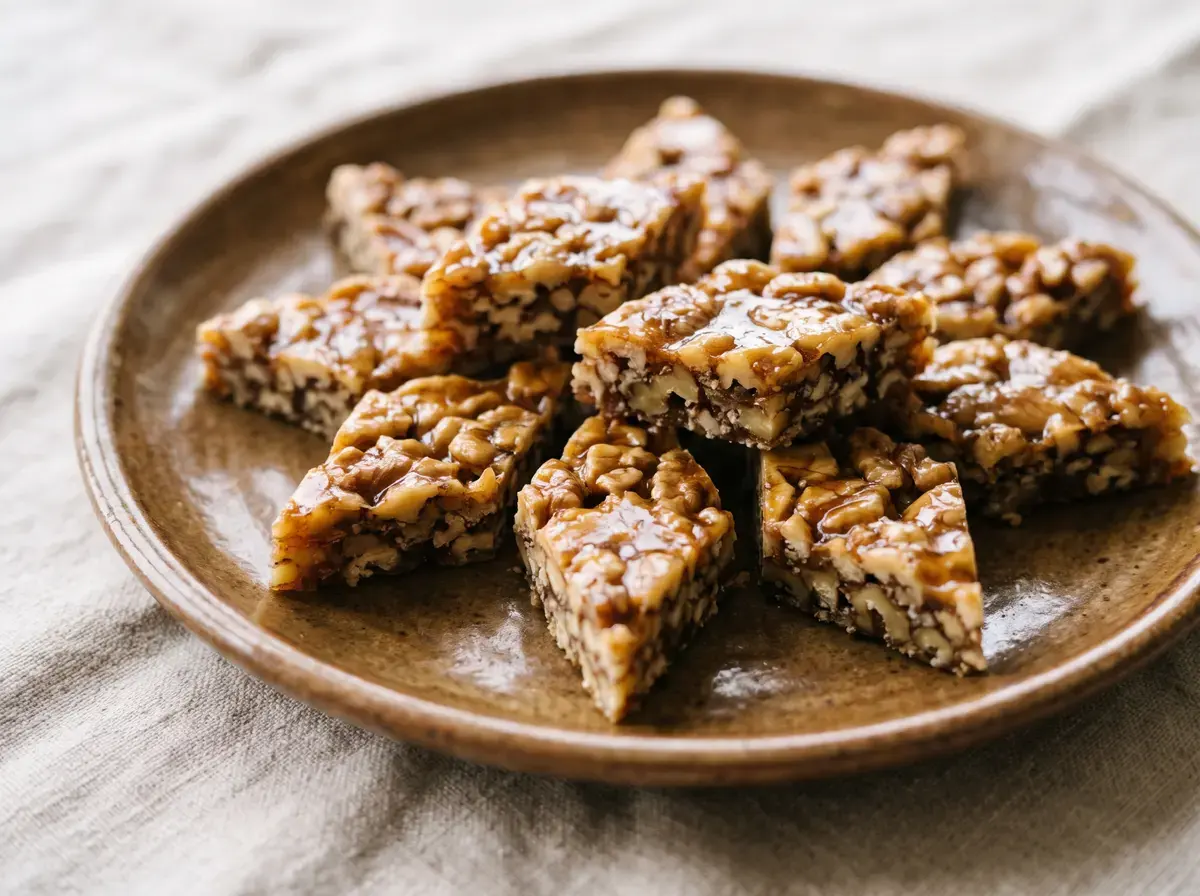
Our gozinaki takes 300 g of honey to 400 g of toasted walnuts and a teaspoon of sugar. You cook the honey slowly and test it by dropping a little into cold water: it is ready when it sinks and holds as a firm ball. The mixture is rolled between a wet board and parchment into a 1 cm slab, and you have about 10 minutes to cut the diamonds while it is still warm, because once it cools it shatters under the knife. The other holiday dish is satsivi, poached chicken in a cold walnut sauce with blue fenugreek and coriander. The Russian magazine Vokrug Sveta calls it Georgia's answer to the Christmas turkey, except that it opens the meal rather than ending it. The sauce thickens as it chills, so it is made the day before.
Shōgatsu: New Year in Japan (1 January)
Shōgatsu is the Japanese New Year, kept on 1 January since 1873 and celebrated over the first days of the year. Families eat osechi, boxes of small dishes that are mostly sweet, sour or dried so they keep for days, and on the morning of New Year's Day, ozoni, a soup with mochi rice cake in it.
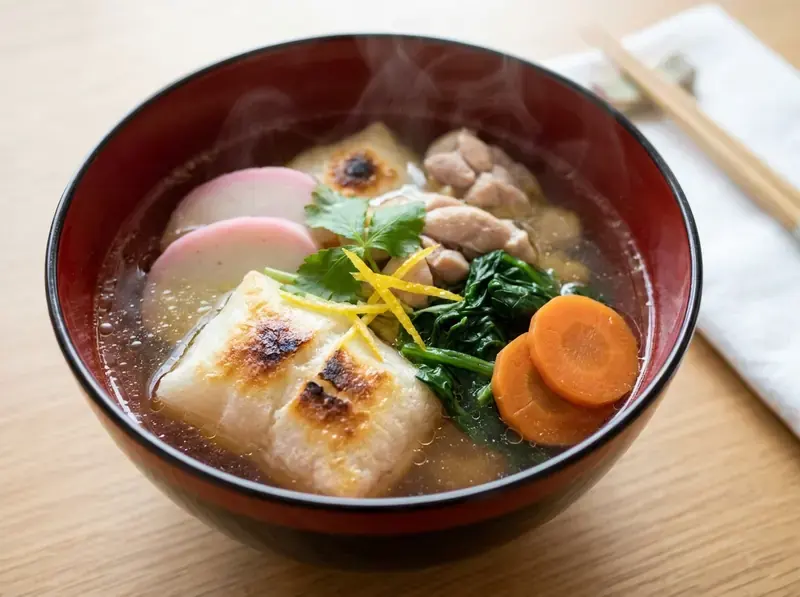
Ozoni changes from region to region. Our ozoni is the Tokyo version: toasted square mochi, chicken and greens in a clear dashi with soy sauce, ready in about 35 minutes. Cut the mochi small and eat it slowly. Japan's Consumer Affairs Agency found that 43% of mochi choking deaths among older people happen in January, most of them in the first three days. From the osechi box, kuri kinton is a golden mash of sweet potato with chestnuts in syrup. Its name is written with the characters for gold, and Japan's agriculture ministry reads it as a wish for money in the coming year. It is sweet, but in Japan it is not counted as a dessert.
Planning a holiday table of your own
Most of these dishes are made the day before, or weeks before in the case of stollen, because the cooks themselves want to sit at the table. If you are cooking for a crowd this season, our festive dinner menu works out portions per guest and how to set the table, whichever of the holidays above you are cooking for.