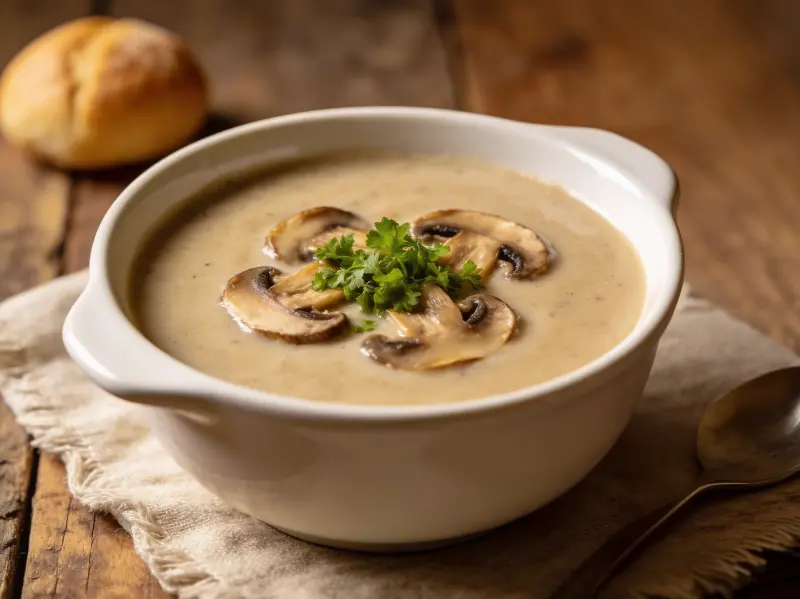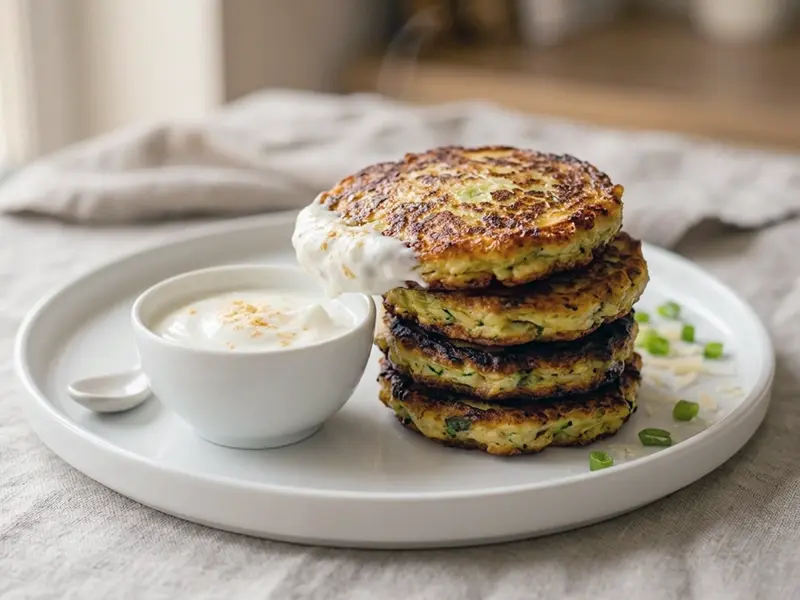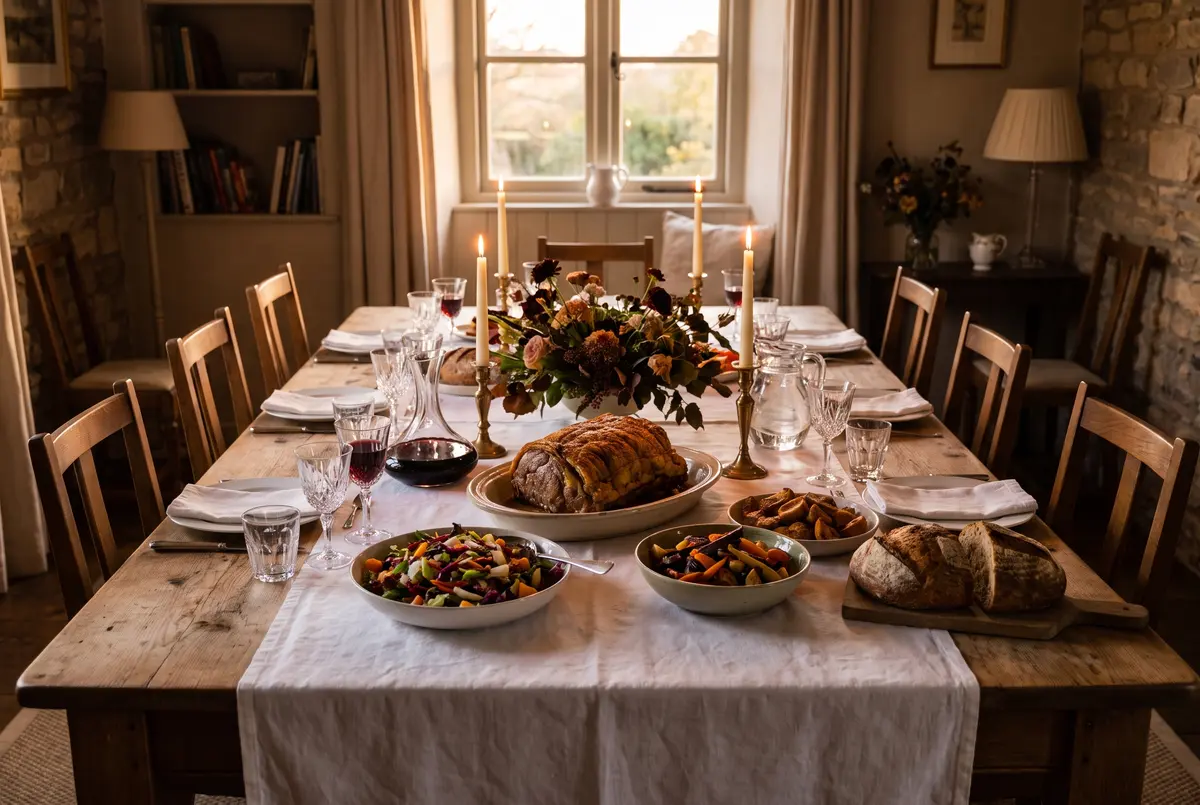
A festive menu is a meal planned around the guests rather than around the cook's weeknight habits: several courses or a spread of shared dishes, one centrepiece that makes the evening feel like an occasion, and enough food prepared ahead that the host can sit down too. This guide covers how to build that menu for a birthday, a dinner party or a family celebration, how much food to make, how different countries lay a festive table, and how to set the table itself. Every dish mentioned links to a full recipe.
How to build a festive menu that doesn't trap you in the kitchen
Most holiday menus fail for the same reason: every dish needs the stove in the last hour. The fix is to plan by timing, not by course.
Pick one showpiece that needs your attention at the end, such as a roast that must rest, a pan sauce or a batch of fritters. Everything else should be food that holds or improves with time: salads that get better after a night in the fridge, braises that reheat, desserts that have to set anyway. A useful rule of thumb is one hot last-minute dish, two or three things that are finished the day before, and one thing guests can reach for as soon as they arrive.
A classic structure looks like this:
- something to nibble with the first drink (dips, pastries, pickles, bruschetta);
- a starter or a spread of salads;
- one main dish with two sides, one starchy and one fresh;
- dessert, ideally one that is made the day before;
- a non-alcoholic drink that is more than water, for drivers, children and anyone who doesn't drink.
For the nibbles, spinach artichoke dip, hummus, Italian bruschetta or Spanish croquetas de jamón all work. Deviled eggs with chipotle can be filled in the morning and chilled.
How much food to cook per guest
This is the question every host asks and most recipes skip. These are the working amounts caterers use for an adult at a dinner with several courses; for a single-dish meal, add roughly a third.
| Course | Per guest |
|---|---|
| Boneless meat or fish, main course | 180–220 g raw |
| Bone-in roast (ham, lamb leg, whole bird) | 350–450 g raw |
| Starchy side (potatoes, rice, pasta) | 150–200 g cooked |
| Vegetable side or salad | 100–150 g |
| Nibbles before dinner | 4–6 small pieces |
| Cake | a 24 cm cake cuts into 10–12 slices |
| Bread | 1–2 slices or rolls |
| Wine, if served | about half a bottle over an evening |
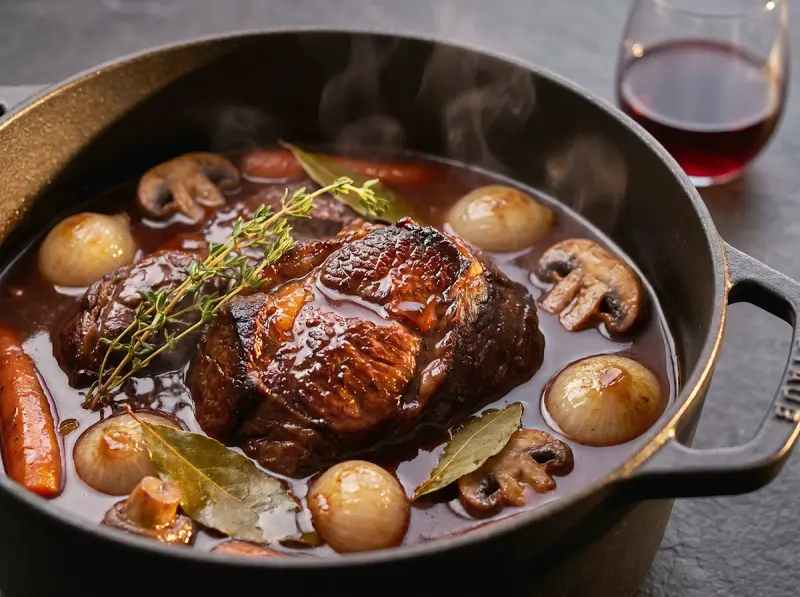
Children eat roughly half an adult portion. Always round up by one extra portion for a guest who arrives unexpectedly, and choose dishes whose leftovers are welcome the next day: golubtsy, beef bourguignon and lasagna all taste better on day two.
What to cook for a birthday dinner at home
A birthday meal has one fixed point, the cake, so build backwards from it. A rich cake calls for a lighter main, and a showpiece main is better followed by a cake that is sharp or airy.
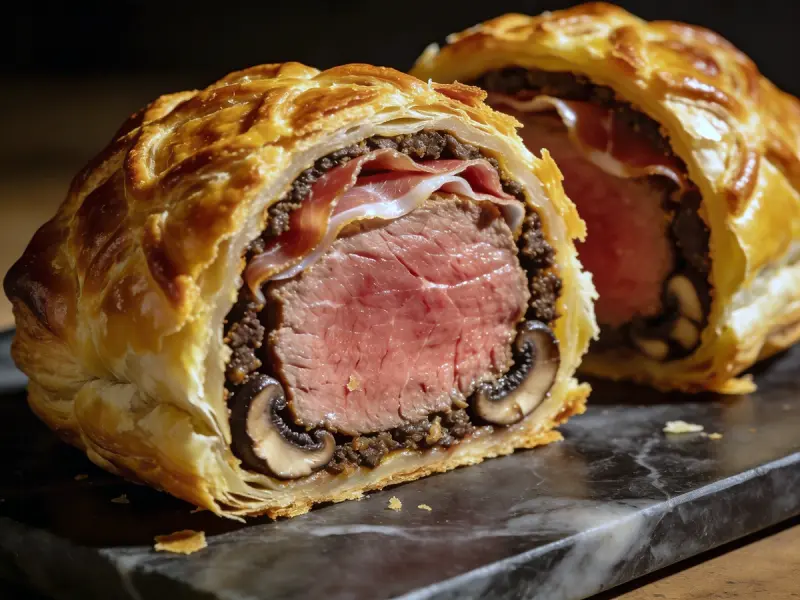
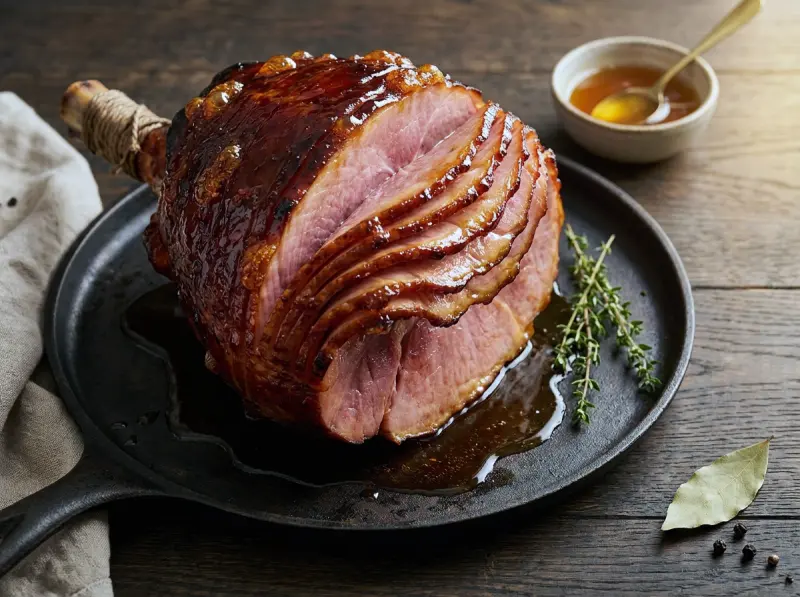
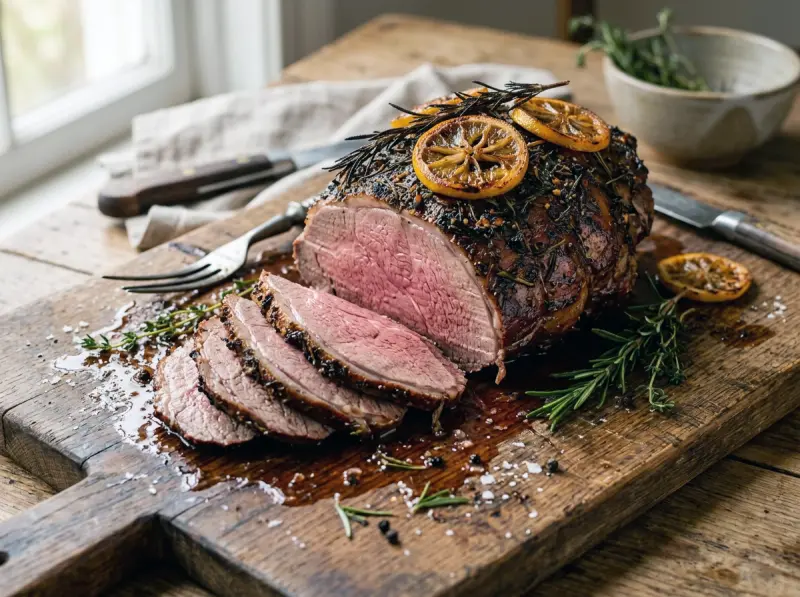
For a grown-up birthday, a roast is the easiest way to feed eight people with one oven: roasted leg of lamb with Meyer lemon, honey-glazed ham or a classic roast chicken doubled up for a crowd. If you want the evening to feel like a restaurant, beef Wellington can be wrapped a day ahead and baked when the guests arrive, and a rack of lamb with herb crust takes twenty minutes in the oven.
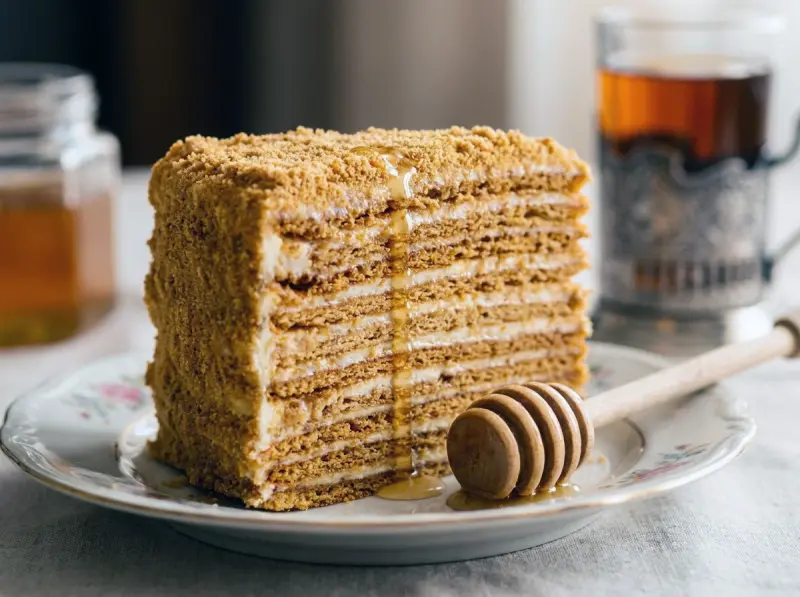
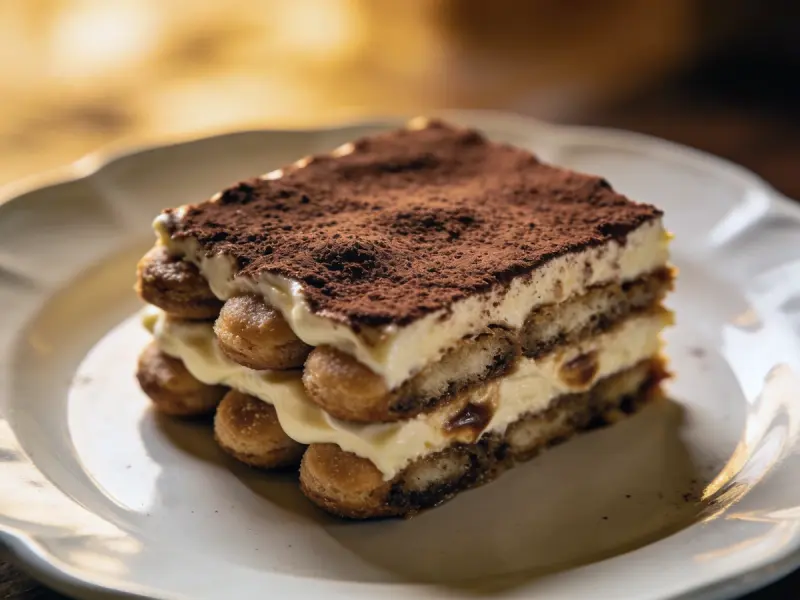
For the cake, medovik and Napoleon cake are the two Russian birthday classics, and both must rest in the fridge overnight, which makes them ideal for a host. Black Forest cake is Germany's party cake, tiramisu needs no oven at all, and carrot cake with cream cheese frosting or a chocolate cake will please children and adults alike. Japan's birthday cake is a light sponge with whipped cream and strawberries; our strawberry shortcake is the American cousin of the same idea.
For a children's birthday, finger food beats plated food: chicken karaage, mini smash burgers, kimbap slices, coxinha and Brazilian brigadeiro, which are the fixed item at every children's party in Brazil.
A dinner party menu for guests: three proven combinations
Each of these menus follows the timing rule above, with one dish cooked at the last moment.
Italian-style dinner. Caprese salad and arancini with the aperitif, mushroom risotto as the one dish stirred at the stove, branzino al sale, whole fish baked in a salt crust and cracked open at the table, and tiramisu made the night before.
French-style dinner. Chicken liver pâté with toast, French onion soup or a green salad, beef bourguignon braised the day before and reheated, and crème brûlée, whose custards set overnight and only need the sugar torched.
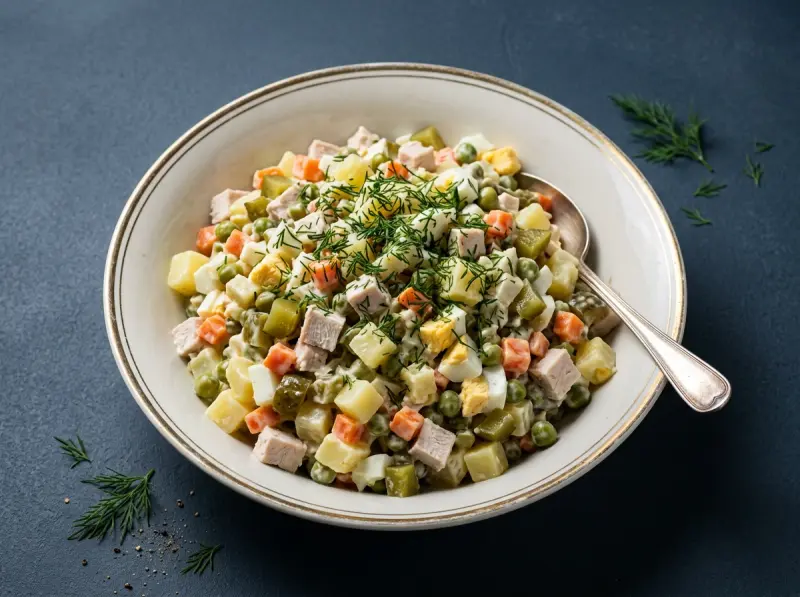
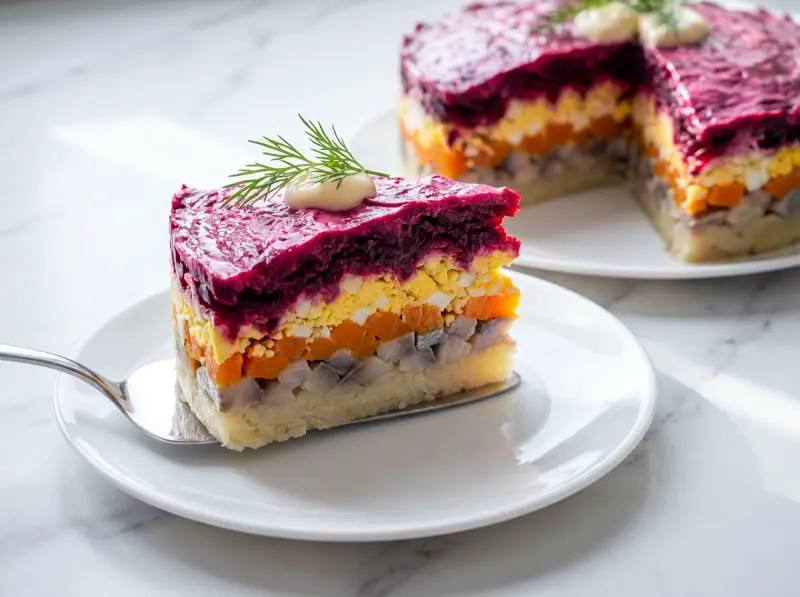
Eastern European celebration. Olivier salad and herring under a fur coat, both better after a night in the fridge, pelmeni boiled straight from the freezer or chicken Kiev as the hot course, and medovik for dessert.
Festive table traditions around the world
Every food culture has its own idea of what makes a meal festive. Borrowing one tradition is often the easiest way to give a dinner a theme.
Russia: everything on the table before anyone sits down
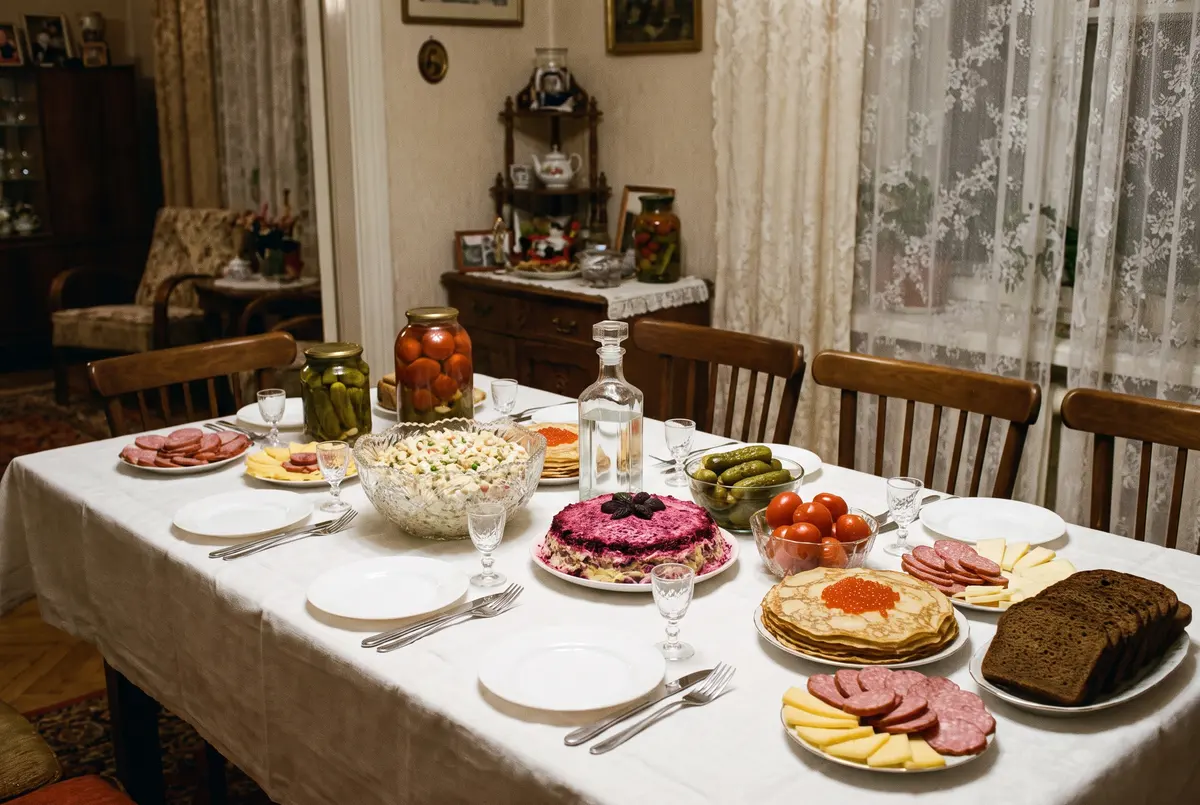
A Russian zastolye starts with a table that is already full. The zakuski, cold starters, are laid out at once: Olivier salad, herring under a fur coat, mimosa salad, pickles and blini with red caviar. Only after several toasts do the hot dishes arrive: julienne of chicken and mushrooms baked in small cocotte dishes, then the main course, often meat in French style, a potato and pork bake that is a fixture of Russian birthday tables. Cake and tea close the evening, sometimes hours later. A host is judged by abundance: a table where the plates don't touch looks unfinished. Our guide to Russian comfort food covers the everyday side of the same cuisine.
Georgia: the supra and the toastmaster
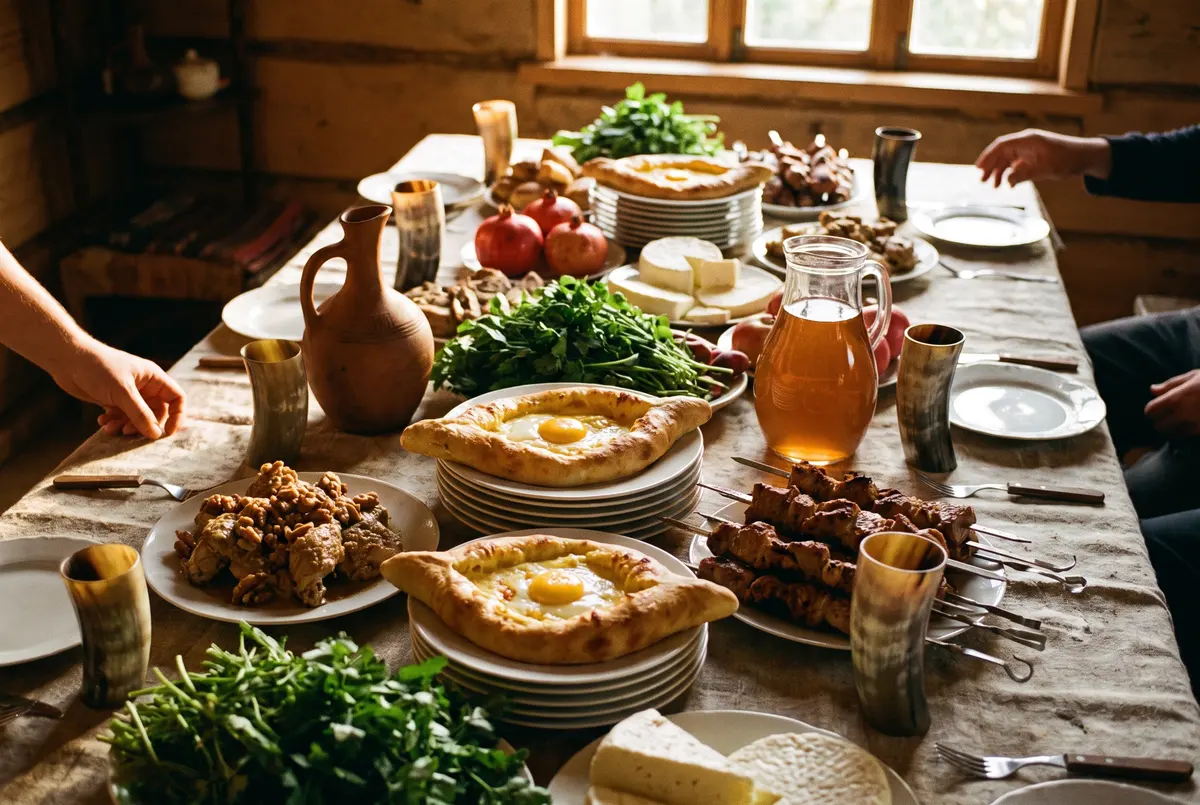
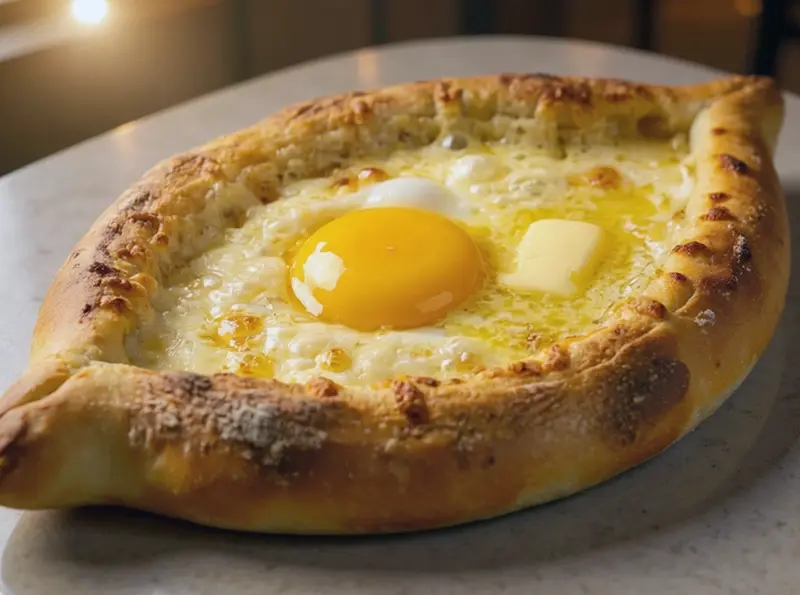
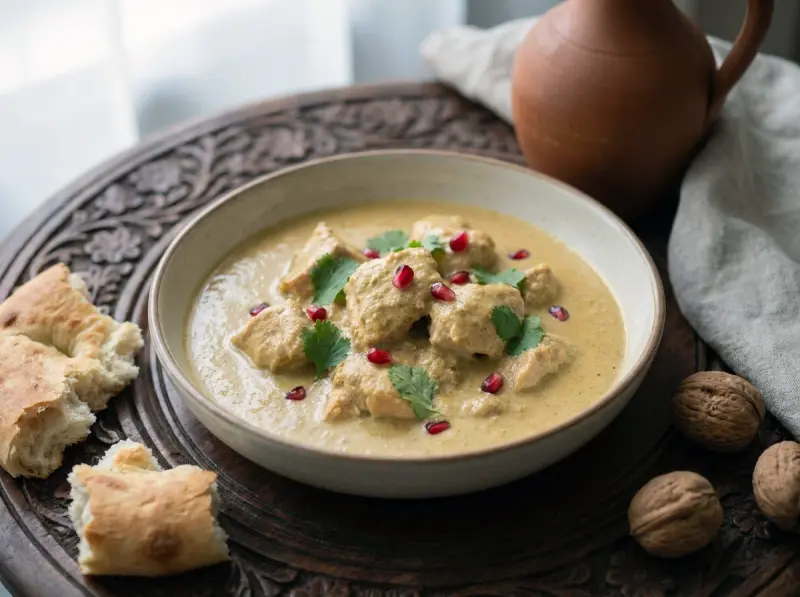
The Georgian supra is a feast led by a tamada, a toastmaster who proposes the toasts in a traditional order that usually includes peace, the family, parents and those no longer at the table. Plates are not cleared; new ones are stacked on top, so a good supra has dishes in layers. Expect Adjarian khachapuri, the boat-shaped cheese bread with an egg yolk, satsivi, chicken in walnut sauce that belongs to New Year and winter feasts, mtsvadi grilled over vine cuttings, khinkali, and piles of fresh herbs eaten whole. For a supra at home, satsivi and the herb plate can be made a day ahead; khachapuri goes in the oven when the guests sit down.
Germany: coffee and cake, and the birthday person pays
In Germany a birthday usually means Kaffee und Kuchen in the afternoon, and the rule surprises foreigners: the person celebrating brings the cake to work and invites friends, rather than being treated. Black Forest cake is the grand version. A festive German dinner is a Sonntagsbraten or Festtagsbraten, a Sunday or holiday roast: beef rouladen with red cabbage, and in November St Martin's goose. Käsespätzle is the meat-free festive main in the south. The German cuisine guide explains the regional differences.
Italy: the long Sunday lunch
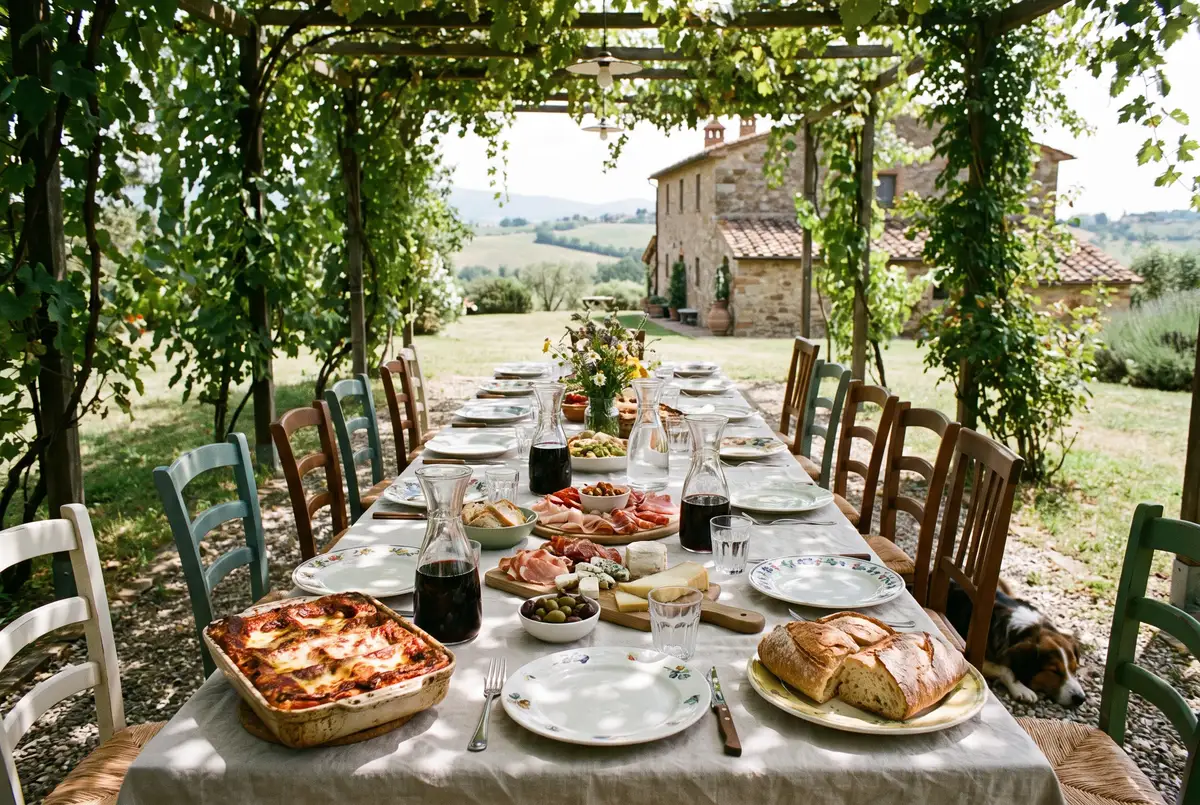
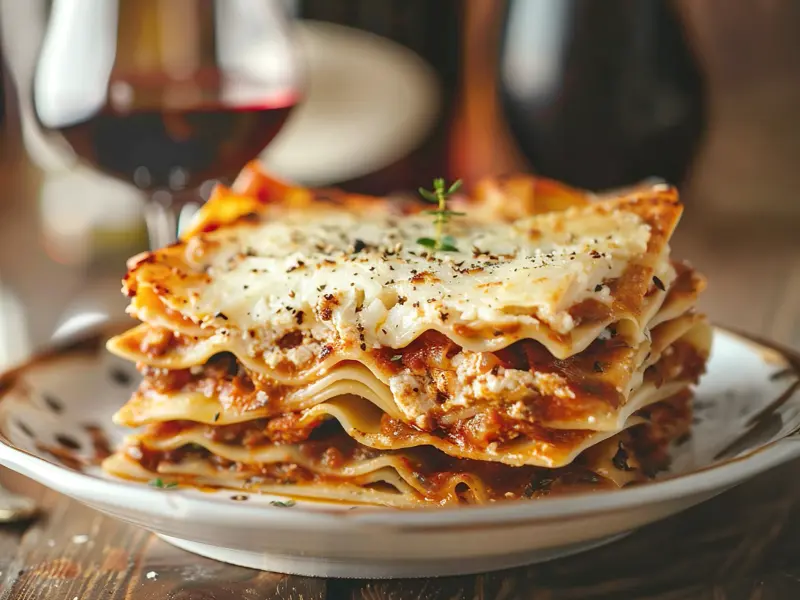
An Italian celebration is more often lunch than dinner, and it keeps a strict order: antipasto, then the primo (pasta or risotto), then the secondo (meat or fish) with a contorno, a vegetable side served on its own plate, then dolce and coffee. Baked pasta such as lasagna is the typical festive primo because it is assembled in advance. Branzino al sale or a roast make the secondo, and tiramisu or cannoli the dessert. See our essential Italian recipes for more.
France: the courses and the cheese before dessert
A French festive dinner runs in courses: apéritif with small bites, entrée, plat principal, cheese, then dessert. Cheese always comes before the sweet course, never after. Bread is placed directly on the tablecloth, not on a side plate, and is used to push food onto the fork. For a French menu at home, lobster bisque or bouillabaisse make a festive first course, duck confit can be cooked days ahead, and chocolate soufflé is the dessert to finish with if you like an audience. The complete guide to French cooking covers the techniques.
Japan: osechi boxes and the celebration cake
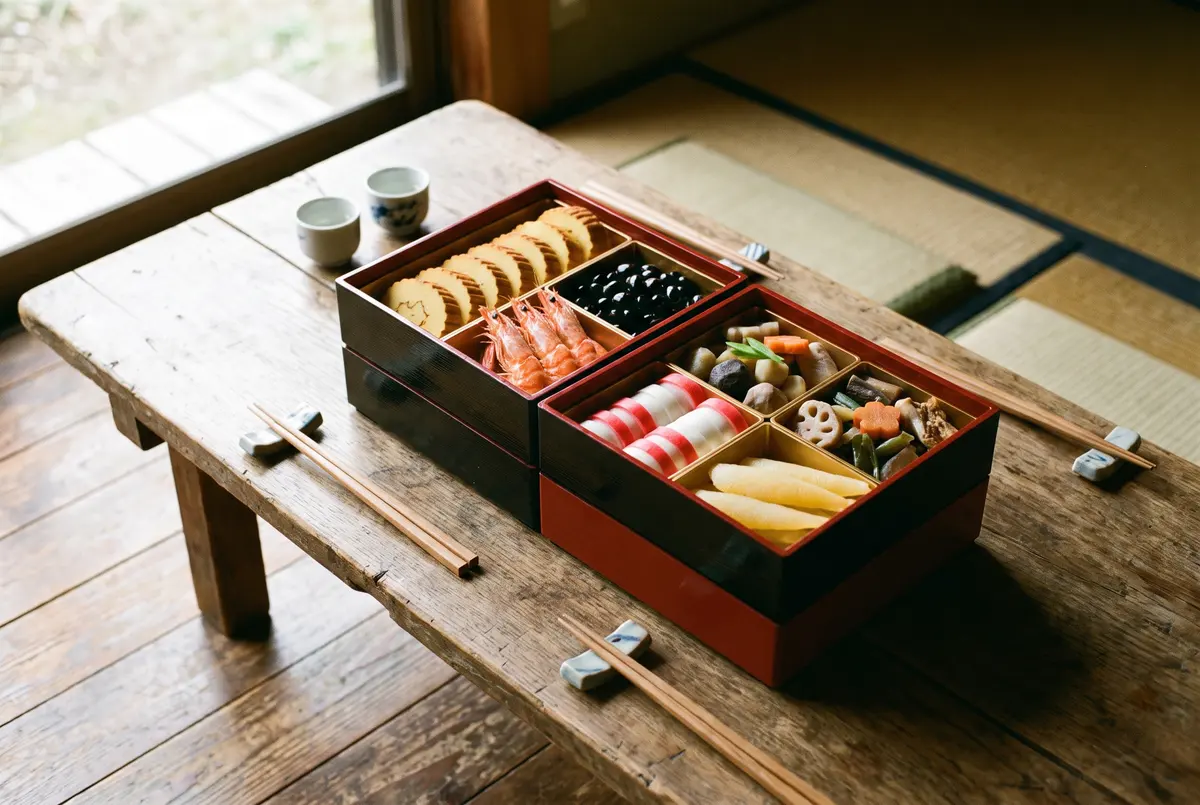
The most festive Japanese meal is osechi ryori, eaten over the first days of the New Year from stacked lacquered boxes called jubako. Each dish is a symbol: black beans for health, shrimp, bent like an old back, for a long life, and the sweet rolled omelette, akin to tamagoyaki, for scholarship. Birthdays are simpler and centre on a strawberry and cream sponge cake. For a Japanese-style dinner at home, chawanmushi is an elegant starter, tempura the hot centrepiece, and our Japanese cuisine guide explains the rest of the table.
Korea, China and India: noodles for a long life, rice for a crowd
In Korea a birthday morning begins with seaweed soup, and a janchi, a festive banquet, would not be complete without japchae, glass noodles with vegetables, and galbi-jjim, braised short ribs. In China long noodles are served on birthdays uncut, because their length stands for a long life, and a whole fish at a celebration dinner is served with the head on. Dumplings like our pork and cabbage jiaozi belong to the Spring Festival. In India, chicken biryani is the classic dish for weddings and big family gatherings because it feeds dozens from one pot.
Mexico, Spain and Uzbekistan: one big dish for everyone
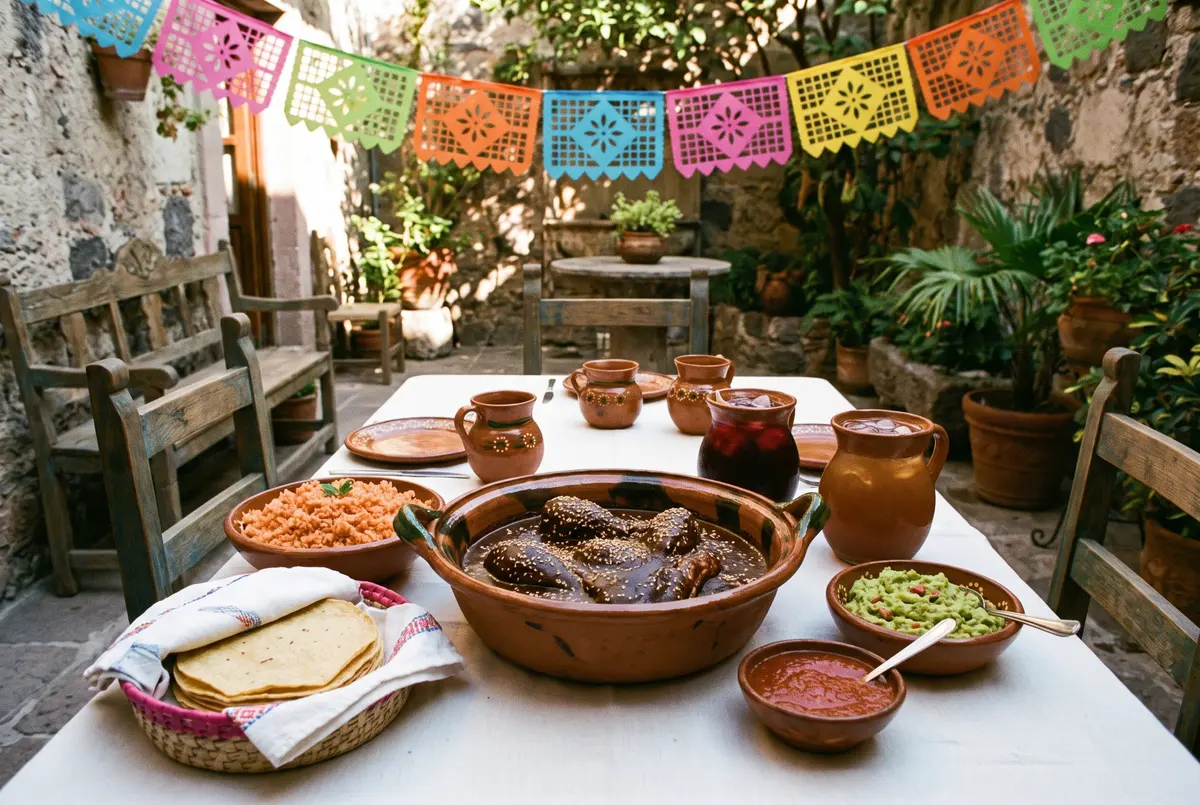
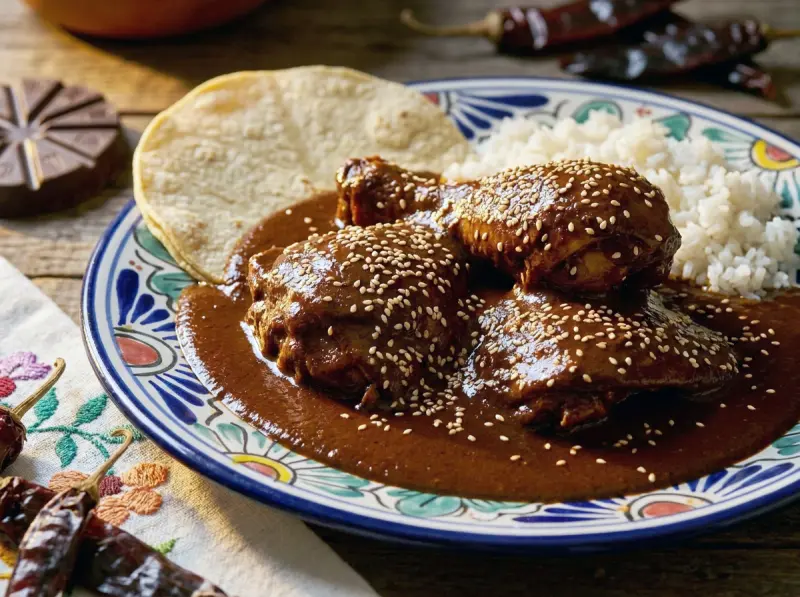
Some cuisines celebrate with a single dish made in quantity. In Mexico that dish is mole poblano, a sauce of dried chillies, seeds, spices and chocolate served at weddings and family fiestas, with agua fresca for everyone. In Spain it is paella, cooked in the open air for a Sunday family gathering. In Uzbekistan plov is cooked in a huge kazan for weddings, where the morning plov for men is a tradition of its own. All three are dishes to cook when you have more guests than chairs.
The United States: the holiday table
The American festive table, whether for Thanksgiving, Christmas or Easter, is built around a roast and a long list of sides: honey-glazed ham, green bean casserole, sweet potato casserole with pecan streusel, cornbread and deviled eggs, with pecan pie or cheesecake to finish. Sides are where guests contribute, and potluck is normal: a guest asked "what can I bring?" really should bring something.
How to set a festive table correctly
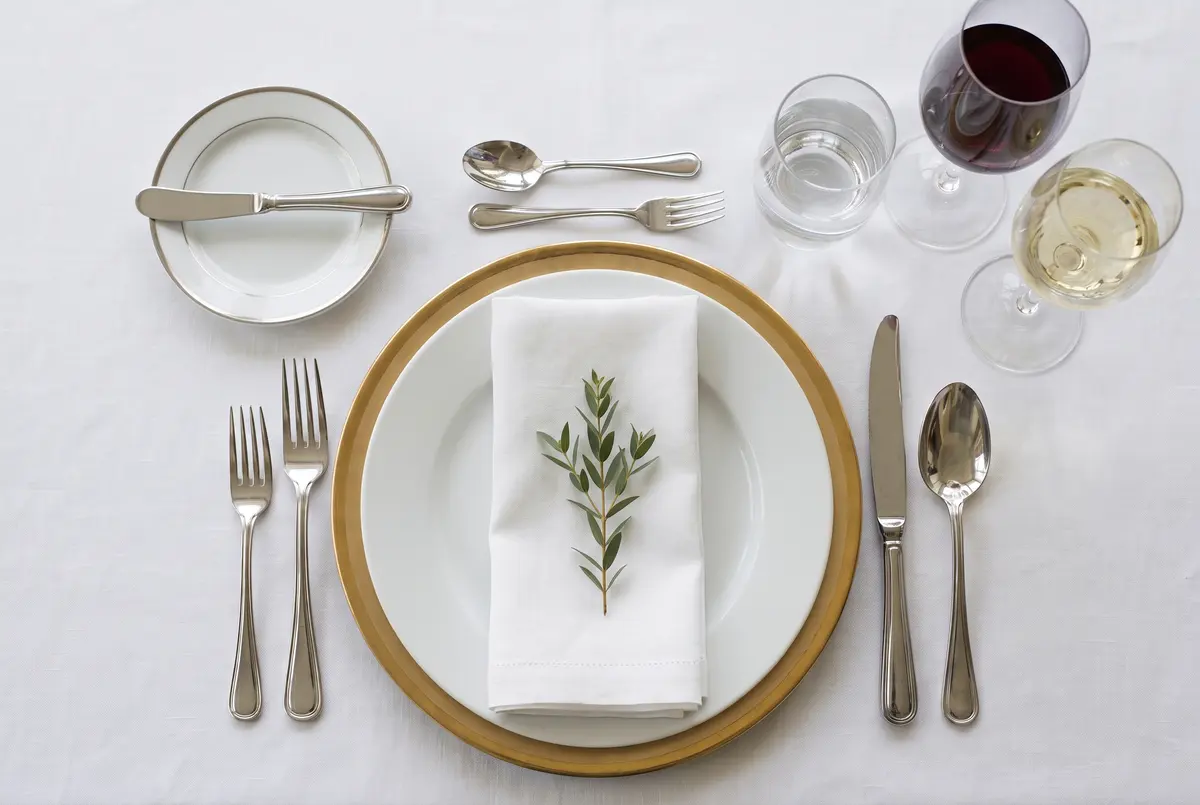
Table setting looks complicated, but it follows one logic: cutlery is used from the outside in, in the order the courses arrive.
- Forks on the left, knives and spoons on the right. The knife blade faces the plate. A soup spoon sits outside the knife.
- Dessert cutlery goes above the plate, the spoon handle pointing right and the fork handle pointing left, so each hand reaches the right one.
- Glasses stand above the knife. The water glass is closest to the knife tip; wine glasses follow to the right in the order they will be used.
- The bread plate is at the upper left, with its small butter knife across it.
- The napkin goes on the plate or to the left of the forks, never under the cutlery.
- Allow about 60 cm of table edge per guest so elbows don't collide, and let the tablecloth hang 20–30 cm over the edge.
- Keep the centrepiece low, under about 30 cm, so guests can see and talk across the table. Tall candles are fine if they are thin.
- Lay out only what the menu needs. Three forks for a two-course dinner look like a mistake, not elegance.
A buffet is laid out in the order people fill a plate: plates first, then salads, then mains, then sides and sauces, and cutlery and napkins at the end, so no one juggles a fork while serving. Put the table where guests can walk around both sides if there are more than twelve.
Festive table manners differ too. In Japan chopsticks are never stood upright in a bowl of rice, which recalls a funeral offering; they rest on a chopstick rest. In southern China a whole fish is not turned over on the plate, because flipping it evokes a capsizing boat for fishing families. At a Georgian supra you wait for the tamada before drinking, and in Russia the first toast is proposed by the host.
A timeline for the host
- Two or three days ahead: shop, make stocks and sauces, bake cake layers, cook braises such as goulash or beef bourguignon.
- The day before: assemble salads that improve overnight, set custards and cakes, marinate meat, iron the tablecloth and set the table.
- The morning: prepare vegetables, make dips, chill drinks, take butter and cheese out of the fridge.
- One hour before guests arrive: the roast goes into the oven, nibbles go onto the table, candles are placed but not lit.
- When guests arrive: serve drinks and nibbles, cook the one last-minute dish, and let the roast rest while the starter is eaten.
Plan it this way and the host eats with the guests, which is the whole point of a festive meal.