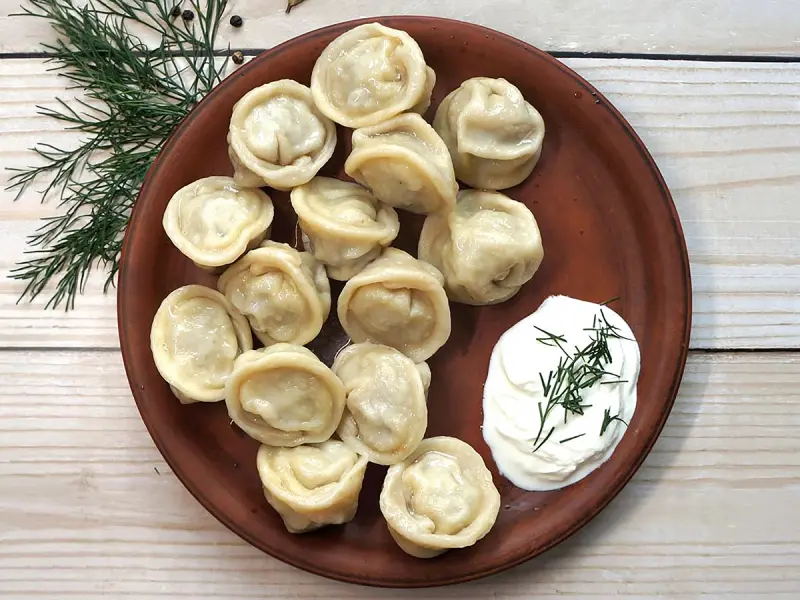
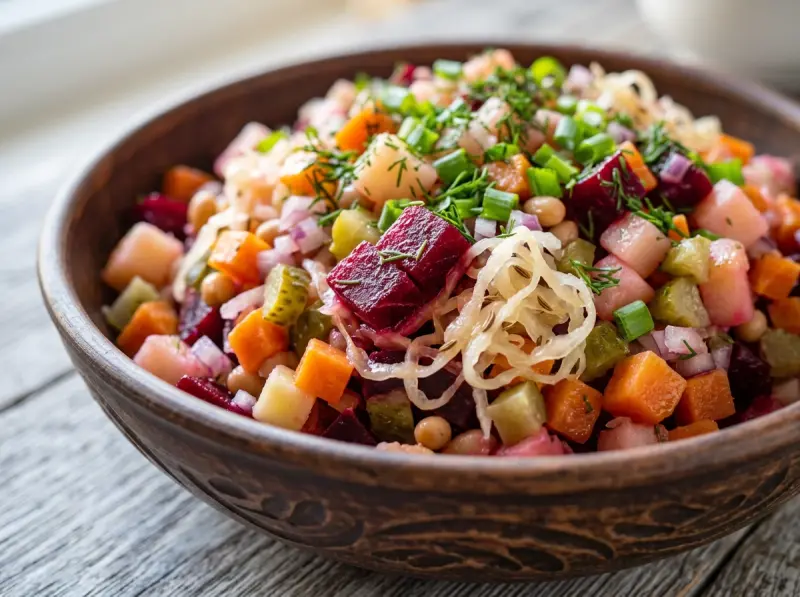
La cuisine russe est souvent mal comprise. Le cliché — lourde, grise, envahie par les pommes de terre — décrit la mauvaise cuisine russe de la même façon que "fade et ennuyeuse" décrit la mauvaise cuisine britannique. La vraie cuisine repose sur des bouillons longuement mijotés, des légumes marinés au goût franc, des raviolis farcis et une relation sérieuse avec les produits laitiers fermentés que la plupart des cuisines occidentales n'ont jamais vraiment explorée.
Six recettes couvrent les bases. Maîtrisez-les et le reste de la cuisine commence à avoir du sens.
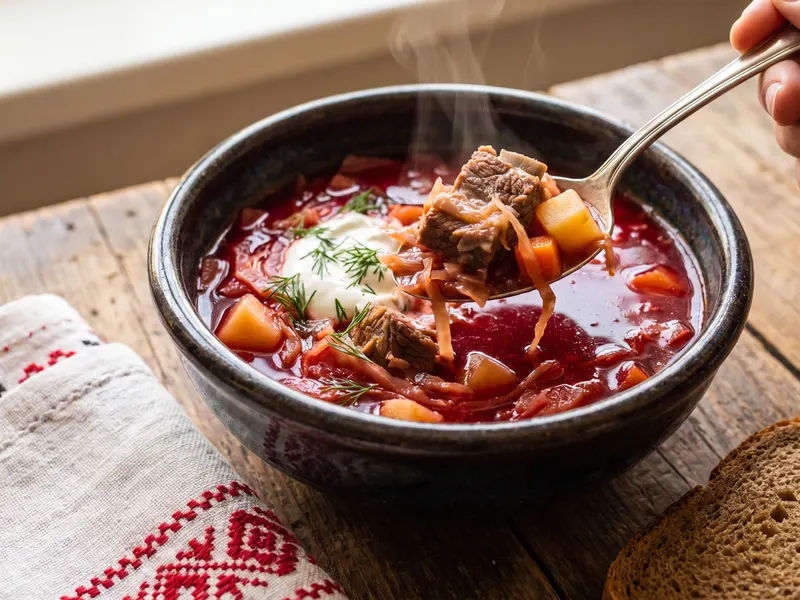
Borscht — la recette classique de soupe russe à la betterave
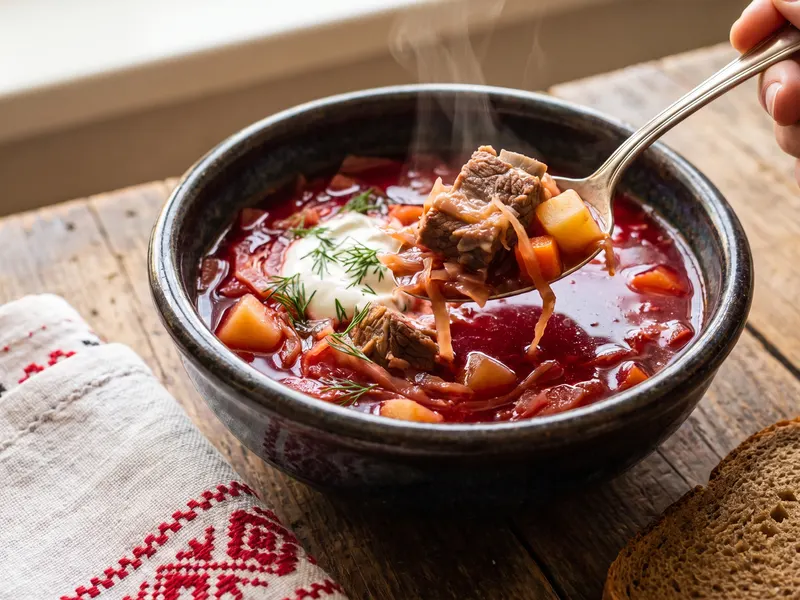
La Russie et l'Ukraine se le disputent, et toutes deux le réussissent. La base est un bouillon de bœuf cuit avec de la betterave, du chou et des légumes racines jusqu'à ce que toute la marmite sente une seule chose plutôt qu'une collection d'ingrédients séparés. On sert avec de la crème fraîche épaisse et du pain de seigle.
Une technique distingue un bon borscht du reste : râpez la moitié des betteraves crues et ajoutez-les tout à la fin, une fois le feu éteint. Elles donnent au bouillon sa couleur rouge profonde et un goût frais légèrement acidulé. L'autre moitié entre au début et fond dans le bouillon. Le même légume, deux rôles différents.
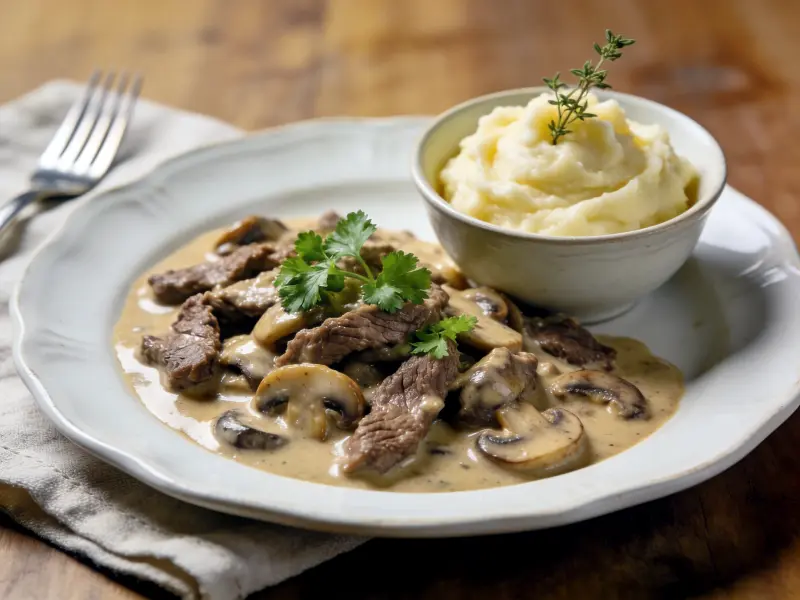
Bœuf stroganoff — la recette russe la plus connue dans le monde
Des lanières fines de bœuf dans une sauce à la crème fraîche. Le plat est né en Russie au XIXe siècle et se retrouve aujourd'hui partout.
Ce qui gâche la plupart des stroganoffs maison : une viande trop cuite. Coupez à contre-fil, en tranches fines, et faites cuire à feu vif maximum pendant 60 à 90 secondes. Les lanières finissent de cuire dans la sauce. Retirez la poêle du feu avant d'ajouter la crème fraîche — elle se sépare si la température est trop élevée. Un stroganoff gris et caoutchouteux est un problème de timing, pas d'ingrédients.
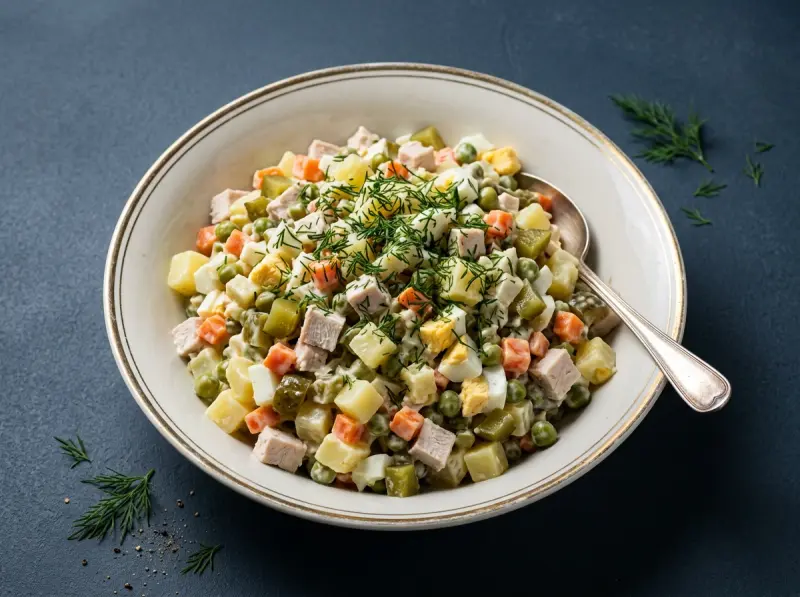
Salade Olivier — la recette russe de salade de pommes de terre pour toutes les occasions
Pomme de terre cuite, carotte, œuf, cornichons, petits pois et poulet en mayonnaise. Chaque famille la fait différemment. Cette version est le point de départ standard.
Coupez tout en petits dés uniformes d'environ 1 cm et la texture devient quelque chose de précis plutôt qu'un bol de choses molles au hasard. Elle se conserve trois jours au réfrigérateur et est meilleure le lendemain, une fois que la mayonnaise a eu le temps de pénétrer les légumes.
→ Recette de la salade Olivier
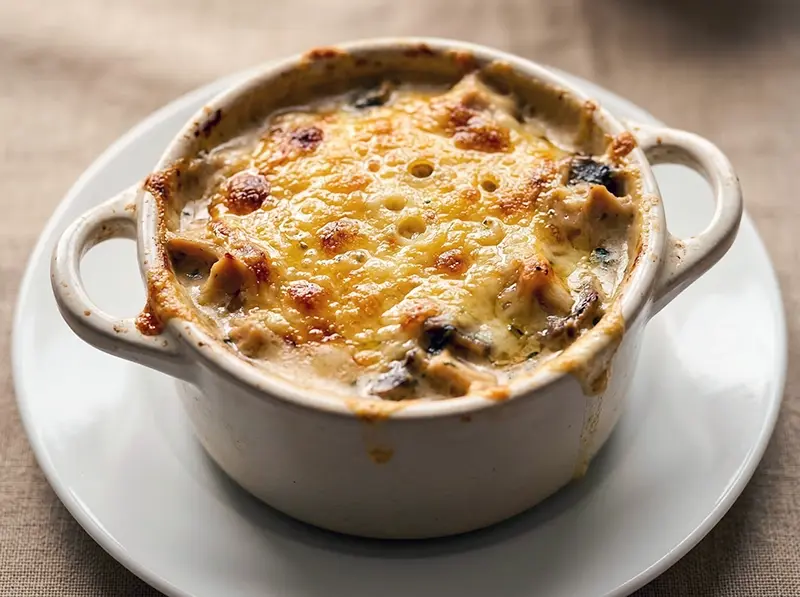
Julienne de champignons — le classique apéritif chaud de la cuisine russe
Champignons émincés cuits au four dans une sauce à la crème fraîche et au fromage fondu, servis dans de petites cocottes. Incontournable sur toute table russe de fête.
La sauce se construit seule : faites revenir l'oignon dans le beurre, ajoutez la crème fraîche et le fromage râpé, puis posez les champignons crus par-dessus. En cuisant, ils libèrent un liquide qui allège et parfume la sauce. Faites cuire au four jusqu'à ce que le dessus bouillonne et soit doré. Une vingtaine de minutes et presque aucune technique.
→ Recette de la julienne de champignons
Ce qui définit vraiment la cuisine traditionnelle russe
La smetana — crème fraîche russe — apparaît dans presque tous les plats, comme base de sauce, garniture de soupe ou vinaigrette. Elle est plus grasse que la crème fraîche occidentale et ne se sépare pas à la chaleur. Le yaourt grec est un substitut raisonnable.
Les légumes marinés font ce que le citron fait dans la cuisine méditerranéenne. Cornichons, choucroute, champignons marinés — ils apportent de l'acidité sans agrumes. Une fois qu'on comprend ça, la logique gustative de la cuisine devient évidente.
Et le temps. Les soupes et ragoûts russes mijotent souvent deux à trois heures. Un bouillon de bœuf qui réduit depuis le matin ne se raccourcit pas. C'est dans cette patience que réside la saveur.