


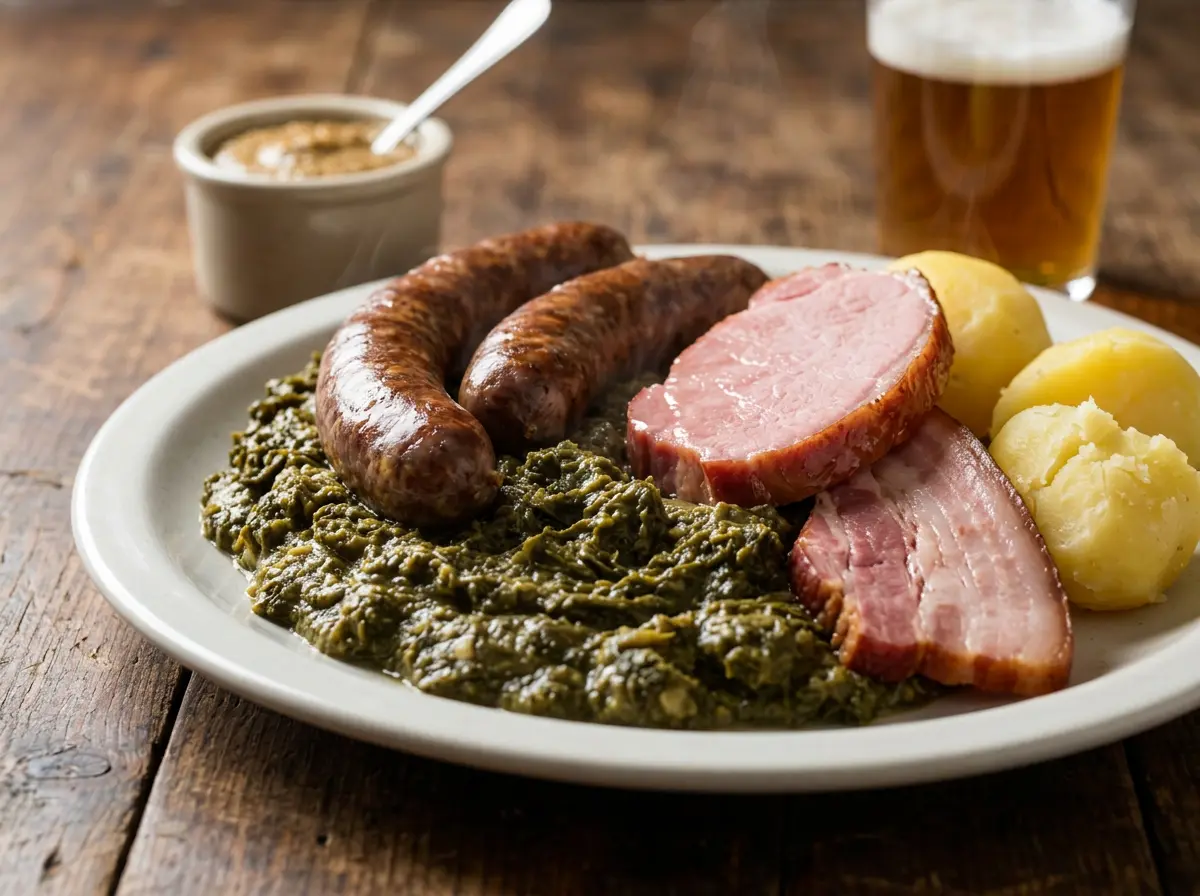
Grünkohl mit Pinkel (German Kale Stew with Pinkel Sausage)
Grünkohl mit Pinkel is a North German winter dish of curly kale stewed for a long time with lard, onion and oats, with smoked pork and Pinkel, a smoked sausage made with oat or barley groats, cooked in the same pot. It is eaten mostly around Oldenburg, Bremen and East Frisia, where people also call it Kohl und Pinkel, and in Bremen Braunkohl und Pinkel. Kale tastes best after the first frost or a long cold spell, and around Bremen the season runs from the first frost to March. In this version the kale braises with a piece of smoked bacon, the Kassler and Pinkel go in for 30 minutes before the oats, and rolled oats thicken it at the end. It takes about 2 hours 20 minutes, most of it with the lid on and the heat low.
What is Grünkohl mit Pinkel?
Grünkohl is curly kale, and in Bremen it is called Braunkohl. The dish is the kale stewed with lard, onion and oats until soft and dark, with smoked meat cooked on top, and it is named after one of those meats, the Pinkel. In north-west Germany you will also hear Kohl und Pinkel, and in Bremen Braunkohl und Pinkel.
Pinkel is a smoked, coarse sausage of bacon, oat or barley groats, onions and spices, often with pork as well. Every butcher has a different recipe. The Bremen kind is made with bacon and no meat, while the Oldenburg and Ammerland kinds contain meat. In winter it is sold at local butchers and supermarket meat counters, and factory-made Pinkel comes vacuum-packed.
Kohlfahrt: walking out for kale
Between November and March, groups of colleagues, club members and friends around Bremen and in the Oldenburg area go on a Kohlfahrt. They pull a handcart through town or out into the country, play games on the way and end up at an inn where the kale and Pinkel are waiting. At the end of the evening someone is crowned Kohlkönig or Kohlkönigin, and the honour comes with a job: organising next year's outing.
What to serve with Grünkohl mit Pinkel
Boiled potatoes or fried potatoes (Bratkartoffeln) go with it, and mustard on the side. In Osnabrück, Hamburg and Schleswig-Holstein people eat their kale with Kassler, Kohlwurst or a coarse Bratwurst, fried potatoes and often a sprinkling of sugar, and around Braunschweig and Hanover the sausage is Bregenwurst. The usual drink is a local beer, often with a Schnaps.
If you like slow-braised cabbage, try the Rotkohl, which is red cabbage cooked the German way. For a lighter winter pot, there is Kartoffelsuppe.
Ingredients
- 1000 gkale
- 1 tbspsalt
- 2 large onions
- 40 glard
- 500 mlwater
- 1 tbspsugar
- 0.5 tspground allspice
- 0.25 tspblack pepper
- 200 gsmoked streaky bacon, in one piece
- 400 gKassler, 4 slices
- 4 Pinkel sausage
- 800 gpotatoes
- 1.5 tspsalt
- 40 goats
- 4 tbspmustard
Method
- Put 4 litres of water on to boil for step 2 first, since it takes about 15 minutes. Pull the kale leaves off the stems and throw away the thick ribs and any yellow or wilted bits. Wash the leaves twice in a sink of cold water, because sand and soil hide in the curls, and keep going until no grit is left at the bottom of the sink. Weigh out 1000 g of leaves. Stems are heavy, so buy more than 1 kg on the stem.
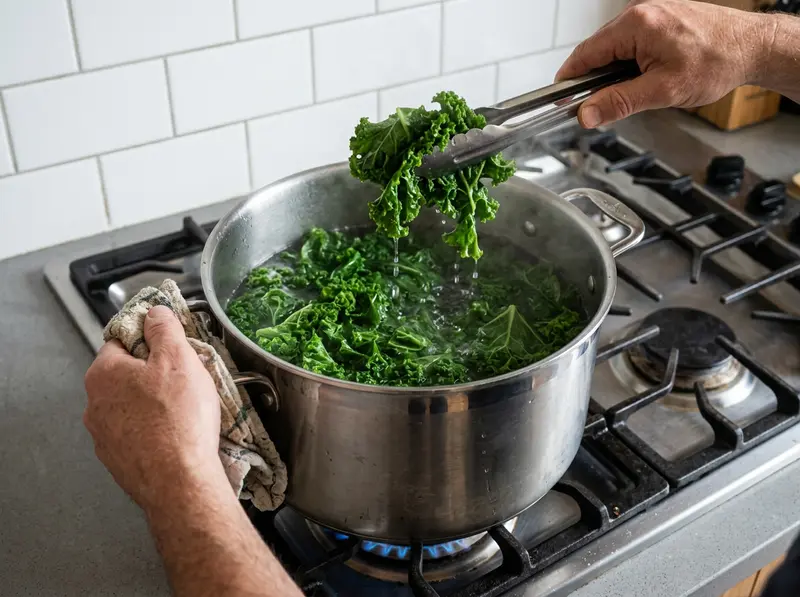
- Bring 4 litres of water with 1 tbsp of salt to the boil in a heavy 6-litre pot over high heat. Blanch the kale in 3 batches for 2 minutes each, until the leaves turn bright green and go limp. Lift each batch with tongs or a slotted spoon into a large bowl of cold water, then drain everything in a colander, squeeze out the water with your hands and chop the kale coarsely. Frozen chopped kale (1 kg) is sold ready to cook, so with frozen kale you skip this step and the one before.
- Pour the water out of the pot and dice the 2 onions. Melt 40 g of lard in the pot over medium heat and cook the onions for 5 minutes, until soft and translucent but not browned. Add the kale and stir for 3 minutes, until it is glossy with fat. Pour in 500 ml of water, add 1 tbsp of sugar, ½ tsp of ground allspice and ¼ tsp of pepper, and no salt yet, because the smoked meat gives salt to the pot. Push the 200 g piece of smoked streaky bacon, in one piece and not sliced, into the middle, bring to the boil, put the lid on and braise over low heat for 50 minutes. Stir every 15 minutes and scrape the bottom, and if the kale catches or looks dry, add a splash more water, about 100 ml. It is ready for the next step when it is soft and has turned a darker olive green. With frozen kale, put the frozen block in after the onions together with the 500 ml of water, skip the 3 minutes of stirring, cover and leave it on low for 30–40 minutes until it has thawed. Then add the sugar, allspice, pepper and bacon, bring it to the boil and start the 50 minutes.
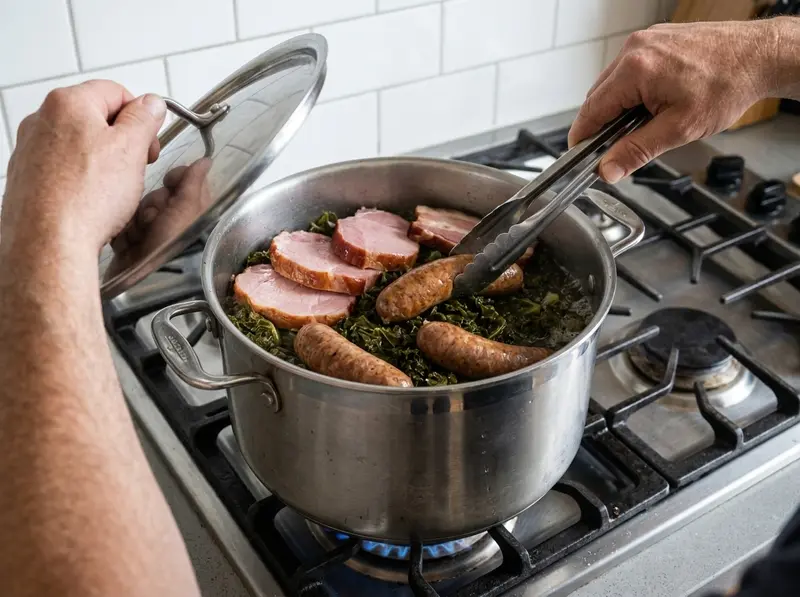
- Lay the 4 slices of Kassler (about 400 g) and the 4 Pinkel (80–100 g each) on the kale and push them halfway in. Put the lid back on and turn the heat to the lowest setting for 30 minutes. You want only small bubbles at the edge of the pot, never a rolling boil, because boiling can burst the Pinkel. Leave the Pinkel whole and don't prick them, so they stay in one piece for slicing. Some Kassler is sold cooked and some raw, so read the label. Cured meat stays pink when it is done, so colour tells you nothing: cut into the thickest slice, which should be hot right through and firm, not glossy in the middle, with clear juices, and the Pinkel should be plump and hot all the way through. With a thermometer, the centre of the Kassler and the Pinkel should reach at least 70 °C and stay there for 2 minutes. Meanwhile peel and halve 800 g of potatoes, cover them with cold water in a 3-litre saucepan, add 1 tsp of salt and boil over medium-high heat for 15–20 minutes, until a knife slides in easily. Drain them and keep the lid on.
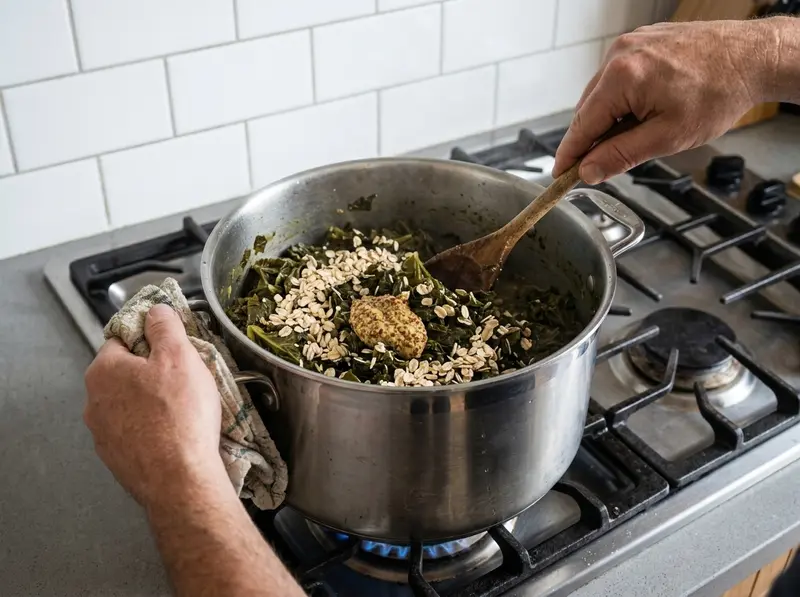
- Lift the Kassler, Pinkel and bacon onto a warm plate and cover it. Stir 40 g of oats and 2 tbsp of mustard into the kale and cook it with the lid off over low heat for 10 minutes, stirring often, because the bottom burns easily now. The kale is done when there is no watery liquid left at the bottom and the oats have swollen and disappeared into a thick, creamy kale. Taste it now, and add up to ½ tsp of salt only if it needs it.
- Slice the bacon and the Kassler. Serve each plate with a mound of kale, a Pinkel, a slice of Kassler, some bacon and potatoes, with the other 2 tbsp of mustard on the table. Put leftovers in the fridge within 2 hours, kale and meat separately, and eat them within 2–3 days. Reheat the kale on its own first, stirring, then add the meat and heat everything until it is steaming hot, 74 °C.
Cooked it? Rate the recipe
FAQ
Pinkel is hard to find even in parts of Germany, so you are not the only one looking for a substitute. German recipes such as REWE's name Kochwurst or Mettenden as the alternative, and outside Germany any smoked sausage works, Polish kielbasa included. Use 4 sausages, about the same weight as the Pinkel, prick them lightly and give them the same 30 minutes on the lowest heat. None of them contains oat groats, so the kale gets a little less body and fat from the sausage, and the 40 g of oats at the end matter even more. Kassler can be swapped the same way, for smoked pork chops, smoked pork loin or smoked gammon.
Yes. Frozen and jarred kale are sold ready to cook, so 1 kg of frozen chopped kale replaces the 1000 g of fresh leaves and you skip the stripping and blanching. Put the frozen block into the pot after the onions together with the 500 ml of water, skip the 3 minutes of stirring, cover it and leave it on low for 30–40 minutes until it has thawed. Then add the sugar, spices and bacon, bring it to the boil and braise for the 50 minutes as written. If you buy fresh kale, weigh it after stripping, because the stems are heavy and you need more than 1 kg on the stem to end up with 1000 g of leaves.
Both come down to the oats and the heat. The oats go in at the end, for 10 minutes with the lid off, because a pot thickened from the start tends to burn during the long braise. During those 50 minutes, stir every 15 minutes and scrape the bottom, and add a splash of water, about 100 ml, if the kale looks dry. If it is still thin after the 10 minutes, stir in more oats a tablespoon at a time. One German family recipe says it can take anything from 2 to 5 tablespoons, depending on the kale.
You can, and like the Rotkohl on this site, it is a braise worth cooking the day before: one German family recipe in the Berliner Kurier starts the kale a day ahead on purpose. Cool it, then put it in the fridge within 2 hours, with the kale and the meat in separate containers, and eat it within 2–3 days. Reheat the kale on its own first over low heat, stirring, since it catches easily with the meat sitting on top, then add the meat and heat everything until it is steaming hot, 74 °C. Cooked kale also freezes well, and a Bremen food blogger keeps it frozen for up to 6 months.
Kassler is cured, smoked pork. Some is sold cooked and some raw, so read the label. Either way, 30 minutes on the barely simmering kale is enough: cut into the thickest slice, which should be hot right through and firm, with clear juices, and with a thermometer the centre should reach at least 70 °C and stay there for 2 minutes. Don't put it in at the start of the braise, because long cooking makes it hard and dry. Outside Germany, smoked pork chops, smoked pork loin or smoked gammon do the same job.
Keep browsing
More dishes from the German archive — picked by overlap with what you're cooking now.



Recipes by email
One letter a week: a recipe picked for your taste, plus whatever is new on the site. You can stop the letters in one click.
Welcome gift: Sergei's cookbook (e-book).
By signing up for the newsletter you agree to the privacy policy.
Tell us what you like to cook (30 seconds) →
Join the conversation
Comments
No comments yet — be the first!