
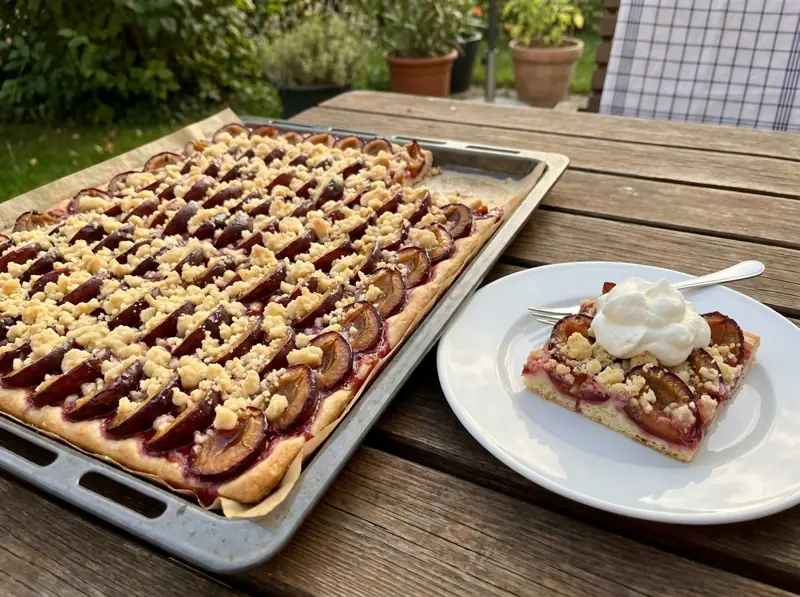
Zwetschgendatschi (Bavarian Plum Sheet Cake)
Zwetschgendatschi, often shortened to Datschi or called Zwetschgenkuchen in other parts of Germany, is a Bavarian sheet cake made from thin yeast dough covered edge to edge with halved Zwetschgen, the small, oval, deep-purple Italian plums that ripen from August into October. Augsburg claims the cake as its own invention, and its residents are still nicknamed Datschiburger, partly because the fanned-out plum halves are said to resemble the pinecone on the city's coat of arms. The dough stays thin and only lightly sweet, so the fruit carries the flavor: tart skin against soft, jammy flesh, with a scatter of cinnamon or butter streusel on top. It disappears from bakery counters once plum season ends and comes back every autumn in time for Erntedank, the German harvest festival in early October.
Ingredients
- 400 gflour
- 200 mlmilk
- 7 gdry yeast
- 50 gsugar
- 80 gbutter
- 1 egg
- 0.5 tspsalt
- 1300 gitalian plums
- 20 gsugar
- 1 tspcinnamon
- 150 gflour
- 80 gsugar
- 100 gbutter
- 1 tspvanilla extract
- 1 pinchcinnamon
- 200 mlheavy cream
Method
- Make the dough. Warm the milk until it feels comfortably warm on your wrist, not hot, and stir in the yeast with a pinch of the sugar; if using instant yeast, whisk it directly into the flour instead. Combine the flour, remaining sugar, and salt in a large bowl, add the milk mixture, the egg, and the soft butter, and knead by hand or with a dough hook for 8 to 10 minutes. The dough is ready when it turns smooth, slightly glossy, and pulls cleanly away from the sides of the bowl; if it still looks shaggy after 10 minutes, knead in another tablespoon of milk.
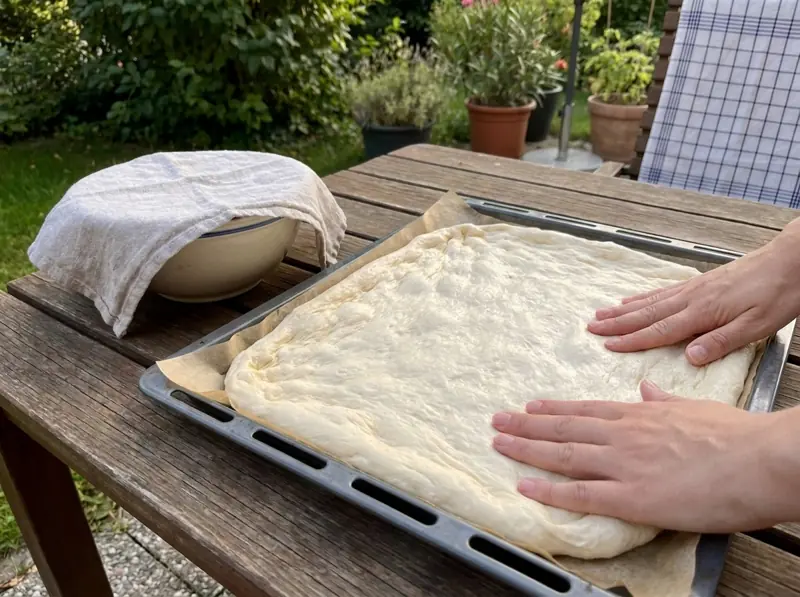
- Let the dough rise, then shape it. Cover the bowl with a damp towel and set it in a warm spot for 45 to 60 minutes, until it has visibly puffed up and springs back slowly when you press a finger into it. Turn it out onto a floured 30x40 cm rimmed baking sheet lined with parchment, and press and stretch it with your fingers to fill the sheet in an even layer, building a slightly raised rim at the edges to hold the fruit and its juice.
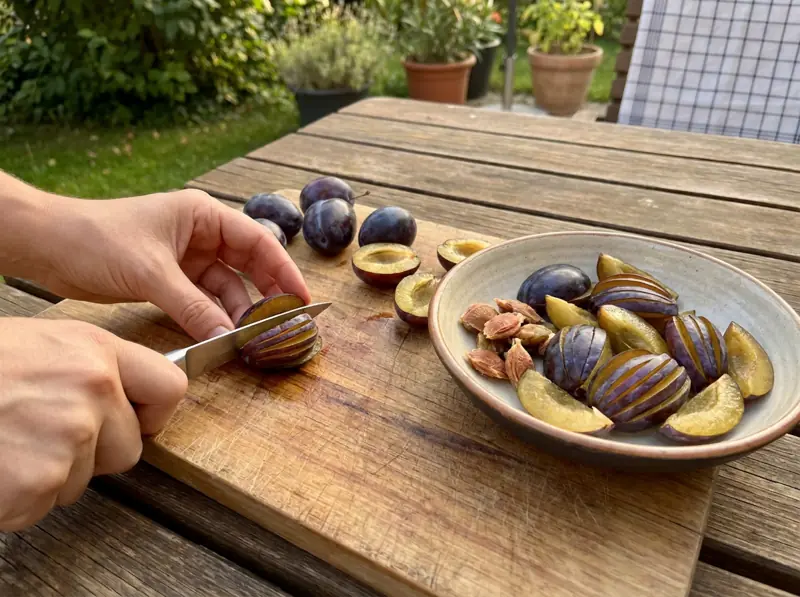
- Prepare the plums. Wash and halve the plums, then twist out the pits. Working with the cut side up, score each half lengthwise almost all the way through, without cutting it apart, and press gently so it fans open like a small accordion. Zwetschgen are the right plum for this: their firm, freestone flesh holds its shape and releases far less juice in the oven than round, clingstone plum varieties, which tend to collapse into mush.
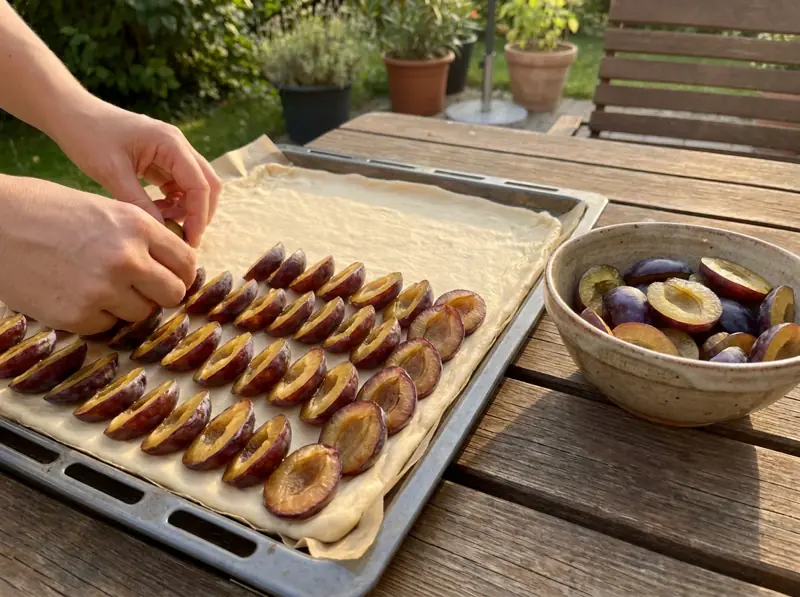
- Cover the dough with fruit. Arrange the plum halves skin-side down in tight, slightly overlapping rows across the entire sheet, packing them edge to edge so almost no bare dough shows through. Sprinkle the sugar and cinnamon evenly over the top. Packing them this tightly matters: the fruit shrinks as it bakes, and a loose arrangement leaves gaps that dry out and burn before the middle of the cake is done.
- Make the streusel, if using. Rub the flour, sugar, soft butter, vanilla extract, and cinnamon together with your fingertips until you get coarse, pea-sized crumbs; do not overwork it into a paste. Scatter the streusel evenly over the plums. It is optional, but it does real work: it soaks up the juice the plums release as they bake, which keeps the dough underneath from turning soggy.
- Bake. Preheat the oven to 190°C top and bottom heat (170°C fan) while the dough finishes its first rise, if you have not already. Bake the sheet in the middle of the oven for 30 to 35 minutes, until the exposed dough at the edges is deep golden brown and the plum juices are bubbling gently around the streusel.
- Cool and serve. Let the cake cool on the sheet for at least 15 minutes before cutting it into 12 squares; it firms up as it cools, and cutting it too soon lets the warm fruit juice run everywhere. Serve it warm or at room temperature with a spoonful of lightly whipped cream on the side.
FAQ
Zwetschgen are a specific type of plum (Prunus domestica subsp. domestica): small, oval, and deep purple-blue, with a distinct seam down one side. Their flesh is firm, low in juice, and separates cleanly from the pit, which is exactly why Zwetschgendatschi calls for them by name instead of just any plum. Round varieties like greengage or mirabelle plums are usually clingstone and much juicier, so they turn soft and watery in the oven and can soak the dough instead of sitting on top of it. Grocery stores sometimes sell the same fruit as Italian plums or prune plums. Damson plums work as a substitute, though they are more tart and slightly smaller.
Yes, but drain them well first. Thaw the plums fully in a colander set over a bowl for at least 30 minutes, pressing gently to release the extra liquid that freezing forces out of the cell walls. Pat them dry with a kitchen towel before arranging them on the dough, otherwise the released juice pools under the fruit and turns the base gummy. Frozen plums also collapse faster in the oven than fresh ones, so check the cake at the 20-minute mark rather than waiting the full 25 to 30 minutes. Fresh Zwetschgen in late summer will always give a firmer bite, but frozen ones get you the cake in the middle of winter.
The most common cause is skipping the second rise: if the dough goes into the oven still dense and unproofed, it cannot cook through evenly under 1.3 kg of juicy fruit. Give the shaped dough a full 45 to 60 minutes in a warm spot until it looks visibly puffed before you even cut the plums. The second cause is too much fruit juice with no way to escape: a layer of butter streusel on top actually helps here, because it absorbs and holds the released juice instead of letting it run down into the dough. Baking on the middle rack, not the lower one, and preheating the oven fully to 200°C also matters more than it seems, since a cool oven means the base sets too slowly. If it still happens, next time roll the dough about 1 cm thicker at the center rather than paper-thin.
The original Augsburg version, documented since the 18th century, is a plain shortcrust base topped only with the plums and no streusel at all. Today most bakeries and home bakers add a butter streusel of flour, sugar, butter, and vanilla, which is why it now reads as the classic version to most Germans. Streusel does more than add crunch: it soaks up the juice that very ripe plums release in the oven, so many bakers add it specifically when the fruit looks especially juicy. If you skip it, dust the finished cake with vanilla sugar the moment it comes out of the oven, while the surface is still warm enough for the sugar to cling.
At room temperature, loosely covered, it stays good for about 2 days before the crumb starts to dry out and the fruit starts to weep more. In the fridge, wrapped, it keeps for up to 4 days, though the base softens as it absorbs moisture from the plums. For longer storage, freeze individual squares wrapped in foil for up to 2 months, then thaw at room temperature for about an hour and warm briefly at 160°C to bring back some crispness at the edges. It does not respond well to the microwave, which turns the yeast dough rubbery instead of tender.
Rate this
Recipes by email
One letter a week: a recipe picked for your taste, plus whatever is new on the site. Unsubscribe in one click.
Welcome gift: Sergei's cookbook (e-book).
By subscribing you agree to the privacy policy.
Tell us what you like to cook (30 seconds) →Keep browsing
More dishes from the German archive — picked by overlap with what you're cooking now.

Join the conversation
Comments
No comments yet — be the first!