Skip to content
GetCookMatch
⌘K
Cuisine · Germany

German cooking

Sausages, potato everything, bread with crust thick enough to matter. Sauerkraut that fermented 3 weeks, schnitzel fried properly.

Sort by
Spritzgebäck (German Piped Butter Cookies) with butter, flour and egg — Germany recipe
🇩🇪GermanyAdvanced
Flour and Confectionery Products

Spritzgebäck (German Piped Butter Cookies)

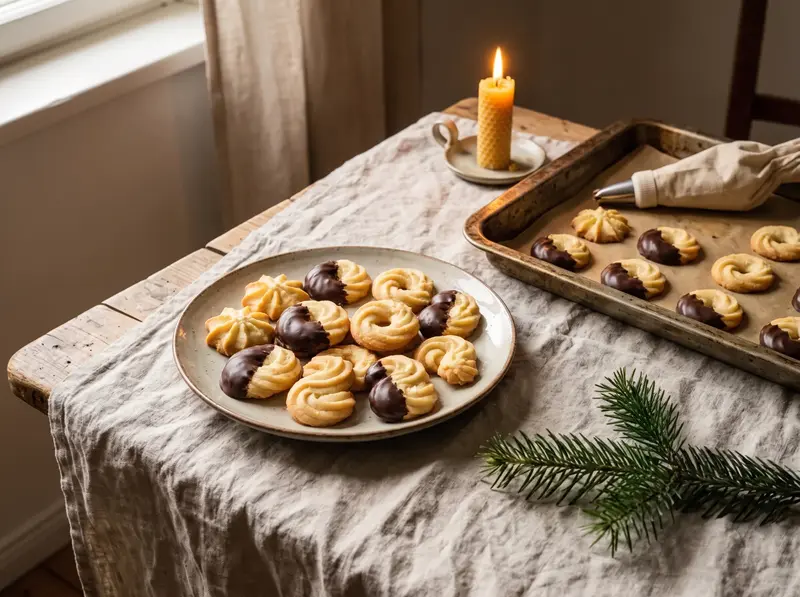
Spritzgebäck (spritz cookies in English, also called Butter-Spritzgebäck) is a German butter cookie: a soft dough of butter, powdered sugar, egg, flour and vanilla that is piped through a star nozzle into rings, S-shapes or rosettes instead of being rolled and cut. Cream the butter, mix in the flour, pipe, chill the trays 30 minutes, bake at 180°C for 12 to 14 minutes and dip half of each cookie in dark chocolate; the batch makes about 40 cookies, 5 per serving. The dough has to be soft enough to leave the nozzle but firm enough to keep its ridges, and most of the method below is about getting that balance. The time counts hands-on work and the oven; the 30-minute chill and the hour the chocolate needs to set come on top.

70 min490 kcal8 serves
🌿Vegetarian
Vanillekipferl (German Vanilla Crescent Cookies) with flour, butter and almonds — Germany recipe
🇩🇪GermanyAdvanced
Flour and Confectionery Products

Vanillekipferl (German Vanilla Crescent Cookies)

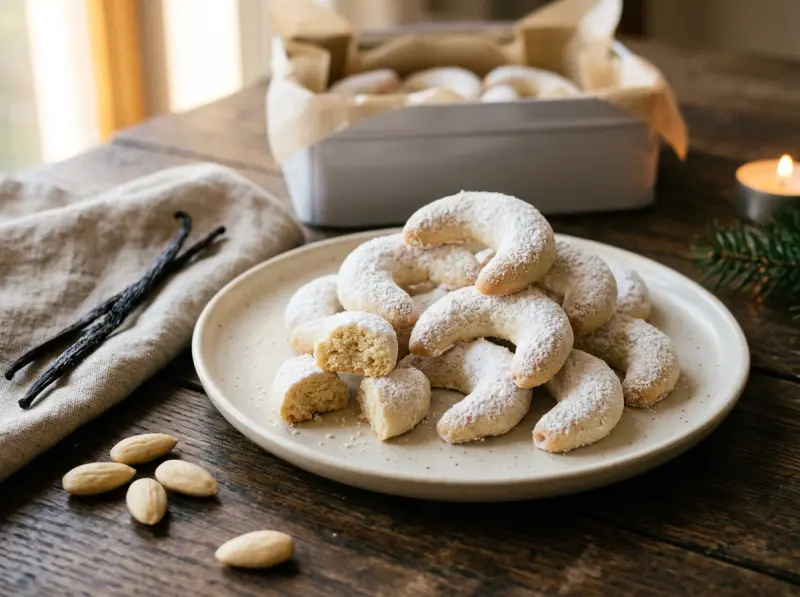
Vanillekipferl are small crescent-shaped shortbread cookies made with ground almonds and rolled in vanilla sugar while still warm. They were first baked in Vienna, and today no Advent cookie tin in Germany or Austria is complete without them. The dough has no baking powder and only two egg yolks, so the crumb is sandy and melts on the tongue instead of crunching. The 75 minutes cover mixing, shaping and baking three trays; the dough also needs an hour in the fridge before shaping, and the cookies are at their best after two or three days in a tin. Makes about 60 pieces, five to a serving.

75 min320 kcal12 serves
🌿Vegetarian
Zimtsterne (German Cinnamon Star Cookies) with almonds, egg whites and cinnamon — Germany recipe
🇩🇪GermanyAdvanced
Flour and Confectionery Products

Zimtsterne (German Cinnamon Star Cookies)

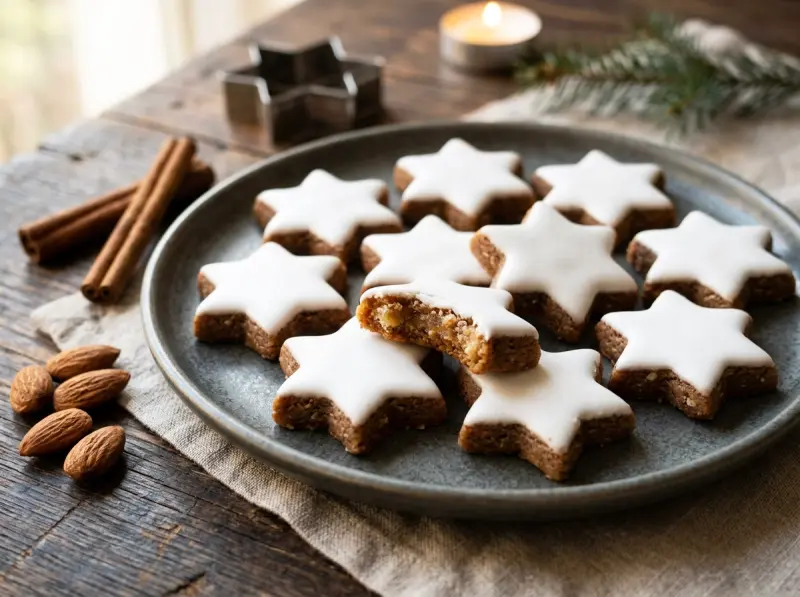
Zimtsterne are star-shaped German Christmas cookies made without any flour: the dough is ground almonds, cinnamon and a meringue of egg whites and powdered sugar, and part of that same meringue becomes the white glaze on top. They come from Swabia in southern Germany and are chewy and soft inside, closer to marzipan than to a biscuit. They bake at a low 140°C so the glaze stays snow white. The 90 minutes cover whipping, cutting, glazing and two trays in the oven; the sticky dough also rests 45 minutes in the fridge before rolling. Makes about 40 stars, four to a serving, and they are naturally gluten-free.

90 min350 kcal10 serves
🌿Vegetarian🌾Gluten-free
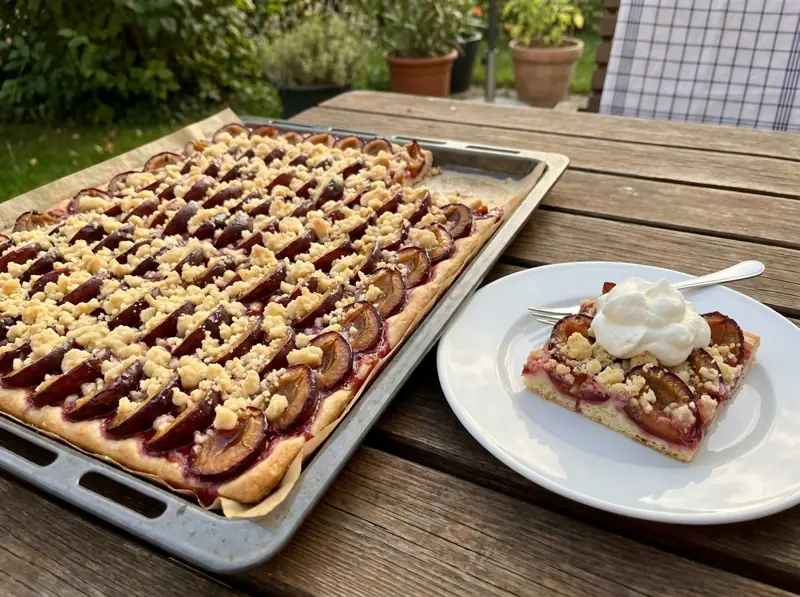
Zwetschgendatschi (Bavarian Plum Sheet Cake) with italian plums, dry yeast and flour — Germany recipe
🇩🇪GermanyAdvanced
Flour and Confectionery Products

Zwetschgendatschi (Bavarian Plum Sheet Cake)

Zwetschgendatschi, often shortened to Datschi or called Zwetschgenkuchen in other parts of Germany, is a Bavarian sheet cake made from thin yeast dough covered edge to edge with halved Zwetschgen, the small, oval, deep-purple Italian plums that ripen from August into October. Augsburg claims the cake as its own invention, and its residents are still nicknamed Datschiburger, partly because the fanned-out plum halves are said to resemble the pinecone on the city's coat of arms. The dough stays thin and only lightly sweet, so the fruit carries the flavor: tart skin against soft, jammy flesh, with a scatter of cinnamon or butter streusel on top. It disappears from bakery counters once plum season ends and comes back every autumn in time for Erntedank, the German harvest festival in early October.

70 min390 kcal12 serves
🌿Vegetarian
Zwiebelkuchen (German Onion Tart) with onion, flour and sour cream — Germany recipe
🇩🇪GermanyAdvanced
Flour and Confectionery Products

Zwiebelkuchen (German Onion Tart)

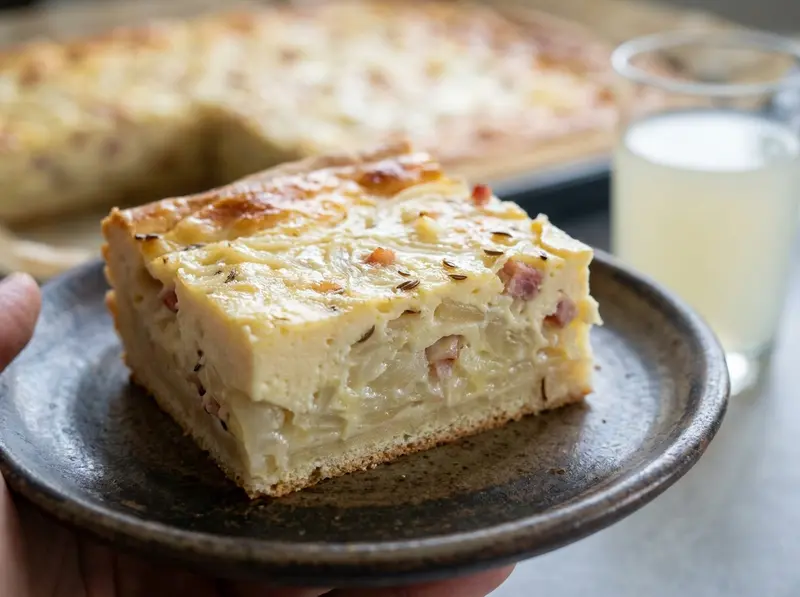
Zwiebelkuchen is a savoury onion tart from the wine villages of southern Germany (Swabia, the Palatinate, Baden, Franconia), eaten through September and October with Federweisser, the cloudy young wine that is still fermenting in the glass. Underneath the topping is yeast dough rather than pastry, a thin bread base pressed into a sheet pan, which is how it is sold at the autumn wine festivals. On top goes well over a kilo of onions sweated until they collapse, bound with sour cream and eggs, seasoned with caraway and studded with smoked bacon. The dough needs about an hour to rise before any of that begins, so the timing below does not include it.

80 min350 kcal12 serves

Nearby flavors

Four kitchens with overlapping ingredients and similar rhythms to German cooking.