Skip to content
GetCookMatch
⌘K
Cuisine · Germany

German cooking

Sausages, potato everything, bread with crust thick enough to matter. Sauerkraut that fermented 3 weeks, schnitzel fried properly.

Sort by
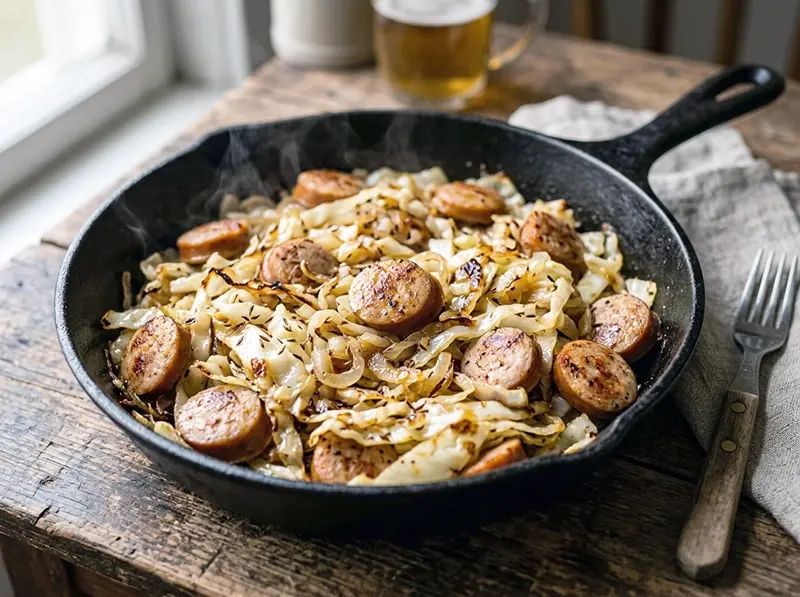
Krautpfanne (German Cabbage and Sausage Skillet) with smoked sausage, white cabbage and onion — Germany recipe
🇩🇪GermanyMedium
Meat Dishes

Krautpfanne (German Cabbage and Sausage Skillet)

Krautpfanne is a southern German one-pan supper: white cabbage cut into ribbons, onion and smoked sausage cooked down in lard with caraway and sweet paprika. Kraut is simply what cabbage is called in Bavaria, Swabia and Austria, and the pan takes its name from it. The sausage goes in first so that the fat it renders is what the cabbage cooks in, and the last few minutes happen with the lid off, which is where the browned edges come from. A spoonful of vinegar at the end keeps it from sitting heavy.

30 min430 kcal4 serves
⚡Quick🌾Gluten-free💪High protein
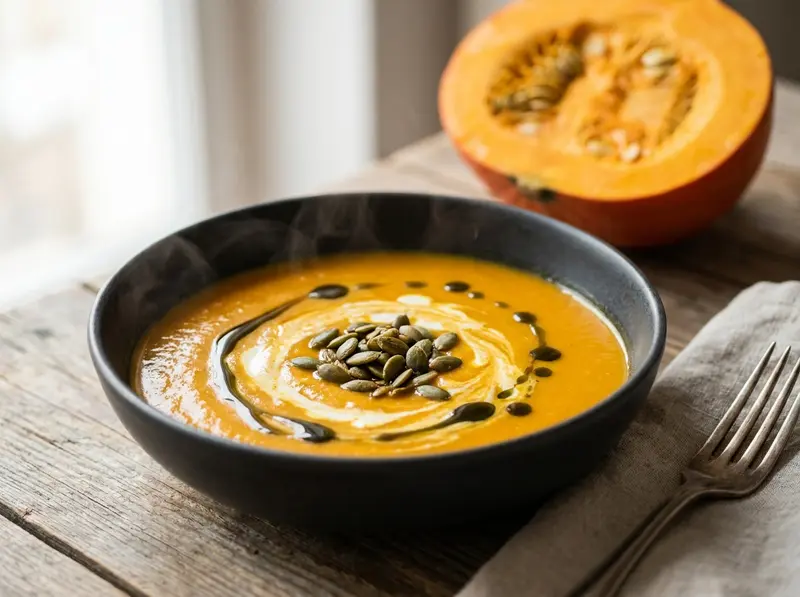
Kürbissuppe (German Pumpkin Soup) with pumpkin, onion and garlic — Germany recipe
🇩🇪GermanyMedium
Soups

Kürbissuppe (German Pumpkin Soup)

Kürbissuppe is the pumpkin soup Germans cook from late September through November, built on Hokkaido squash, onion, ginger and a little cream. The Hokkaido goes into the pot unpeeled: its skin is thin, cooks away completely in twenty minutes and carries a good share of the colour and of the chestnut taste that separates this from a soup made with peeled butternut. The cubes are browned in butter first, otherwise the sweetness has nothing underneath it. It gets finished at the table with toasted seeds and a spoonful of dark green pumpkin seed oil.

40 min340 kcal4 serves
🌿Vegetarian🌾Gluten-free
Martinsgans (German Roast Goose) with goose, apple and onion — Germany recipe
🇩🇪GermanyAdvanced
Meat Dishes

Martinsgans (German Roast Goose)

Martinsgans is the roast goose Germany eats around 11 November, the feast of St Martin, stuffed with apples, onions and mugwort and served with red cabbage and potato dumplings. The same bird reappears at Christmas, but November is when it belongs to a date. The method is slow and then fast: about three hours at 160 to 180°C for a 4.5 kg goose, breast down for the first hour so the back fat bastes the lean meat, then a short blast at 220°C with a brush of salted water to crisp the skin. The bird also gives up half a litre of clean fat along the way, which is a second ingredient rather than waste.

240 min820 kcal6 serves
🌾Gluten-free💪High protein

Mulled Wine with red wine, orange and cinnamon sticks — Germany recipe
🇩🇪GermanyEasy
Beverages

Mulled Wine

Glühwein is the hot spiced red wine poured from wooden huts at German Christmas markets: wine, sugar, orange and whole spices, and under EU rules nothing else — not even water. Orange and cinnamon carry the top of it, while cloves and star anise sit underneath and keep the drink from reading as syrup. Heat is the whole job here: hold the pot near 70°C and never let it bubble, or the wine browns and goes flat. Active work is about fifteen minutes, after which the pan sits on the lowest flame for another twenty to thirty while the spices open up.

15 min200 kcal4 serves
🌱Vegan🌿Vegetarian🌾Gluten-free
Obatzda with camembert, butter and cream cheese — Germany recipe
🇩🇪GermanyMedium
Appetizers and Sandwiches

Obatzda

Obatzda is the Bavarian beer-garden spread of over-ripe soft cheese mashed with butter, sweet paprika and onion, eaten on dark bread or torn off with a pretzel. It began as a way to use up camembert that had gone too far to serve in slices, and since June 2015 the name has carried an EU protected geographical indication: the finished spread has to be at least half cheese, built on camembert or brie. The work itself takes twenty minutes and needs nothing but a fork. What it does need is planning: an hour out of the fridge before you start so the cheese and butter are soft, and an hour back in it afterwards so the spread firms up.

20 min305 kcal5 serves
🌿Vegetarian🥑Keto⚡Quick
Pretzel (Brezel) with bread flour, yeast and baking soda — Germany recipe
🇩🇪GermanyAdvanced
Flour and Confectionery Products

Pretzel (Brezel)

Yeast-leavened dough shaped into the classic knot, dipped in a strongly alkaline bath, and baked at high heat until the crust turns deep mahogany brown and crackles. The alkaline bath is what makes a pretzel taste like a pretzel — it triggers an intense Maillard reaction on the surface that no other baking technique can replicate. Authentic German pretzels (Laugenbrezel) use food-grade lye; this recipe uses baked baking soda, a practical home alternative that reaches a higher pH than regular baking soda. The belly is thick and soft; the twisted arms are thin and chewy-crisp. Served warm, spread with butter, with a cold beer.

90 min280 kcal8 serves
🌿Vegetarian
Rinderrouladen (German Beef Roulades) with beef, bacon and dill pickles — Germany recipe
🇩🇪GermanyAdvanced
Meat Dishes

Rinderrouladen (German Beef Roulades)

The German Sunday roast in miniature: thin slices of beef spread with mustard, layered with bacon, onion, and a dill pickle, rolled tight and braised for two hours until they cut with a fork. The sauce is built from the browned bits in the pan, which is why searing the rolls hard matters more than anything else here.

150 min520 kcal4 serves
💪High protein
Rotkohl (German Braised Red Cabbage) with red cabbage, apple and onion — Germany recipe
🇩🇪GermanyAdvanced
Vegetable and Mushroom Dishes

Rotkohl (German Braised Red Cabbage)

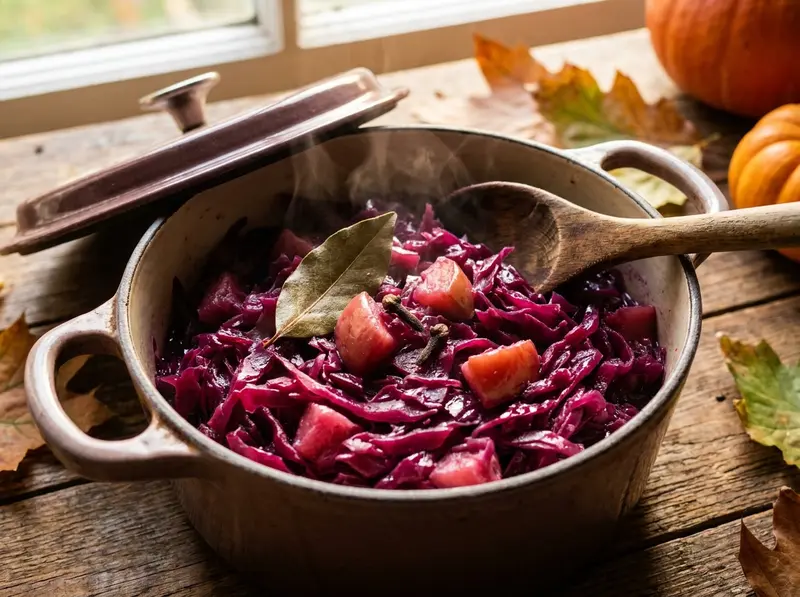
Rotkohl is the braised red cabbage that sits next to almost every German roast from October onwards: shredded cabbage cooked down for an hour with apple, onion, vinegar and cloves until it goes glossy and deep purple. The vinegar is not only there for taste. The pigment in red cabbage works like a pH indicator, and without acid the pot turns a murky blue-grey, which is also why the same vegetable is called Blaukraut in Bavaria and Rotkohl in the north. It tastes better on the second day, so most households cook it the night before the roast and take one job off the table.

80 min150 kcal6 serves
🌿Vegetarian🌾Gluten-free

Schnitzel with pork loin cutlets, plain breadcrumbs and eggs — Germany recipe
🇩🇪GermanyMedium
Meat Dishes

Schnitzel

Thin pork or veal cutlets pounded to 3 to 4 mm, breaded with flour, egg, and breadcrumbs, and fried in hot fat until the crust is golden and crackling. The mark of a well-made schnitzel is a crust that has puffed slightly away from the meat and blisters with air pockets — this happens only when the breadcrumbs are not pressed in. The fat must be deep enough that the schnitzel floats rather than sits on the pan base. Serve immediately with a wedge of lemon. This is the Schweineschnitzel (pork) version; for Wiener Schnitzel, use veal.

30 min520 kcal4 serves
⚡Quick💪High protein
Soft Pretzels (Laugenbrezeln) with bread flour, yeast and butter — Germany recipe
🇩🇪GermanyAdvanced
Flour and Confectionery Products

Soft Pretzels (Laugenbrezeln)

Laugenbrezeln (lye pretzels) are Germany's most iconic baked bread — a yeast dough shaped into the traditional looped knot, dipped in an alkaline bath, and baked at high heat until the crust turns a deep, glossy mahogany with a characteristic chewy outer layer and a soft, slightly dense interior. The word Lauge means lye, referring to the sodium hydroxide solution that bakeries use — it is the alkali bath that produces the distinctive pretzel flavor and color through the Maillard reaction at a lower temperature than bread normally allows. At home, baked baking soda (regular baking soda heated in the oven to convert it to sodium carbonate, which is more alkaline) produces a result close to the bakery original. Served with coarse pretzel salt, they are essential at Oktoberfest, Bavarian beer gardens, and across southern Germany.

120 min280 kcal8 serves
🌿Vegetarian
Spätzle with plain flour, eggs and butter — Germany recipe
🇩🇪GermanyMedium
Cereal and Pasta Dishes

Spätzle

Soft egg-and-flour dumplings pressed through a grater or colander into simmering salted water, then finished in brown butter until lightly crisp at the edges. Spätzle (pronounced SHPETS-luh, meaning 'little sparrows') comes from Swabia in southern Germany and is the region's equivalent of pasta — served alongside schnitzel and goulash, or layered with melted cheese to make Käsespätzle. The batter is thicker than pancake batter but thinner than a dough; it falls through the holes under its own weight when pushed with a spatula. The butter finish in the pan is what elevates them from simple boiled dumplings to something worth eating on their own.

35 min340 kcal4 serves
🌿Vegetarian
Spekulatius (German Spiced Christmas Biscuits) with almonds, cinnamon and cardamom — Germany recipe
🇩🇪GermanyAdvanced
Flour and Confectionery Products

Spekulatius (German Spiced Christmas Biscuits)

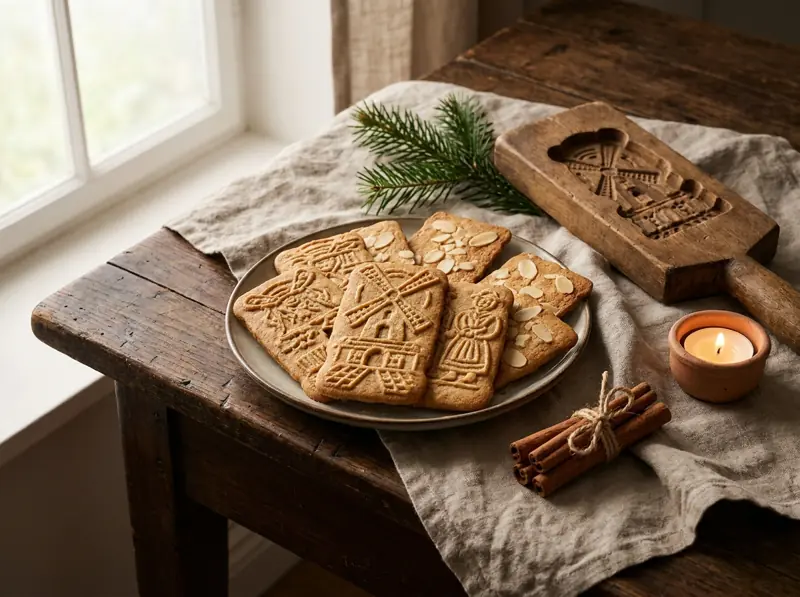
Spekulatius are thin, crisp spiced shortcrust biscuits stamped with a picture before baking, known in the Netherlands and Belgium as speculaas and baked across the Rhineland and Westphalia for Sankt Nikolaus on 6 December. The dough is a butter shortcrust built around a home-mixed spice blend of cinnamon, clove, cardamom, nutmeg, ginger, allspice and white pepper, with ground almonds folded in for a short, sandy bite. Traditionally the picture comes from a carved wooden mould, a Model, but an embossed rolling pin or an ordinary cookie cutter gives the same biscuit without ever owning one. The 60 minutes here covers mixing, shaping and two trays in the oven; the dough itself needs to rest in the fridge overnight, and the biscuits only crisp up fully once they cool. Makes about 45 thin biscuits, five to a serving.

60 min345 kcal9 serves
🌿Vegetarian

Nearby flavors

Four kitchens with overlapping ingredients and similar rhythms to German cooking.