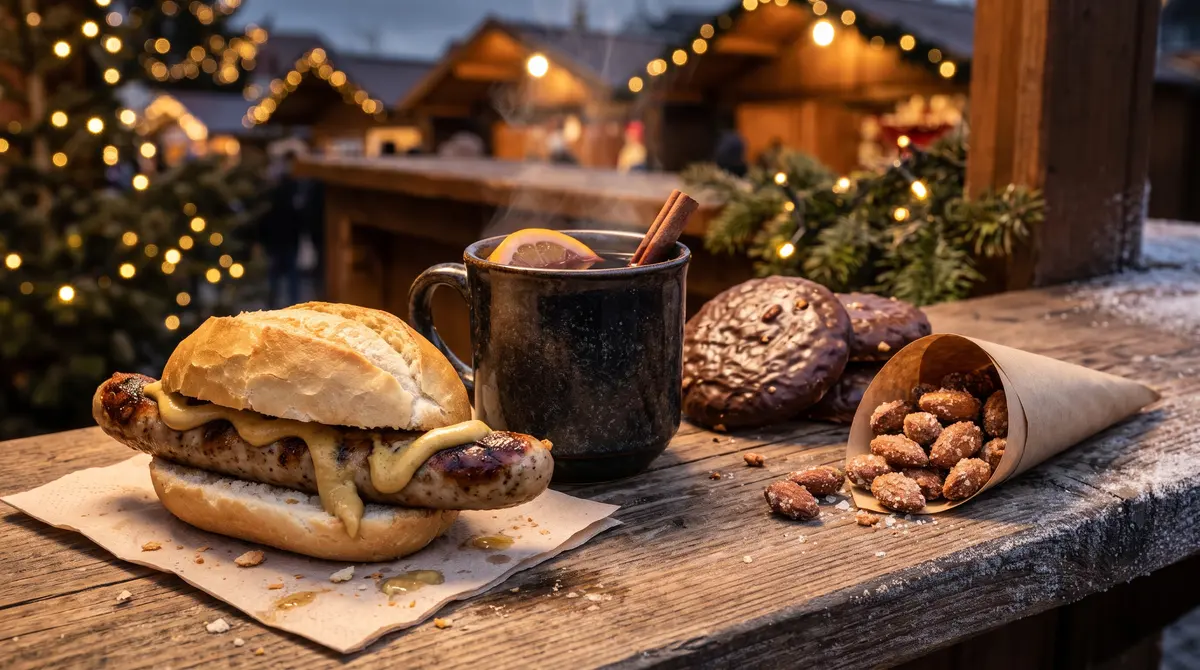
A German Christmas market, the Weihnachtsmarkt, is a street fair of wooden stalls set up in a town square during Advent. Depending on the region it is also called Christkindlesmarkt, Christkindlmarkt or Adventsmarkt. People go for the decorations and the crafts, and to eat and drink outdoors in the cold: grilled sausages, potato pancakes, gingerbread, Stollen, roasted chestnuts, candied almonds and a mug of hot Glühwein. This guide goes through what the stalls sell, group by group, and which of our recipes will get you close to it at home.
When the big markets open in 2026
The dates move a little every year, so here they are from the organisers. The market by Cologne Cathedral, on Roncalliplatz, runs from Monday 16 November to 23 December 2026 and closes for one day, Totensonntag, 22 November. Dresden's Striezelmarkt on the Altmarkt opens on Wednesday 25 November at 4 pm, with the traditional cutting of a Christstollen, and stays open until 2 pm on 24 December. It has been held since 1434, which makes it the oldest Christmas market in Germany with a document to prove it. Nuremberg's Christkindlesmarkt opens on Friday 27 November 2026: the Christkind opens it with her prologue at 5.30 pm, and the stalls trade until 24 December, 10 am to 9 pm on ordinary days.
From the grill and the pan: Bratwurst, Currywurst and Reibekuchen
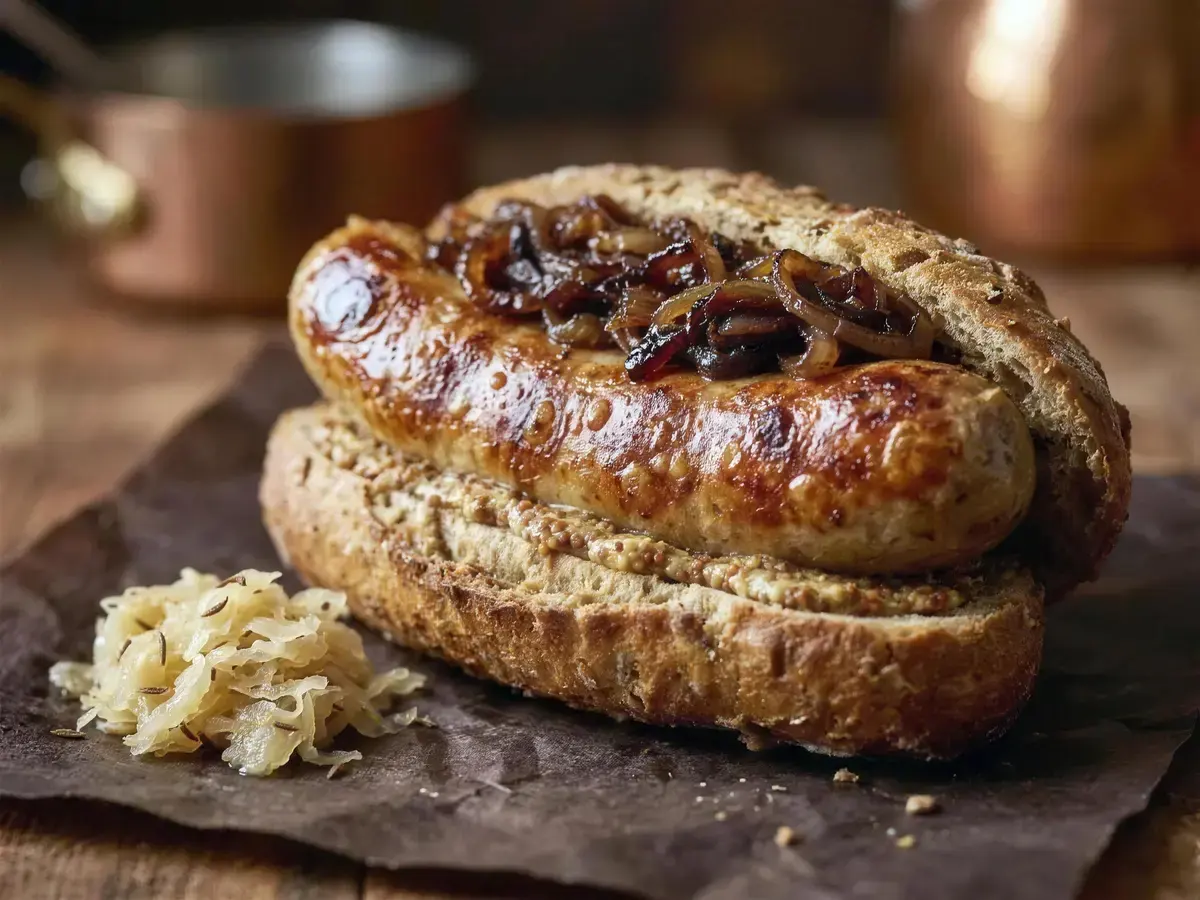
Almost every market has a sausage hut. In Nuremberg it sells the local Rostbratwurst, a small sausage of 7 to 9 cm and about 20 to 25 g, eaten as "Drei im Weggla", three of them in a bread roll. The name Nürnberger Rostbratwurst is a protected geographical indication, so only sausages made in Nuremberg may carry it. Elsewhere the hut usually sells a full-size bratwurst in a roll, with mustard or ketchup.
Our bratwurst is a full-size fresh pork sausage of about 100 g, and its method comes from Wisconsin, not from Franconia. The sausages simmer in beer with onion and bay for 10 to 12 minutes until the centre reads 71°C, then go into a very hot cast-iron pan for 3 to 4 minutes a side. The simmer cooks them through without splitting the skin, and the pan gives you the blistered brown casing you get at a stall. Split a crusty roll, spread both sides with medium-hot German mustard and you're most of the way to the market version.
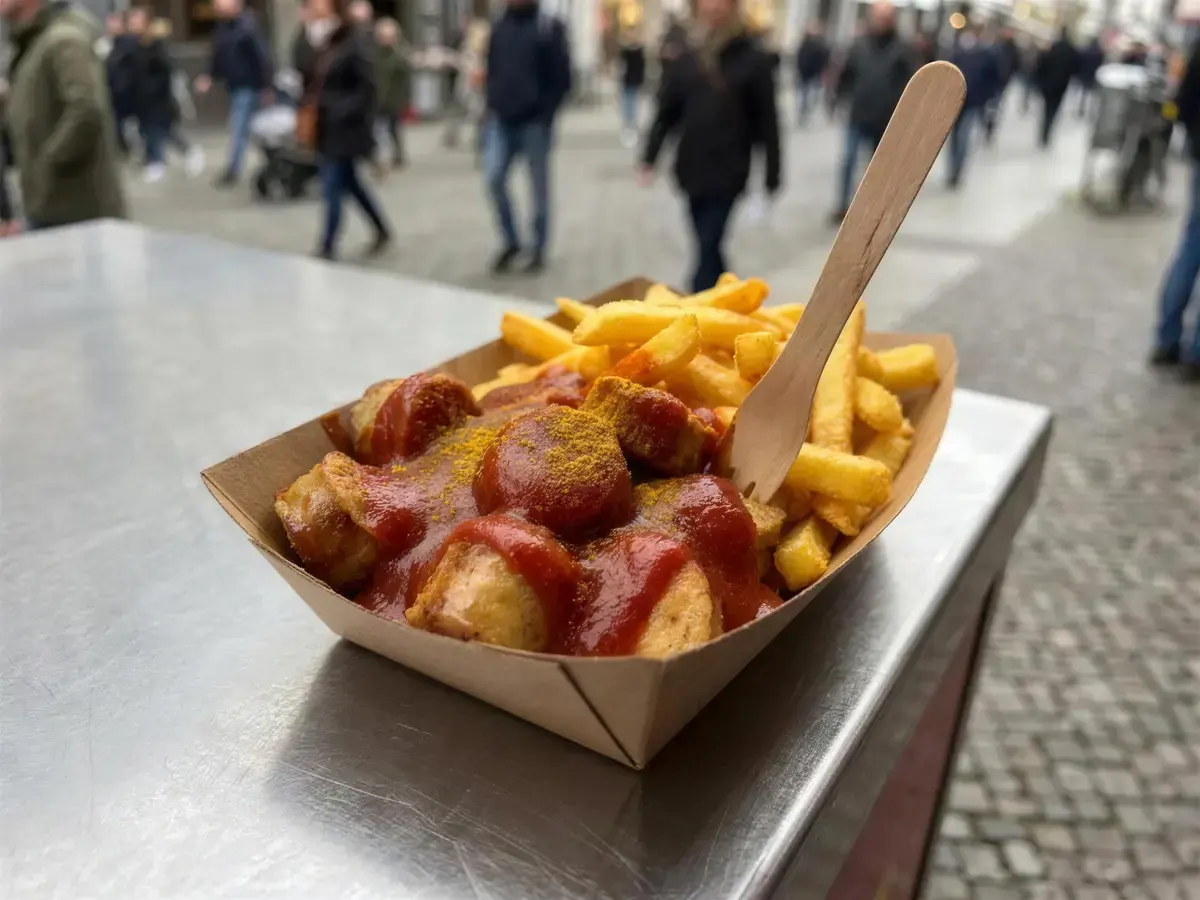
Currywurst is a market regular too. NDR's consumer programme "Markt" tested the market versions in December 2025 and found prices of five euros and up for one sausage. For our Currywurst the sauce is tomato paste fried with sweet paprika and curry powder, then simmered with beef broth, vinegar and Worcestershire sauce for 10 to 15 minutes, until it coats a spoon. The sausage is poached to 71°C, seared, cut into rounds and buried under the sauce with a last dusting of curry powder. Berlin traces the dish to Herta Heuwer's stand in Charlottenburg in 1949, although that story is disputed.
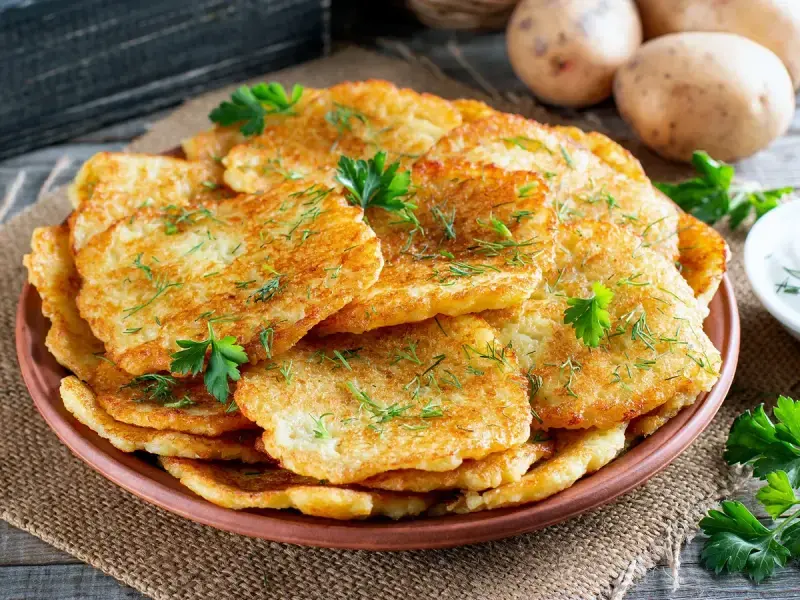
In the Rhineland the classic market snack is the potato pancake. Reibekuchen (Rievkooche in Rhineland dialect, Kartoffelpuffer or Reiberdatschi elsewhere) are grated potato pancakes fried crisp in hot fat, and the usual partner is apple sauce, sometimes sugar and cinnamon. We don't have a Rhineland recipe, but our draniki are Belarusian potato pancakes made the same way. You grate potato and onion together, squeeze out the liquid hard, stir the settled starch back in and fry spoonfuls in about 1 cm of hot oil for 3 to 5 minutes a side. Keep the finished ones on a rack in a 100°C oven while the rest fry. Our recipe serves them with sour cream. For the market version, swap it for a spoonful of apple sauce.
Cheese and dough: Flammkuchen, raclette and Käsespätzle
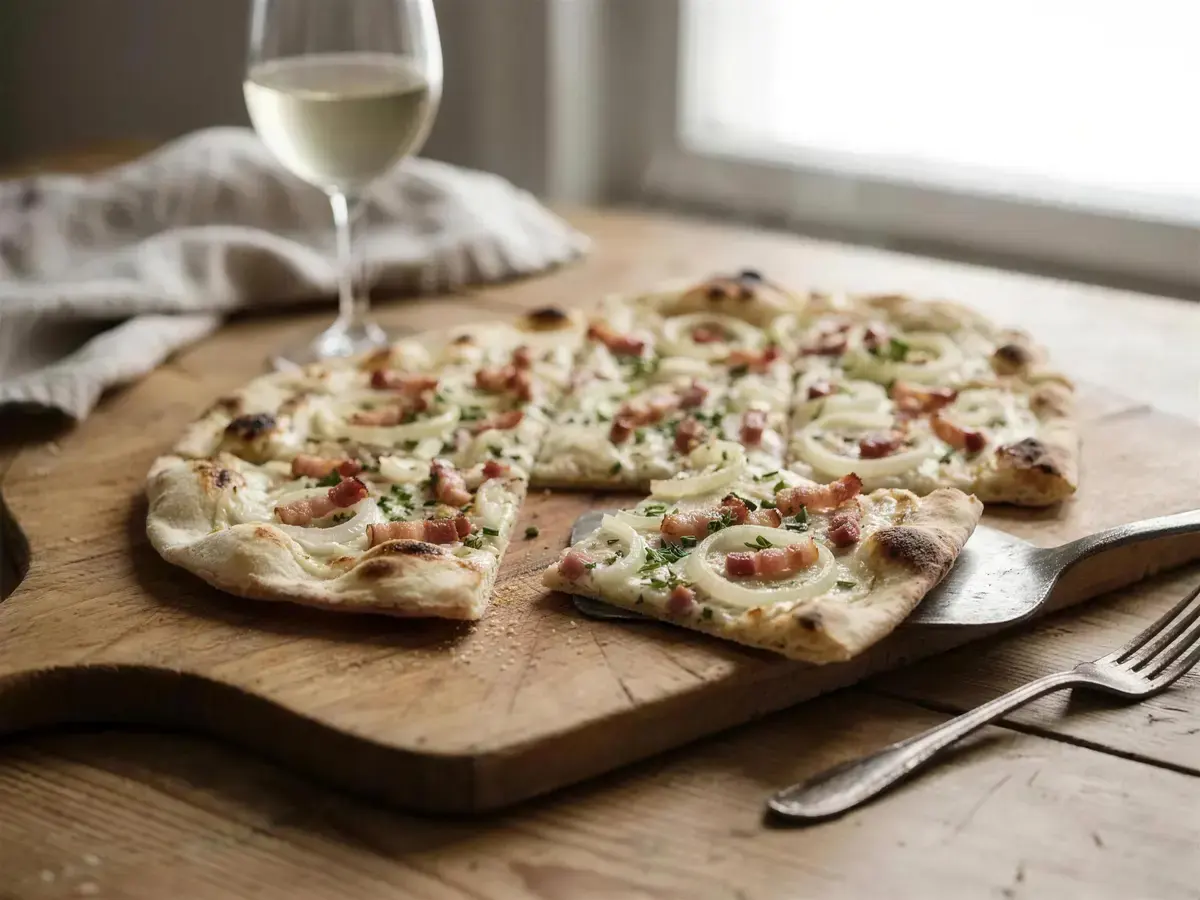
Flammkuchen comes from Alsace and the wine regions along the Rhine, and it now turns up at Christmas markets as well. It is a paper-thin flatbread under soured cream, onion and bacon. Our Flammkuchen has no yeast in the dough, which is why it bakes into something closer to a cracker than a pizza. You roll it about 2 mm thick, thin enough to see the grain of the baking paper through it, and bake it for 10 to 12 minutes at 250°C on a sheet that has been heating with the oven. Take it out when the onion tips have caught and turned black. Those burnt edges carry a lot of the flavour.
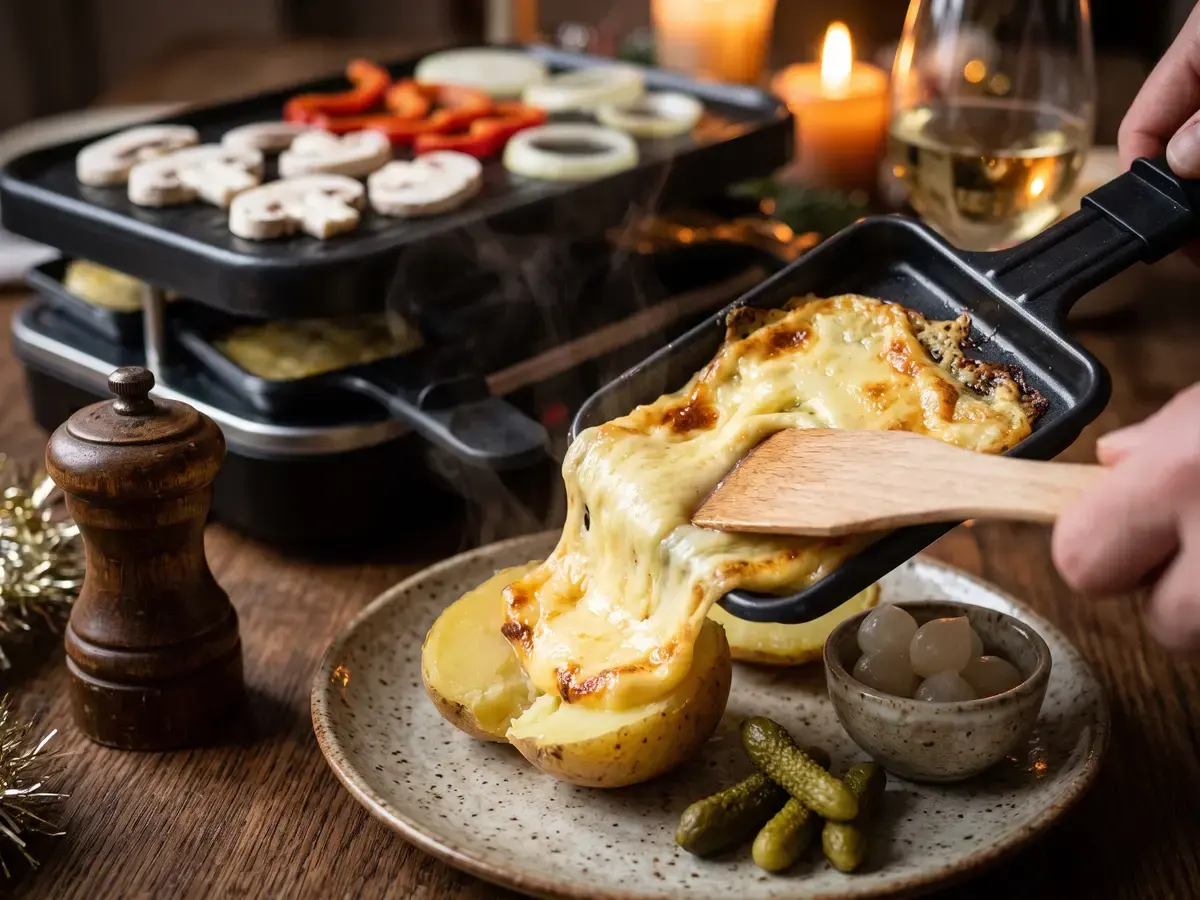
Raclette bread is the cheese stall's version: a slice of bread topped with melted raclette cheese. Our raclette is the dinner rather than the snack. It is the tabletop grill that comes out in many German homes at Christmas and New Year's Eve, with potatoes boiled in their skins, gherkins and small pickled onions. Each guest melts a slice of cheese in a little pan for 3 to 5 minutes, until it bubbles and browns at the edges, and scrapes it onto a potato. The market snack works the same way. Scrape the melted cheese onto bread instead of potato.
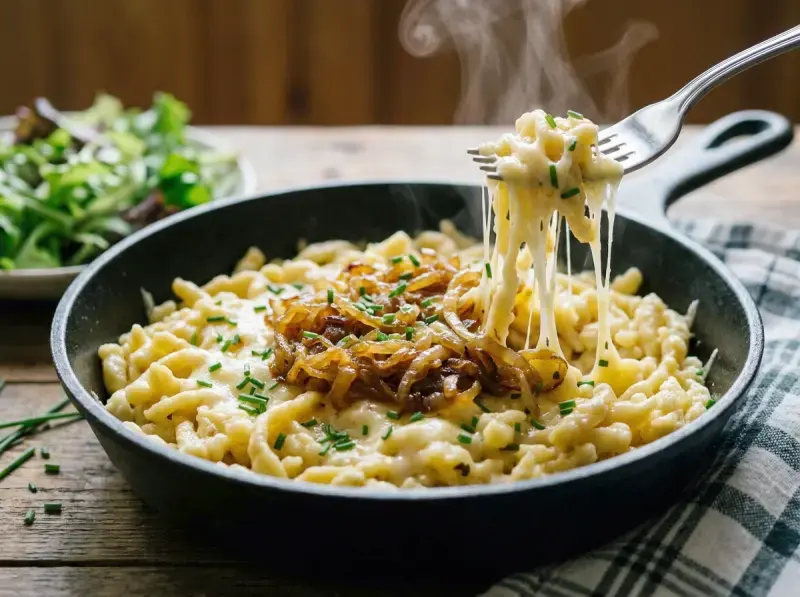
Käsespätzle are the heaviest thing on the market menu: soft egg noodles layered with cheese and topped with fried onions. Our Käsespätzle use 400 g flour and 4 eggs, beaten hard until the batter blisters. The batter is pressed into boiling salted water in batches and lifted out about 30 seconds after the noodles float. They go straight into a warm bowl in layers with grated Emmental and Gruyère, so the cheese melts on the heat of the noodles alone. Fry the onions slowly while the batter rests, 15 to 20 minutes, until they are deep golden. The other pan dish on almost every stall list is the crêpe, sweet or savoury, often just with cinnamon and sugar.
Sweet stalls: Lebkuchen, Stollen, Spekulatius and baked apples
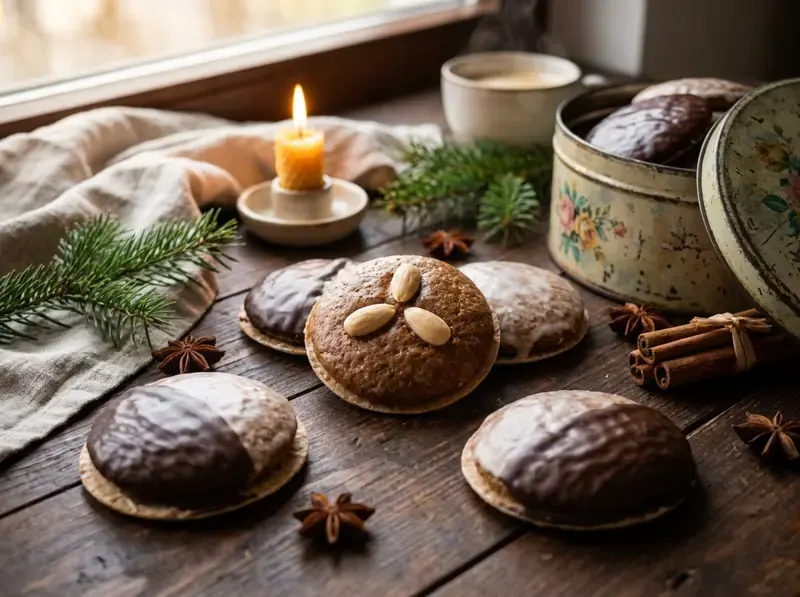
Nuremberg is the gingerbread town, and its market sells Nürnberger Lebkuchen at many stalls. The finest kind, Elisenlebkuchen, must by German food standards be at least 25% nuts and no more than 10% flour. Our Elisenlebkuchen leave the flour out altogether: ground almonds, hazelnuts and walnuts, very finely chopped candied peel, honey and spice, held together by eggs whipped for 5 to 6 minutes until pale and tripled. About 40 g of the mixture goes onto each round baking wafer, smoothed right to the edge, and bakes for 20 to 22 minutes at 160°C. The tops should stay pale. Half get a lemon icing, half get dark chocolate, and both need a night uncovered to set.
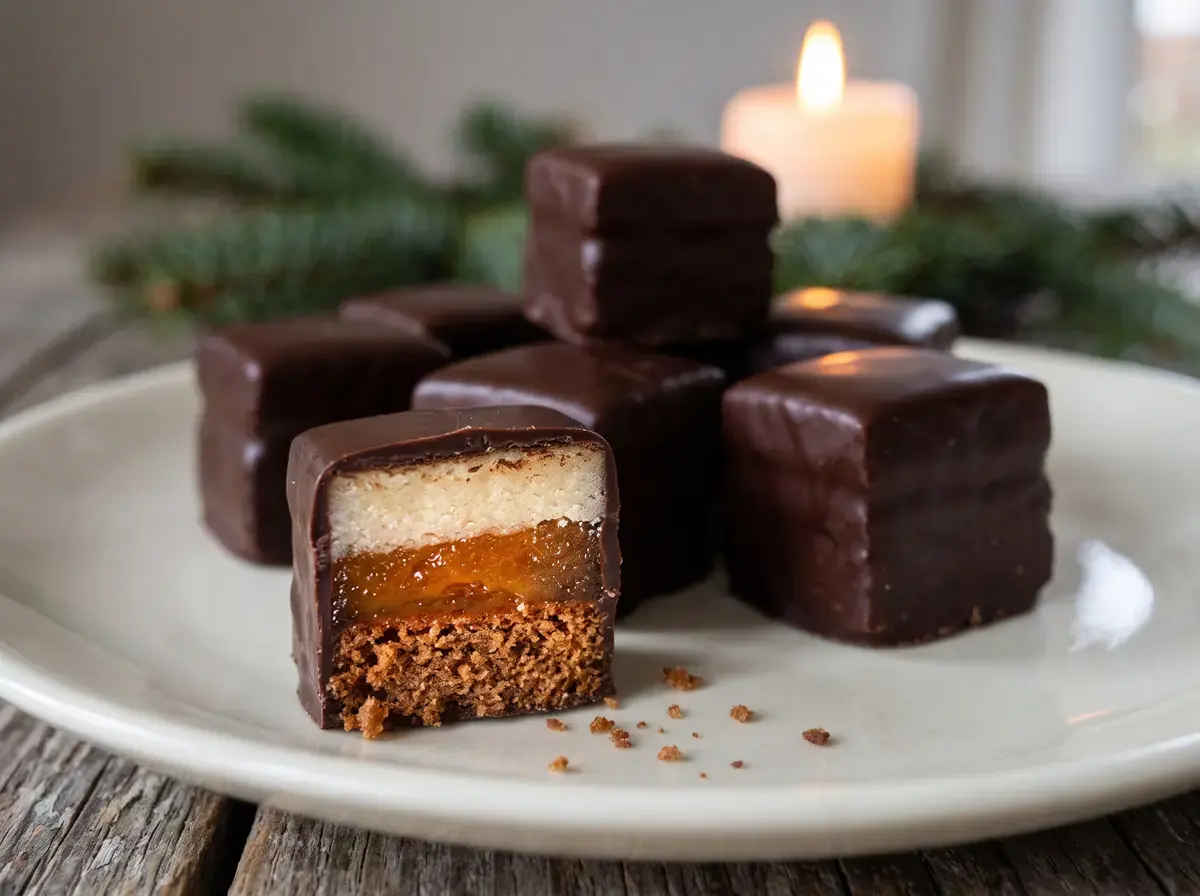
Dominosteine are a German Christmas sweet: little cubes of honey gingerbread, apricot jelly and marzipan coated in dark chocolate. According to dpa they were created in Dresden in 1936 by the chocolatier Herbert Wendler. At home the job takes two days. Our version builds one slab in a 20 × 30 cm tin, lets the jelly set overnight under the marzipan and cuts about 90 cubes of 2.5 cm, then dips each one on a fork. They keep for 3 weeks in a closed tin in the fridge.
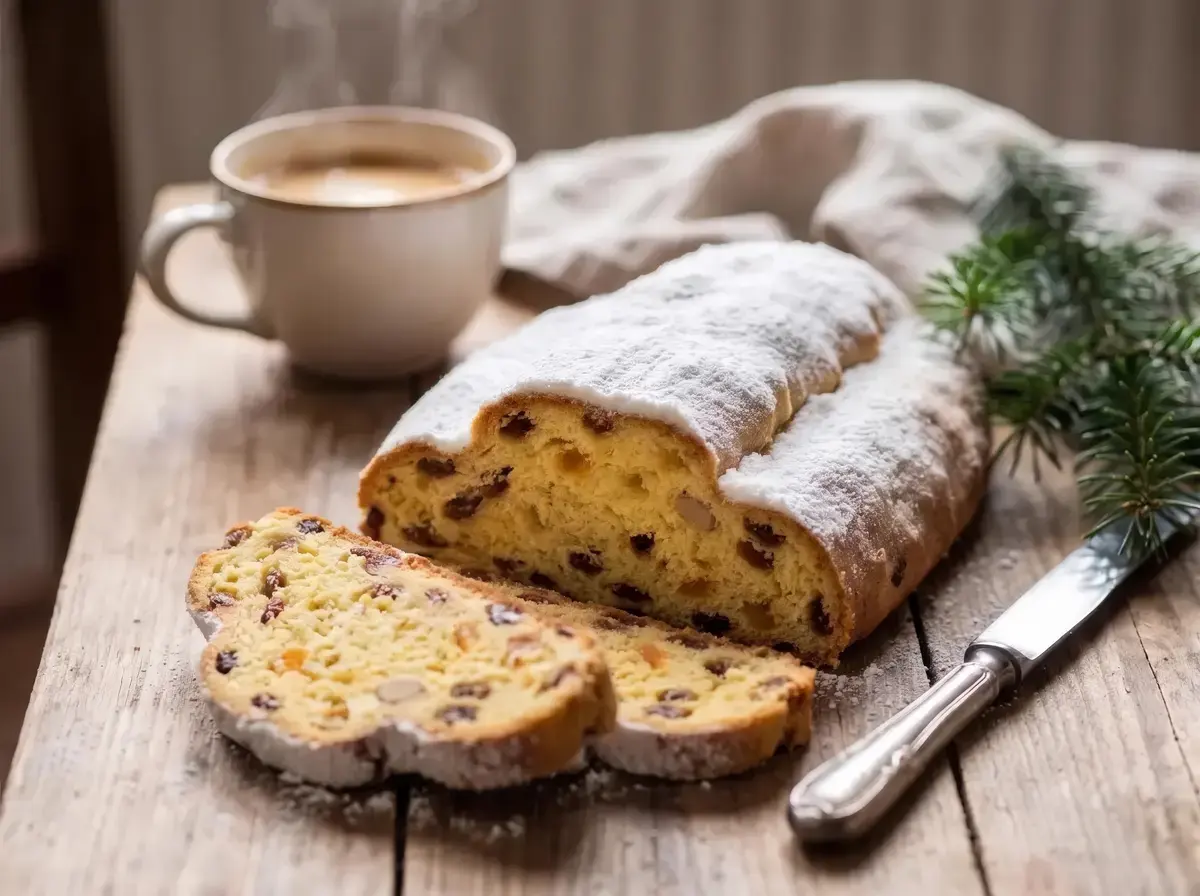
Dresden's market is named after Stollen. "Striezel" is an old word for the loaf, and the city holds a Stollen festival at the Striezelmarkt on 5 December 2026, with a gingerbread festival on the 6th. Our Christstollen is a buttery yeast loaf with rum-soaked raisins, candied orange and lemon peel and almonds, folded into its ridge and baked for about 50 minutes: 10 at 200°C, then 40 at 170°C. While it is hot you brush it with 100 g of melted butter and coat it in powdered sugar, then wrap it and leave it in a cool place for two to three weeks before cutting. Bake it at the start of Advent and it is ready for Christmas. Only loaves baked in Dresden and the towns around it may be sold as Dresdner Stollen.
Spekulatius, on the stall lists next to Lebkuchen and Stollen, are thin spiced biscuits stamped with a picture, baked for St. Nicholas Day on 6 December in the Rhineland and Westphalia. Our Spekulatius dough rests overnight, is rolled to 3 mm and bakes for 9 to 11 minutes at 190°C. Watch the last two minutes, because they burn fast. Vanillekipferl, Zimtsterne and the rest of the cookie tin are in our German Christmas cookies guide.
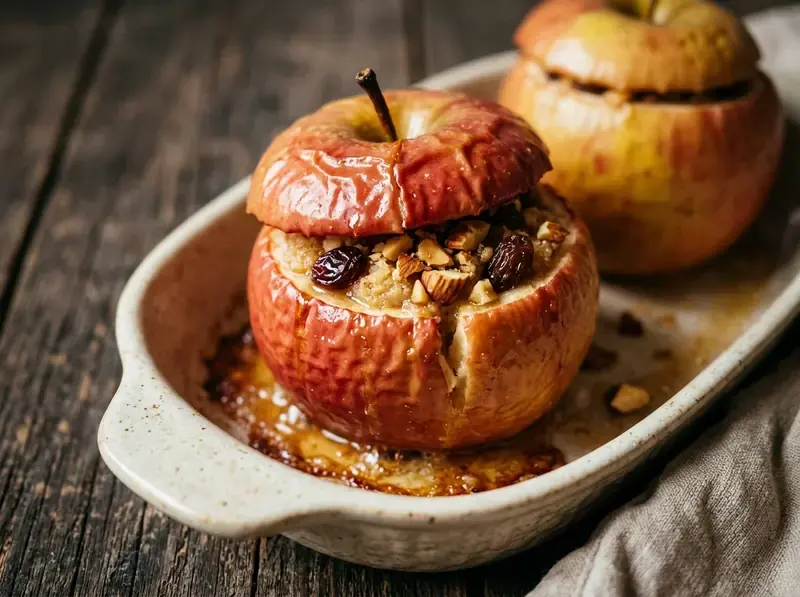
A Bratapfel, a baked apple, is the warm dessert of the season, sold at markets and made at home. Ours is a Bratapfel filled with marzipan, toasted almonds and rum-soaked raisins, baked at 180°C for 35 minutes with a little apple juice in the dish. It's done when a skewer slides in easily and the skin has wrinkled and started to split. Firm, tart apples work best; Boskoop is the German choice. Germans usually pour vanilla sauce over it, which our recipe doesn't include.
The smell that often fills the whole market comes from gebrannte Mandeln, almonds stirred with sugar and water until the sugar caramelises around them. We don't have a recipe for them yet.
Hot drinks: Glühwein, Eierpunsch, Kinderpunsch and hot chocolate

Glühwein is drunk in Advent, often at Christmas markets. It is so tied to them that some people call a market a "Glühmarkt". In Germany it is a regulated drink: nothing goes in to stretch it, no water at all, and it must end up between 7% and 14.5% alcohol. Markets often charge a deposit on the mug, and Dresden's Striezelmarkt brings out a new design every year. Our Glühwein takes a 750 ml bottle of red wine, an orange, cinnamon, cloves, star anise, cardamom and rock sugar. The thing to watch is the heat. Hold the pot near 70°C, covered, on the lowest flame for 20 to 30 minutes, and never let it bubble, because alcohol boils off at 78°C and boiled wine turns brown and flat. Strain out the spices before serving, or the second mug will taste bitter.
Eierpunsch is another hot drink for adults at the markets, made from egg liqueur, white wine and vanilla and topped with whipped cream. We don't have a recipe for it. The nearest thing on the site is our homemade eggnog, and it is a different drink: a custard of egg yolks, milk and cream cooked to 71 to 74°C, chilled for at least 3 hours and served cold.
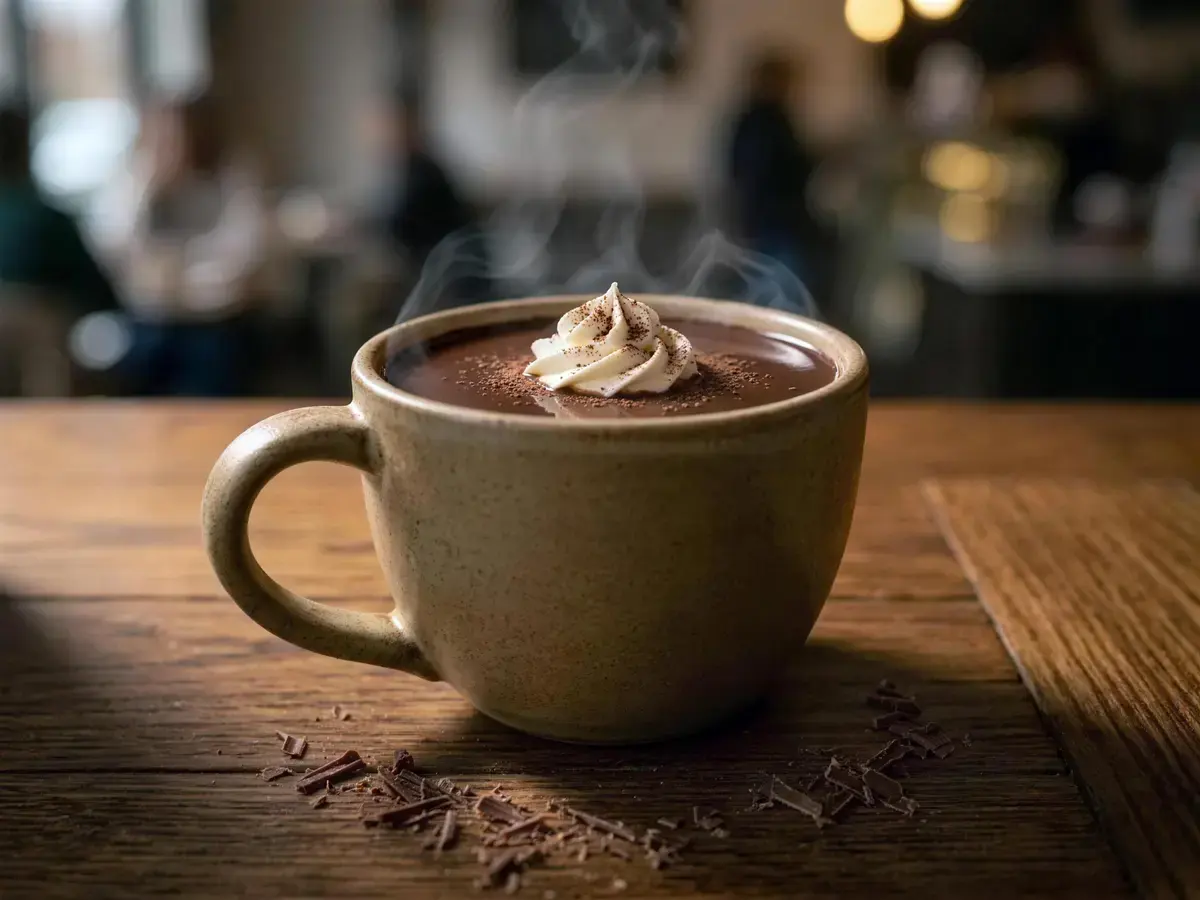
For children there is Kinderpunsch, a sweet hot drink made from fruit tea, and hot chocolate for anyone who would rather skip the wine. With a shot of rum it goes by the name Lumumba. For our hot chocolate you heat 480 ml of whole milk with a spoonful of cocoa to about 70°C, whisk in 80 g of finely chopped dark chocolate and finish with a pinch of salt. It takes 15 minutes. Add the rum to your own cup, not to the pot.
A market evening at home
You don't need all of this at once. One hot dish, one sweet thing and a pot of something warm is already a market evening. The Stollen and the Lebkuchen are baked weeks or days earlier, so on the night the Glühwein sits on the lowest flame while the baked apples are in the oven, and the sausages or the Reibekuchen go in the pan as people arrive. If you want the bigger picture, our German cuisine guide covers the food of the regions these markets come from, and Holiday Food Around the World follows the season from Thanksgiving to Japanese New Year.