

Hausgemachter Cidre (Apfelwein)
Der hausgemachte Cidre in diesem Rezept ist die alkoholische Variante, die in den USA „Hard Cider“ heißt: ein trockenes, leicht perlendes Getränk aus Apfelsaft, der 1 bis 2 Wochen mit Wein- oder Cidrehefe vergoren, dann geklärt und in Flaschen gefüllt wird. Er ist nicht der unvergorene „Cider“, der in den USA als Saft verkauft wird. Der Saft allein ergibt etwa 5 bis 6 % Alkohol, und die 50 g Zucker pro Liter aus diesem Rezept heben ihn auf ungefähr 8 bis 9 %, man behandelt ihn also besser wie Wein als wie Limonade. Er wird trockener und säuerlicher als süßer Cidre aus dem Supermarkt, und sein Geschmack hängt von den Äpfeln ab, mit denen man beginnt. Mit gekauftem Saft kommt die eigentliche Arbeit auf etwa eine Stunde, das Pressen eigener Äpfel dauert mindestens eine weitere; der Rest ist Warten und Sauberhalten.
Zutaten
- 4.5 lApfelsaft, naturtrüb und ungefiltert, ohne Konservierungsstoffe (frisch gepresst oder gekauft)
- 1 PäckchenCidre- oder Weinhefe
- 1 TLHefenährsalz (oder die Dosis laut Packung)
- 1 Campden-Tablette (für nicht pasteurisierten Saft)
- 225 gZucker (50 g pro Liter Saft; nach Belieben, für einen stärkeren Cidre)
- 36 gZucker für die Flaschen (4 g, 1 gestrichener TL, pro 500-ml-Flasche)
Zubereitung
- Saft und Gärgefäß vorbereiten. Die Ausrüstung vor dem Start zusammenstellen: Außer dem Gärgefäß braucht man ein Gärröhrchen, ein Aräometer, einen Weinheber, ein zweites Gefäß mit 4,5 bis 5 Litern, Flaschen für kohlensäurehaltige Getränke und ein lebensmittelechtes Desinfektionsmittel aus dem Hobbybrauer-Bedarf (jedes Teil wird in dem Schritt erklärt, in dem es gebraucht wird). Für 4,5 Liter Saft braucht man ungefähr 7 bis 9 kg Äpfel und eine Obstpresse oder einen elektrischen Entsafter; wer beides nicht hat, kauft den Saft. Die Äpfel waschen, faule Stellen ausschneiden und das Kernhaus entfernen, die Schale aber dranlassen, denn sie liefert Gerbstoffe. Für die Presse die Äpfel zuerst zu grober Maische zerkleinern oder reiben, denn aus ganzen Stücken holt sie kaum Saft; für den Entsafter ist das nicht nötig. Dann portionsweise pressen oder entsaften und durch ein Mulltuch seihen. Gekaufter Saft sollte naturtrüb und ungefiltert sein; Ascorbinsäure auf dem Etikett stört nicht, Kaliumsorbat oder Natriumbenzoat dagegen bremsen die Hefe aus. Den Saft in ein sauberes, desinfiziertes Gärgefäß mit mindestens 6 Litern Fassungsvermögen füllen, damit der Schaum der ersten Tage Platz hat. Bei frischem oder nicht pasteurisiertem Saft 1 Campden-Tablette zerdrücken (die übliche Dosis ist 1 Tablette auf 4,5 Liter, eine britische Gallone), einrühren, bis sie sich gelöst hat, abdecken und 24 Stunden stehen lassen. Die Tablette schaltet die wilden Hefen und Bakterien aus, die mit der Apfelschale in den Saft kommen und den Cidre sonst verderben würden; auch die zugesetzte Hefe würde leiden, wenn sie früher hineinkäme. Pasteurisierter Saft braucht weder die Tablette noch die Wartezeit.
- Zuckern und Hefe zugeben. Nach den 24 Stunden 225 g Zucker (50 g pro Liter bei 4,5 Litern) im Saft auflösen; er dient nur dazu, den späteren Alkoholgehalt zu erhöhen. Ohne ihn vergärt der Saft mit seinem eigenen Zucker auf die üblichen 5 bis 6 %. Die Temperatur des Safts prüfen: 18 bis 22°C sind ideal. Die Trockenhefe auf die Oberfläche streuen und das Hefenährsalz in der Dosis laut Packung zugeben, denn Apfelsaft enthält wenig von dem Stickstoff, den die Hefe braucht. Das Gärgefäß verschließen und ein Gärröhrchen (Gärspund) aufsetzen, ein kleines, zur Hälfte mit Wasser gefülltes Kunststoffventil, das im Deckel oder im Stopfen steckt: Es lässt das Kohlendioxid hinaus und hält Luft und Fruchtfliegen draußen. Innerhalb von 12 bis 24 Stunden sollte das Gärröhrchen bei Raumtemperatur zu blubbern beginnen.
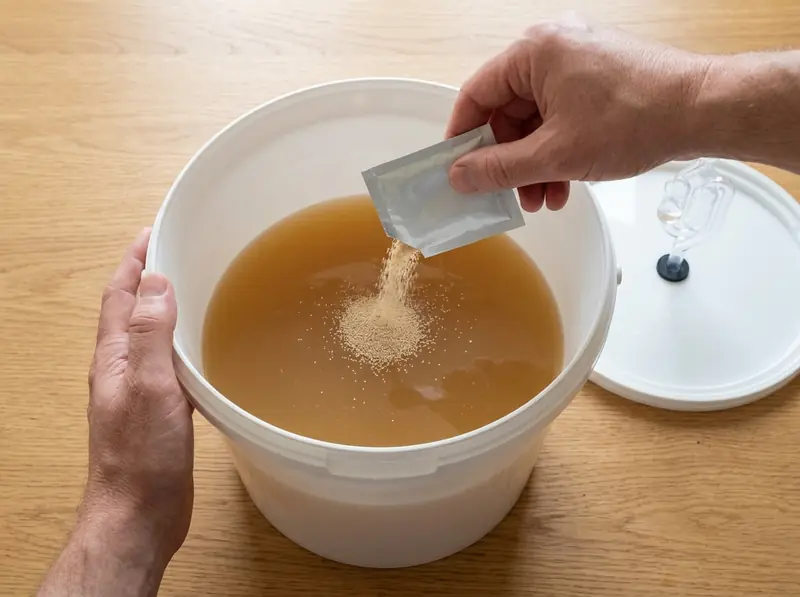
- 1 bis 2 Wochen gären lassen. Das Gärgefäß bei Raumtemperatur (18 bis 22°C) und ohne direkte Sonne aufstellen. Das kräftige Blubbern der ersten Tage lässt nach, bis nur noch ab und zu eine Blase aufsteigt. Ein ruhiges Gärröhrchen heißt nur, dass die Gärung langsamer geworden ist, nicht, dass sie beendet ist. Mit einem Aräometer prüfen (einer günstigen Glasspindel aus dem Hobbybrauer-Bedarf). Zum Messen mit einer desinfizierten Schöpfkelle so viel Cidre entnehmen, dass ein hohes, schmales Glas oder ein Messzylinder voll wird, das Aräometer hineingeben und frei schwimmen lassen, dann die Skala auf Augenhöhe ablesen, am unteren Rand der Wölbung, die die Flüssigkeit um den Stiel bildet. Die Probe nicht zurückgießen, sondern trinken oder wegschütten. Die Gärung ist abgeschlossen, wenn der Wert 3 Tage hintereinander gleich bleibt, meist bei 1,000 oder knapp darunter, und der Cidre klar zu werden beginnt. Probieren: Er sollte trocken und leicht säuerlich sein und sauber riechen, ohne jede Essignote.
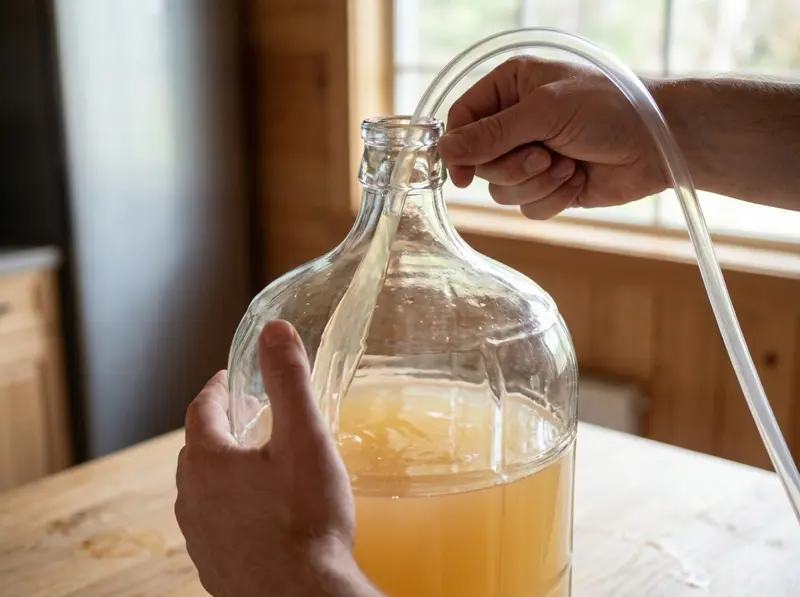
- Abziehen und klären. Den Cidre mit einem Weinheber vom Bodensatz in ein zweites sauberes, desinfiziertes Gefäß umfüllen: Ein Weinheber ist nichts weiter als ein lebensmittelechter Kunststoffschlauch, durch den die Flüssigkeit von selbst läuft, wenn das volle Gärgefäß höher steht als das leere Gefäß. Dieses Umfüllen nennt man Abziehen. Das Schlauchende über dem Bodensatz halten und den Cidre an der Wand des neuen Gefäßes hinunterlaufen lassen, ohne dass er spritzt. Ein Glasballon mit 4,5 bis 5 Litern hat die richtige Größe: Je voller er wird, desto weniger Luft bleibt über dem Cidre. Das Gärröhrchen wieder aufsetzen und den Cidre weitere 3 bis 5 Tage klären lassen. Jetzt lässt er sich schon als stiller Cidre trinken: trocken, säuerlich und mit schlichtem Apfelgeschmack.
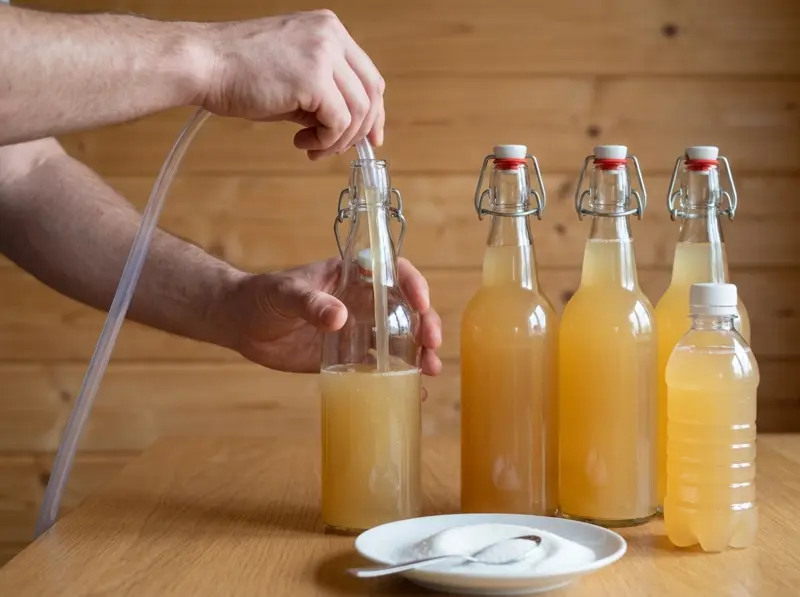
- Für perlenden Cidre in Flaschen füllen, aber erst, wenn der Aräometerwert 3 Tage lang stabil war: Gärt noch Zucker, kommt der Zucker für die Flaschengärung dazu, und in den Flaschen kann so viel Druck entstehen, dass sie platzen. Zuerst Flaschen, Verschlüsse und den Schlauch des Weinhebers spülen und desinfizieren. In jede leere 500-ml-Flasche genau 4 g Zucker (1 gestrichenen Teelöffel) geben, dann den Cidre mit dem Weinheber einfüllen, ohne den Bodensatz aufzuwirbeln, und 2 bis 3 cm unter dem Verschluss frei lassen. Die Hefe, die noch im Cidre ist, verbraucht diesen Zucker in der verschlossenen Flasche und sorgt für die Perlen. Nur Flaschen verwenden, die für kohlensäurehaltige Getränke gemacht sind: Bierflaschen mit Bügelverschluss oder Kronkorken oder Limoflaschen aus Kunststoff; niemals Einmachgläser oder Weinflaschen. Eine Limoflasche aus Kunststoff als Testflasche füllen. Alle Flaschen bei Raumtemperatur stehen lassen, in einer geschlossenen Kiste oder einem Schrank, falls doch eine platzt, und die Testflasche jeden Tag drücken: Meist dauert es 5 bis 7 Tage, in einem kühlen Raum länger, und sobald sie prall ist und sich kaum noch eindrücken lässt, alle Flaschen in den Kühlschrank stellen. Vor dem Öffnen mindestens 3 Tage kühlen und die erste Flasche über dem Spülbecken öffnen. Kalt gelagert hält sich der Cidre mehrere Monate, durch langes Lagern wird er aber nicht besser.
Fragen
Am besten funktioniert eine Mischung: süße, neutrale Äpfel als Basis (Golden Delicious, Gala, Fuji), ein saurer Apfel für die Säure (Bramley, Granny Smith), ein aromatischer wie Cox und möglichst einige Holzäpfel oder echte Mostäpfel für die Gerbstoffe. Eine gängige Faustregel sind 30 bis 60 % neutrale Basis, 10 bis 20 % saure, 10 bis 20 % aromatische und 5 bis 20 % gerbstoffreiche Früchte. Cidre aus einer einzigen Tafelsorte ist möglich, schmeckt aber meist flach. Bei gekauftem Saft bringt das Mischen von 2 oder 3 Marken ein deutlich besseres Ergebnis.
Cidre- oder Weinhefe vergärt sauber und lässt den Apfelgeschmack im Vordergrund. Backhefe vergärt den Saft zwar auch, hinterlässt aber oft einen hefigen, brotigen Geschmack und setzt sich schlecht ab, sodass der Cidre trüb bleibt. Für den ersten Ansatz ein Päckchen trockene Wein- oder Cidrehefe nehmen. Backhefe passt zu einer kurzen Gärung wie bei hausgemachtem Brotkwas, der nach ein bis zwei Tagen fertig ist.
Warten, bis der Aräometerwert 3 Tage lang gleich geblieben ist und der Cidre klar geworden ist, dann in jede 500-ml-Flasche genau 4 g Zucker (1 gestrichenen Teelöffel) geben, bevor sie gefüllt und verschlossen wird. Das sind 8 g pro Liter; mehr als 10 g pro Liter sollten es nicht sein. Die im Cidre verbliebene Hefe verbraucht den Zucker und bildet Kohlendioxid (CO₂), das in der verschlossenen Flasche gelöst bleibt. Stabile Flaschen für kohlensäurehaltige Getränke verwenden und eine Limoflasche aus Kunststoff als Testflasche füllen: Sobald sie sich kaum noch eindrücken lässt, alle Flaschen in den Kühlschrank stellen. Niemals gewöhnliche Einmachgläser oder Weinflaschen verwenden, denn der Druck kann sie zerspringen lassen.
Die üblichen Ursachen sind Saft mit Konservierungsstoffen (Kaliumsorbat oder Natriumbenzoat bremsen die Hefe aus), ein kalter Raum (die Gärung wird mit sinkender Temperatur langsamer und kann ganz stehen bleiben), tote Hefe (etwas davon in warmes Wasser mit einer Prise Zucker rühren: Sie muss innerhalb von 10 Minuten schäumen) oder Hefe, die zu früh nach der Campden-Tablette zugegeben wurde (die vollen 24 Stunden warten, bis das Schwefeldioxid verflogen ist). Ein Cidre, der in einem kühlen Raum langsam blubbert, ist oft in Ordnung, also erst auf 18 bis 22°C stellen, bevor man einen Fehler vermutet. Wer wilde Hefen bei der Arbeit sehen will: Tepache gärt mit den Hefen auf der Ananasschale, genau denen, die hier die Campden-Tablette beseitigt.
Ja, und das klappt sehr gut. Naturtrüben, ungefilterten Saft wählen und das Etikett lesen: Er darf weder Kaliumsorbat noch Natriumbenzoat enthalten. Pasteurisierter Saft ist in Ordnung und braucht keine Campden-Tablette. Klarer, gefilterter Saft vergärt ebenfalls, der Cidre wird aber leichter und fader.
Bewerten
Rezepte per E-Mail
Ein Brief pro Woche: ein Rezept nach Ihrem Geschmack und alles Neue auf der Seite. Abmelden mit einem Klick.
Als Geschenk: Sergeis Kochbuch (E-Book).
Mit der Anmeldung akzeptieren Sie die Datenschutzerklärung.
Verraten Sie uns, was Sie gern kochen (30 Sekunden) →Weiter stöbern
Weitere Gerichte aus dem Archiv — ausgewählt nach Überschneidung mit dem, was du gerade kochst.


An der Diskussion teilnehmen
Kommentare (1)
I always chill the glasses for homemade apple cider — 15 minutes in the freezer transforms the drinking experience. The frost on the glass keeps everything at the perfect temperature through the last sip.